
Georgia Roofing License Requirements — What Contractors Need and Homeowners Should Verify
Georgia's contractor licensing system protects homeowners from unqualified roofers — but only if you know what to look for. This guide covers state licensing thresholds, insurance mandates, county-level requirements across metro Atlanta, and exactly how to verify a roofing contractor's credentials before signing a contract.
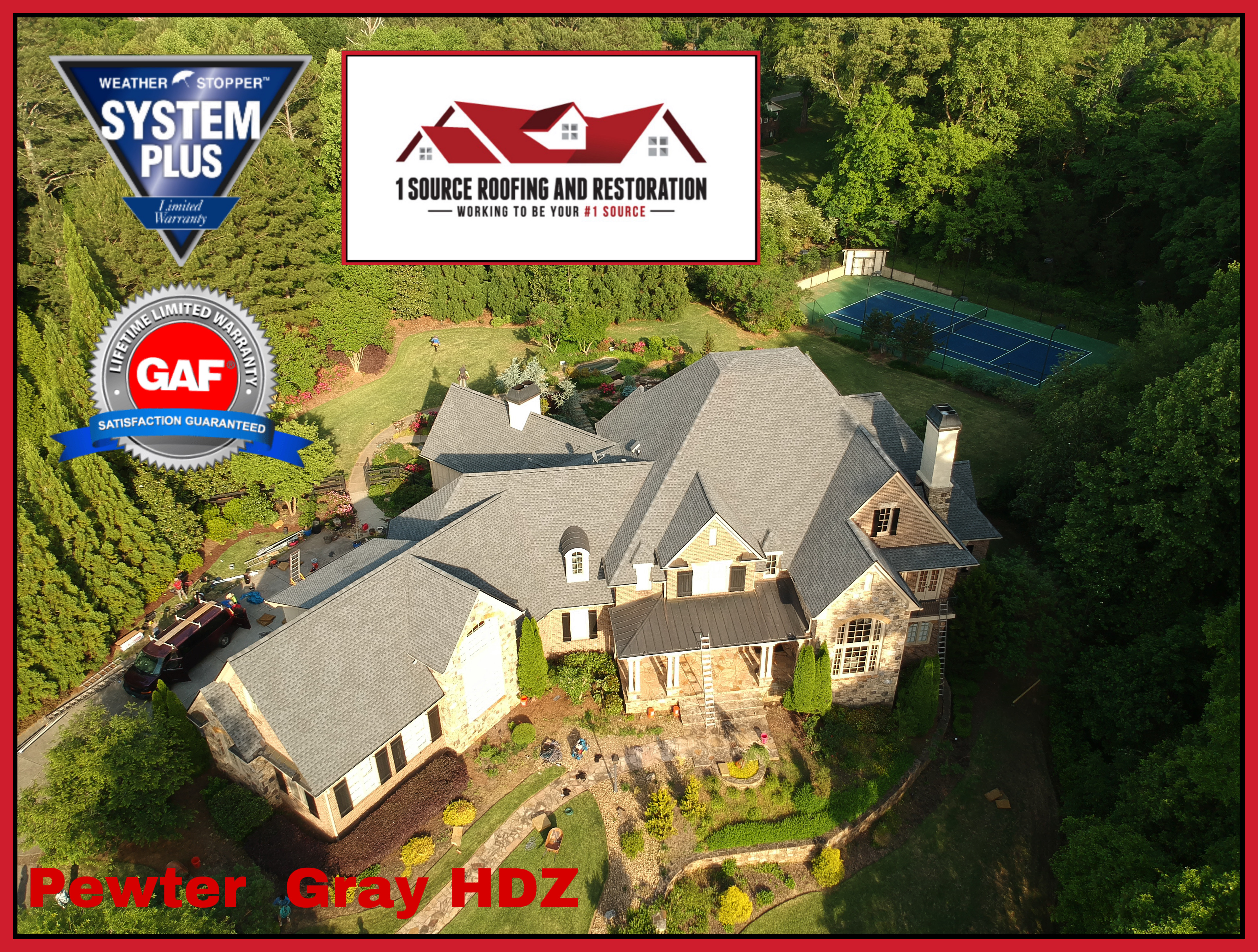
Certified by Industry-Leading Manufacturers
Georgia's Roofing Contractor Licensing Framework
Georgia does not issue a dedicated roofing license. That surprises most homeowners — and it catches many out-of-state contractors off guard too. Unlike Florida, which requires a separate roofing certification, or Alabama, which licenses roofers through its Home Builders Licensure Board, Georgia folds roofing work into its broader contractor licensing system.
The governing law is the Residential and General Contractor Act (O.C.G.A. Title 43, Chapter 41), administered by the Georgia Secretary of State through the Division of Contractor Licensing. Under this framework, any contractor performing residential construction work — including roof replacement, roof repair, and storm damage restoration — on a project valued at more than $2,500 (combined labor and materials) must hold a valid state contractor license.
That $2,500 threshold is the bright line. Below it, no state license is required, though local business license and occupation tax requirements still apply. Above it, working without a license is a criminal offense. The threshold includes the total project cost, not just labor — so a $1,800 labor estimate plus $900 in materials puts the project at $2,700, firmly in licensed territory.
For homeowners, this means something specific: if your roofing project costs more than $2,500 — and nearly all roof replacements in metro Atlanta exceed $10,000 — the contractor must be licensed. Period. A contractor who tells you "roofers don't need a license in Georgia" is either ignorant of the law or deliberately misleading you. Both are disqualifying.
The licensing system exists to protect homeowners. Licensed contractors have passed competency examinations, carry required insurance, and are subject to disciplinary action through the state licensing board. Unlicensed contractors operate outside that system entirely — which means you have no state-level recourse if they damage your property, abandon the job, or perform substandard work.
Georgia's approach creates an unusual situation compared to states with dedicated roofing licenses. A contractor can hold a valid Georgia license and still lack specific roofing expertise or manufacturer certifications. That's why verifying the license alone isn't enough — you also need to confirm manufacturer certifications like GAF and CertainTeed credentials that demonstrate actual roofing competency and activate extended warranty options.
Types of Contractor Licenses in Georgia
Georgia issues three categories of contractor licenses, each with different scopes of work and examination requirements. Understanding which license applies to roofing — and which your contractor holds — directly affects the quality of protection you receive as a homeowner.
Residential Basic Contractor (RBC)
This is the most common license held by roofing contractors in Georgia. The Residential Basic Contractor license authorizes work on one- and two-family dwellings with a project value exceeding $2,500. Most residential roof replacements, repairs, and storm damage restoration projects fall under this license category. The RBC license requires passing a trade examination administered by PSI (now Scantron), covering Georgia construction law, business management, and trade-specific knowledge.
Residential Light Commercial Contractor (RLCC)
The RLCC license expands the scope beyond single-family homes to include light commercial projects — buildings up to three stories and 25,000 square feet. Roofing contractors who work on both residential homes and small commercial buildings (strip malls, office buildings, churches, small apartment complexes) typically hold this license. The examination is more extensive than the RBC, covering commercial building codes and project management for larger structures.
General Contractor (GC)
The broadest license category, the General Contractor license authorizes work on any type of construction project without size or scope limitations. Large commercial roofing operations and companies that handle both roofing and general construction often hold this license. The GC examination is the most demanding, covering the full International Building Code, commercial construction law, and advanced project management.
The Examination Process
All three license categories require passing a proctored examination. Georgia contracts with PSI/Scantron to administer these tests at approved testing centers throughout the state. The examinations are open-book — candidates can bring reference materials — but they are rigorous. Pass rates for first-time test takers typically run between 55% and 70%, depending on the license category.
The examination covers three areas: Georgia construction law and regulations (including lien law, contract requirements, and the Contractor Act itself), business and project management, and trade-specific knowledge. Candidates must score at least 70% on each section to pass.
Continuing Education
Georgia requires licensed contractors to complete continuing education credits for license renewal. The renewal cycle runs every two years, and contractors must complete three hours of approved continuing education covering updates to building codes, changes in Georgia construction law, and business practices. Failure to complete continuing education results in license expiration — and working on an expired license carries the same penalties as working without one.
How to Verify a License
The Georgia Secretary of State maintains an online license verification database at sos.ga.gov. Enter the contractor's name or license number to see their current license status, license type, issue date, expiration date, and any disciplinary actions. You can also call the Division of Contractor Licensing at (478) 207-2440 for phone verification. A legitimate contractor will provide their license number without hesitation — reluctance to share this information is a red flag.
.JPG)
Insurance Requirements for Georgia Roofing Contractors
Licensing tells you a contractor passed an exam. Insurance tells you whether you're financially protected when something goes wrong on your property. In roofing, things go wrong more often than most homeowners realize — a worker falls from a ladder, a shingle tear-off damages a window, a debris pile cracks a driveway. Without proper contractor insurance, those costs land on your homeowner's policy or, worse, directly on you.
General Liability Insurance
General liability insurance covers property damage and bodily injury caused by the contractor's work. If a roofing crew drops a bundle of shingles through your soffit, or debris from a tear-off damages your landscaping, general liability pays for the repair. Georgia does not mandate a specific minimum coverage amount for contractors, but industry standards for roofing contractors call for at least $1 million per occurrence and $2 million aggregate. Any contractor carrying less than $1 million in general liability is underinsured for residential roofing work in metro Atlanta, where property values routinely exceed $500,000.
Ask for a Certificate of Insurance (COI) before signing any roofing contract. The COI should name you as an additional insured party and include the policy number, coverage limits, and expiration date. Call the insurance company listed on the COI to verify the policy is active — some contractors present expired or fraudulent certificates. A legitimate contractor will produce a current COI within 24 hours of your request.
Workers' Compensation Insurance
Georgia law (O.C.G.A. § 34-9-2) requires workers' compensation insurance for any employer with three or more employees, including part-time workers, seasonal workers, and subcontractors who don't carry their own coverage. Roofing is statistically one of the most dangerous occupations in the United States — the Bureau of Labor Statistics consistently ranks it among the top five most fatal industries. Falls from roofs account for the majority of these fatalities.
If an uninsured worker is injured on your property and the roofing contractor lacks workers' compensation, you can be held liable for medical expenses, lost wages, and disability payments. Your homeowner's insurance may cover some of this exposure, but many policies exclude injuries to workers performing contracted services. The financial exposure can reach hundreds of thousands of dollars for a serious fall injury.
Even contractors with fewer than three employees should carry workers' comp voluntarily — and reputable ones do. The cost of a workers' comp policy is a standard business expense that responsible contractors build into their pricing. A contractor who avoids workers' comp to undercut competitors on price is transferring that risk directly to you.
Surety Bonds
Georgia does not require roofing contractors to carry a surety bond as a condition of state licensing, unlike some states that mandate bonds ranging from $10,000 to $50,000. However, some metro Atlanta municipalities require bonds for local business licenses or building permits. A surety bond provides a financial guarantee that the contractor will complete the work according to the contract terms. If they abandon the project or perform defective work, the bond provides a pool of money for the homeowner to recover damages, up to the bond amount.
While not required statewide, a contractor who voluntarily carries a surety bond demonstrates financial stability and confidence in their work. Ask about bonding when evaluating contractors — it's another data point that separates professional operations from fly-by-night outfits.
Verify Before You Sign — We Welcome the Scrutiny
1 Source Roofing is fully licensed, insured, and manufacturer-certified. We'll provide our license number, insurance certificates, and manufacturer credentials before you ask.
County and City Business License Requirements in Metro Atlanta
State licensing is only half the equation. Every county and most cities in metro Atlanta impose their own business license requirements, occupation tax certificates, and building department registrations. A contractor can hold a valid state license and still operate illegally in your city if they haven't obtained the required local permits.
These local requirements vary widely across the metro area. Here's what applies in the six primary counties where 1 Source Roofing serves homeowners:
Gwinnett County
Gwinnett County requires a Business Registration Certificate for all contractors operating within unincorporated Gwinnett. Incorporated cities within the county — Lawrenceville, Duluth, Suwanee, Buford, Lilburn, Snellville — each require their own city business license or occupation tax certificate. The Gwinnett County Department of Planning and Development issues building permits and conducts inspections. Roofing projects require a building permit before work begins, and the county conducts inspections upon completion to verify code compliance.
Fulton County
Fulton County issues an Occupational Tax Certificate (OTC) for contractors working in unincorporated Fulton. The City of Atlanta, Sandy Springs, Roswell, Alpharetta, and Johns Creek each maintain separate business license requirements. Atlanta's permitting process is notably more complex than surrounding suburbs, with additional plan review requirements for certain roofing projects in historic districts. The Buckhead area falls under City of Atlanta jurisdiction and follows Atlanta permitting rules.
DeKalb County
DeKalb County requires an Occupational Tax Certificate for contractors. The county's building permit process requires proof of state contractor licensing, general liability insurance, and workers' compensation (for applicable employers) before issuing permits. Incorporated cities within DeKalb — Decatur, Brookhaven, Dunwoody — have their own business license requirements separate from the county.
Cobb County
Marietta and other Cobb County cities require local business licenses. Cobb County's building department is known for thorough inspections, particularly regarding wind resistance requirements and proper flashing installation. The county requires a building permit for all roof replacements and conducts both rough and final inspections.
Cherokee County
Cherokee County requires a contractor registration in addition to the state license. The registration process includes verification of state licensing, insurance certificates, and a local background check. Woodstock, Canton, and Holly Springs each have city-level business license requirements.
Forsyth County
Forsyth County has experienced rapid growth and maintains strict contractor registration requirements. The county building department requires proof of state licensing, insurance, and workers' compensation before issuing permits. Cumming, the county seat, requires a separate city business license.
The takeaway for homeowners: ask your roofing contractor whether they hold the required local business license or occupation tax certificate for your specific city or county. A contractor who is properly licensed at the state level but lacks local registration may be unable to pull building permits in your jurisdiction — forcing them to either skip the permit (a code violation) or ask you to pull the permit yourself (a red flag).
How to Verify a Roofing Contractor's Credentials in Georgia
Verification takes less than an hour and can save you tens of thousands of dollars. Every data point below is free to check, publicly available, and tells you something specific about the contractor's legitimacy and reliability.
Step 1: Georgia Secretary of State License Lookup
Visit sos.ga.gov and search for the contractor under the Division of Contractor Licensing. The database shows license type (RBC, RLCC, or GC), issue date, expiration date, and any disciplinary actions — complaints, fines, suspensions, or revocations. A clean record with a long-standing license is a positive signal. Multiple complaints or a recently issued license after a previous revocation is not.
Step 2: Insurance Certificate Verification
Request a Certificate of Insurance (COI) showing both general liability and workers' compensation coverage. Don't just look at the document — call the insurance company's verification line (listed on the COI) to confirm the policy is active and the coverage limits match what the certificate shows. Policies can lapse between the date the COI was issued and the date your project starts. A five-minute phone call confirms current coverage.
Step 3: BBB Accreditation and Complaint History
Check the Better Business Bureau (bbb.org) for the contractor's accreditation status, rating, and complaint history. An A+ rating with BBB accreditation indicates a company that responds to complaints and maintains ethical business practices. Pay attention to complaint patterns — a single complaint about scheduling isn't concerning, but multiple complaints about abandoned projects or payment disputes is a pattern you want to avoid.
Step 4: Google Business Profile and Reviews
Search for the contractor on Google and review their Google Business Profile. Look beyond the star rating at the content of reviews. Consistent themes — professionalism, communication, clean job sites, warranty follow-through — indicate operational quality. Watch for review patterns that suggest manipulation: clusters of five-star reviews posted on the same day, reviews with no project details, or generic praise that could apply to any business.
Step 5: Manufacturer Certification Verification
GAF, CertainTeed, Owens Corning, and other major shingle manufacturers maintain online directories of certified contractors. These certifications require ongoing training, warranty claim performance, and business stability reviews. A GAF Certified Contractor, for example, has met requirements that fewer than 7% of roofing contractors nationwide achieve. Verify the certification directly through the manufacturer's website — not just the contractor's claim.
Red Flags That Should Stop the Conversation
Certain behaviors indicate a contractor you should not hire, regardless of price:
- No license number provided. A licensed contractor knows their number and will share it immediately. "I'll get that to you later" means they don't have one.
- Reluctance to show insurance. Producing a COI takes one phone call to their insurance agent. Resistance means the policy is lapsed, insufficient, or nonexistent.
- Demands cash payment or large upfront deposits. Georgia law allows reasonable progress payments, but demanding full payment before work begins — or insisting on cash only — suggests a contractor who may not complete the work.
- No physical business address. A P.O. box or "we work out of our trucks" indicates a transient operation. Established contractors have a fixed location, even if it's a home office.
- Pressure to sign immediately. Storm chasers are notorious for pressuring homeowners to sign contracts on the spot, often going door-to-door after severe weather. Legitimate contractors give you time to verify their credentials and compare estimates.
- No written contract or vague scope of work. A professional roofing contract specifies materials (manufacturer, product line, color), scope (tear-off vs. overlay, areas included), timeline, payment schedule, warranty terms, and permit responsibility. A one-page "estimate" with a signature line is not a contract.
1 Source Roofing — Our Licensing, Insurance, and Certifications
We built this page because we believe informed homeowners make better decisions — and those decisions consistently lead them to contractors like us who operate with full transparency. Here's exactly where we stand on every credential discussed above.
State Licensing
1 Source Roofing and Restoration holds a valid Georgia contractor license through the Secretary of State, Division of Contractor Licensing. Our license is current, has been continuously active since our founding, and carries zero complaints or disciplinary actions. We provide our license number to every prospective client as part of our standard estimate package — before they ask for it.
Insurance Coverage
We carry general liability insurance with per-occurrence and aggregate limits that exceed industry minimums, plus a full workers' compensation policy covering every member of our crew. We provide Certificates of Insurance naming the homeowner as an additional insured party as a standard part of every project. Our insurance agent is available for direct verification — we include the contact information on the COI itself.
Manufacturer Certifications
Our manufacturer certifications set us apart from the majority of roofing contractors in metro Atlanta:
- GAF Certified Contractor — Fewer than 7% of roofing contractors nationwide earn this certification. It requires training in GAF installation methods, passing a background check, maintaining adequate insurance, and meeting ongoing performance standards. This certification enables us to offer GAF's strongest warranty packages, including the Golden Pledge Limited Warranty.
- CertainTeed Certified Contractor — CertainTeed's certification program requires demonstrated expertise in their product lines, completion of training modules, and maintaining active credentialing status. This dual certification — both GAF and CertainTeed — means we can offer homeowners the best warranty options from the two largest shingle manufacturers in North America.
- BBB A+ Accreditation — Our Better Business Bureau accreditation reflects our commitment to resolving any client concerns through established channels and maintaining ethical business practices.
Local Business Licensing
We maintain active business licenses and occupation tax certificates in every jurisdiction where we operate across metro Atlanta. When we pull a building permit for your project — which we do for every roof replacement — we're doing so as a locally registered contractor with full authority to work in your city or county.
Why We Welcome Verification
Every credential listed above is independently verifiable. We encourage homeowners to check our license through the Secretary of State, call our insurance company, search our BBB profile, verify our GAF and CertainTeed certifications through manufacturer websites, and read our Google reviews. We have nothing to hide and everything to demonstrate.
Transparency in licensing and insurance is the foundation of the contractor-client relationship. If a contractor resists verification at this stage, imagine how they'll respond when a warranty issue arises three years after installation, or when a flashing leak appears and needs correction under their workmanship guarantee.
We don't just meet the minimum requirements — we exceed them because our clients' homes deserve that level of protection. From Alpharetta to Marietta, from Sandy Springs to Roswell, every project we take on carries the full weight of our licensing, insurance, manufacturer certifications, and reputation.
Ready to work with a contractor whose credentials speak for themselves? Call 1 Source Roofing at (404) 277-1377 for a free roof inspection and estimate. We'll have our license number, insurance certificates, and manufacturer credentials ready before you arrive.
Frequently Asked Questions — Georgia Roofing Licensing
Does Georgia require a roofing license?
Georgia does not issue a standalone roofing license. Instead, roofing contractors fall under the state's general contractor licensing system, administered by the Georgia Secretary of State through the Division of Contractor Licensing. Any residential roofing project exceeding $2,500 in combined labor and materials requires the contractor to hold a valid Residential Basic Contractor, Residential Light Commercial Contractor, or General Contractor license. Projects under $2,500 are exempt from state licensing, though local business license requirements still apply.
How do I verify a roofer's license in Georgia?
Visit the Georgia Secretary of State website at sos.ga.gov and use the license verification search tool under the Division of Contractor Licensing. Enter the contractor's name or license number. The database shows active license status, license type, expiration date, and any disciplinary actions. You can also call (478) 207-2440 for phone verification. Always confirm the license is current — not expired or suspended — before signing any contract.
Does my roofing contractor need workers' compensation insurance?
Yes, if the contractor employs three or more workers. Georgia law (O.C.G.A. § 34-9-2) requires workers' compensation coverage for any business with three or more employees, including part-time and seasonal workers. If an uninsured worker is injured on your property and the contractor lacks workers' comp, you as the homeowner could face liability for medical expenses and lost wages. Always request a Certificate of Insurance showing both general liability and workers' compensation coverage before work begins.
What happens if I hire an unlicensed roofer in Georgia?
Hiring an unlicensed contractor for a project over $2,500 creates multiple risks. The contractor faces criminal penalties — operating without a license is a misdemeanor in Georgia, carrying fines up to $1,000 per offense. For the homeowner, the risks include voided manufacturer warranties, inability to file complaints through the state licensing board, no bond protection if the contractor abandons the job, and potential complications with your homeowner's insurance if defective work causes damage.