
Ceiling Leaking Into Your Living Room? We Fix It Today.
Water is dripping through your ceiling, staining your walls, and soaking your floors right now. Our emergency crews arrive within 60 minutes to stop the damage, extract the water, and begin full restoration.
Certified & Trusted Emergency Restoration
Water on Your Ceiling Is a Structural Emergency
A water stain on your ceiling is not a cosmetic problem. It is a warning sign that hundreds of pounds of water may be pooled above your head right now, trapped between the drywall and the subfloor or roof decking above. Standard half-inch drywall was never designed to hold weight. When water accumulates in the cavity above a ceiling, the paper facing softens, the gypsum core turns to paste, and the entire sheet can release without warning.
We have responded to ceiling collapses across metro Atlanta where the homeowner noticed a small brown stain in the morning, went to work, and came home to find an entire 8-by-12-foot section of ceiling on their living room floor. The couch, the hardwood, the area rug, the entertainment center — everything beneath that section was destroyed in a single moment.
Here is what a wet ceiling is telling you right now:
- Brown or yellow stains spreading outward: Water is actively migrating through the drywall from a source above. The stain you see represents only the front edge of the water. The saturated area behind the drywall is always larger than what is visible from below.
- Bubbling or blistering paint: Water has fully saturated the drywall and is now pushing against the paint film. The drywall is structurally compromised at this point. Collapse risk is real.
- Sagging or drooping sections: The drywall is loaded with water and gravity is winning. This is the stage immediately before collapse. Do not stand under it. Do not push on it. Get everyone out of the room and call us.
- Active dripping: Water has found a path through the drywall, typically at a seam, a light fixture cutout, or a nail hole. While dripping reduces the collapse risk slightly because water is escaping, it means the source above is still actively producing water.
Every minute you wait gives that water more time to spread. Call (404) 277-1377 right now. We will have a crew at your home within the hour.
What Is Causing Water to Come Through Your Ceiling
Ceiling water damage does not happen for one simple reason. The source determines how we respond, what equipment we bring, and how the restoration unfolds. Here are the causes we encounter most frequently in metro Atlanta homes:
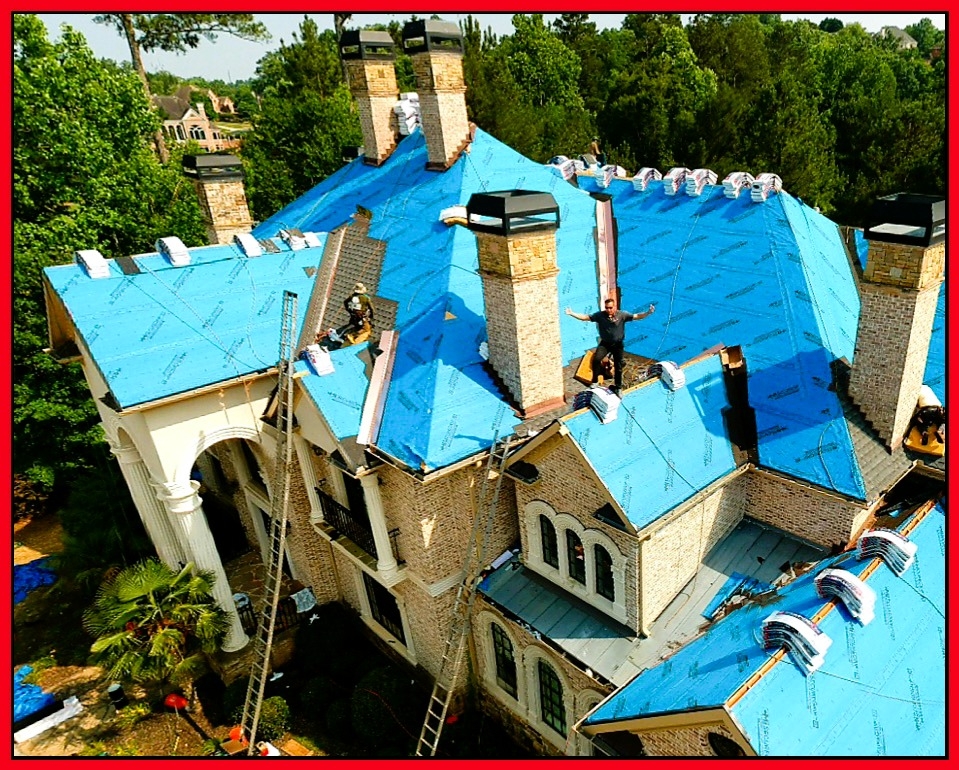
Roof leaks from storm damage or aging materials. Metro Atlanta averages 50 inches of rain per year and sees 50 to 60 thunderstorm days annually. Wind-driven rain pushes water under shingles, past compromised flashing, and through gaps around roof penetrations. The water travels along roof decking, runs down rafters, and pools on top of the ceiling drywall — often 10 or 15 feet from where the roof actually failed. This is why the stain on your living room ceiling might have nothing to do with the roof directly above it. Our storm damage restoration team traces every leak back to its true point of entry.
HVAC condensate drain failures. Most Atlanta homes have their air handler mounted in the attic. These units produce gallons of condensation daily during our 5-month cooling season. When the primary condensate drain line clogs — and they all clog eventually from algae and sediment — the overflow pan catches the excess. But overflow pans have their own drain lines, and those clog too. When both fail, water pours directly onto the attic floor and soaks through the ceiling below. We see this failure pattern spike every June through September across Buckhead, Sandy Springs, and Alpharetta.
Plumbing failures on upper floors. A burst supply line, a failed toilet wax ring, or an overflowing bathtub on the second floor sends water cascading through the floor assembly and into the ceiling of the room below. Supply line failures are the worst because they produce water at full municipal pressure — 40 to 80 PSI in most metro Atlanta systems — and will not stop until someone shuts off the valve.
Appliance failures above living spaces. Second-floor laundry rooms, kitchens above living areas, and bathrooms directly over finished ceilings are all high-risk configurations. A washing machine hose failure on the second floor can dump 500 gallons per hour through your living room ceiling.
Ice dam formation during freeze events. Atlanta does not get ice dams often, but when we do, the damage is severe because our homes are not built for it. During the January 2024 freeze, ice dams formed along the eaves of homes across North Fulton and Gwinnett County. The trapped water backed up under shingles and poured into attic spaces, saturating insulation and ceiling drywall across entire rooms.
Identifying the source matters because your insurance claim depends on it. A sudden pipe burst is covered differently than a slow roof leak your insurer argues you should have noticed months ago. We trace every ceiling leak to its origin and document the failure mechanism for your adjuster.
Sagging drywall, expanding water stains, dripping at seams, and visible bulging all indicate a ceiling holding water weight. A 4x8 sheet of saturated drywall weighs over 100 pounds. If you see any of these signs, evacuate the room and call (404) 277-1377 immediately.
How Ceiling Water Destroys Your Living Room Hour by Hour
Your living room contains some of the most expensive finishes and furnishings in your home. Hardwood floors, custom built-ins, upholstered furniture, electronics, and irreplaceable personal items all sit directly in the path of water falling from a compromised ceiling. Here is what happens on a timeline:
- First 30 minutes: Water dripping from the ceiling begins pooling on hardwood, laminate, or carpet. Hardwood absorbs moisture from the surface down and from the subfloor up simultaneously. Upholstered furniture sitting in standing water begins wicking moisture into the foam and fabric. Electronics on the floor or on low shelves are at immediate risk.
- Hours 1 through 4: Hardwood floor boards begin swelling at the edges, creating visible cupping. Carpet padding absorbs water like a sponge and holds it against the subfloor. Drywall on walls adjacent to the ceiling damage starts wicking moisture downward through capillary action. The water stain on the ceiling continues expanding outward.
- Hours 4 through 12: Laminate flooring delaminates at the seams and begins buckling. Crown molding and baseboards swell and pull away from walls. Water migrates into wall cavities, saturating insulation and reaching electrical wiring. If the ceiling has recessed lighting, water pools inside the light cans and creates an electrical hazard.
- Hours 12 through 24: Wet drywall on the ceiling has now been saturated long enough that structural integrity is failing. Sagging becomes pronounced. The paper facing separates from the gypsum core. Hardwood floors that have been wet this long will require sanding and refinishing at minimum, full replacement at worst.
- 24 to 48 hours: Mold colonization begins on every wet organic surface. In Georgia's warm, humid conditions, mold does not need encouragement. It is already present in the air at background levels. All it needs is sustained moisture. By this point, you are no longer dealing with water damage alone. You are dealing with water damage plus mold remediation — and the cost difference is substantial.
The math is simple. Every hour you wait increases restoration costs by hundreds of dollars. A ceiling leak caught and addressed within the first few hours might cost a few thousand dollars to restore. The same leak left overnight routinely generates five-figure restoration bills. Call (404) 277-1377 now.
What Happens When Our Crew Arrives at Your Home
When you call 1 Source Roofing and Restoration for ceiling or living room water damage, a live dispatcher answers. Not a voicemail system. Not a call center that takes a message. A real person who starts dispatching a crew while still on the phone with you.
Here is our response protocol for ceiling and living room water damage:
- Phone triage (while you are on the call): We ask where the water is coming from, whether the ceiling is sagging or actively dripping, and whether you can identify the source. If the cause is a plumbing failure, we walk you through shutting off the supply. If it is a roof leak, we tell you to contain what you can with buckets and towels and get everyone out from under the compromised ceiling section.
- Arrival and safety assessment (within 60 minutes): Our lead technician evaluates the ceiling for collapse risk before anyone enters the room. If the ceiling is holding significant water, we perform a controlled release by puncturing the drywall at the lowest point of the sag to drain the water into collection containers. This prevents an uncontrolled collapse that would spread water across a much larger area and destroy everything below.
- Source identification: We trace the water path from the ceiling stain back to its origin point. This requires accessing the attic space, the floor cavity above, or the roof itself. Our infrared thermal cameras show us the moisture trail through building materials without cutting any exploratory holes. We find the source and stop it before spending a single minute on extraction.
- Water extraction and controlled demolition: Once the source is stopped, we extract all standing water from the living room floor using truck-mounted equipment. We remove the damaged sections of ceiling drywall in a controlled manner, cutting back to dry material. Saturated insulation above the ceiling is pulled and bagged for disposal.
- Moisture mapping and documentation: Every surface in the affected area gets checked with professional moisture meters. We map readings at dozens of points throughout the room — walls, floor, remaining ceiling, and the cavity above. All readings are logged with timestamped photos for your insurance claim.
- Structural drying setup: Commercial dehumidifiers and high-velocity air movers are positioned throughout the living room and in the cavity above the ceiling. Drying equipment runs continuously, monitored daily, and repositioned as moisture levels change.
Most ceiling and living room water damage emergencies require 3 to 5 days of active drying before rebuild work can begin. Our team monitors progress daily and provides you with updated moisture readings so you know exactly where things stand.

The Damage You Cannot See Above Your Ceiling
The stain on your ceiling is the visible evidence. The real scope of damage is hidden in the spaces you cannot access without professional equipment and controlled demolition.
Water on top of a ceiling does not sit still. It follows the path of least resistance, flowing along joists, pooling in low spots, and wicking into every porous material it contacts. A single point of entry from a roof leak or plumbing failure above routinely affects an area three to five times larger than the visible ceiling stain suggests.
Here is what we typically find above the ceiling during restoration:
- Saturated attic insulation: Blown-in cellulose insulation absorbs water and compresses into a dense, wet mat that holds moisture against the ceiling drywall for days. Fiberglass batts hold water between the fibers and lose all thermal performance. Both must be removed from the affected area and replaced once the cavity is dry.
- Wet roof decking (if the source is a roof leak): Plywood roof decking that stays wet develops delamination and soft spots. OSB decking is worse — it swells and never returns to its original dimensions. If roof decking is compromised, it must be replaced before new roofing materials go down. This is where a simple ceiling stain turns into a roofing project.
- Damaged framing members: Ceiling joists and rafter ties that sit in standing water absorb moisture and can develop wood rot if not dried properly. In older Atlanta homes with dimensional lumber framing, sustained moisture above 19% creates conditions for fungal decay that weakens structural members over time.
- Electrical hazards: Ceiling cavities contain wiring for light fixtures, ceiling fans, smoke detectors, and sometimes speaker systems or security equipment. Water contacting these components creates corrosion, short-circuit risk, and potential fire hazards. Georgia building code requires electrical inspection after significant water intrusion into ceiling cavities.
- HVAC ductwork contamination: Many Atlanta homes run supply and return ducts through the attic or through the floor/ceiling cavity between stories. Water that reaches ductwork can enter the system through joints and seams, contaminating the interior surfaces. Once mold establishes inside ductwork, it distributes spores to every room in the house through the supply registers.
Our infrared cameras detect these hidden moisture concentrations without cutting any holes. We map the full extent of the damage before we make a single cut, so there are no surprises during restoration and your insurance claim reflects the true scope of work.
Ceiling Water Damage Gets Worse by the Hour. Call Now.
Our emergency crews are standing by 24 hours a day, 7 days a week. We arrive within 60 minutes anywhere in metro Atlanta.
Why Ceiling Water Damage Grows Mold Faster Than You Expect
Ceiling cavities are the single worst location for water accumulation when it comes to mold growth. The reason is thermodynamics. In a Georgia summer, your attic reaches 140 to 160 degrees. In winter, the ceiling cavity stays warmer than exterior walls because heat rises. This means the temperature inside your ceiling cavity is almost always within the ideal range for mold growth: 68 to 86 degrees Fahrenheit.
Add moisture to that warm, dark, unventilated space and mold colonization accelerates dramatically compared to water damage on an open floor or visible wall surface.
Mold timeline in a ceiling cavity after water intrusion:
- 0 to 12 hours: Moisture activates dormant mold spores already present on organic building materials. Paper-faced drywall, wood framing, and cellulose insulation all provide food sources. The biological clock starts the moment water contacts these surfaces.
- 12 to 24 hours: Hyphal networks begin forming on the wettest materials. These are the root structures of mold colonies. They are microscopic at this stage and invisible to the naked eye, but they are establishing a foothold.
- 24 to 48 hours: Early colonies become visible as dark spots on drywall paper facing and as discoloration on wood. At this stage, antimicrobial treatment and professional drying can still kill active growth without full remediation.
- Beyond 48 hours: Mold spreads aggressively in the confined, warm, humid ceiling cavity. Spore production begins, and those spores migrate through gaps, seams, and light fixture cutouts into your living space. Air quality testing at this point typically shows elevated spore counts throughout the room.
Georgia ranks in the top five states nationally for mold-related property damage claims, and ceiling cavities are where the worst infestations start. The cost of mold remediation in a ceiling cavity runs three to five times higher than the cost of proper drying and antimicrobial treatment within the first 24 hours.
That is why we answer the phone at 2 AM. That is why we arrive within 60 minutes. Call (404) 277-1377 right now.
Living room ceiling and water damage claims we handle range from $3,000 for a contained ceiling stain to over $40,000 when water has damaged hardwood flooring, custom millwork, built-in cabinetry, and personal property below the failure point.
How We Protect Your Insurance Claim for Ceiling and Living Room Damage
Ceiling water damage claims get disputed by insurance companies more often than most homeowners expect. The reason is straightforward: adjusters look for any evidence that the damage was gradual rather than sudden. A brown ceiling stain that you "first noticed last week" gives the adjuster ammunition to argue the damage accumulated over time due to deferred maintenance rather than a covered sudden event.
Here is how we build your claim to withstand scrutiny:
- Immediate evidence preservation: From the moment we arrive, every condition gets documented. The active water flow, the ceiling condition, the extent of floor damage, the moisture readings at dozens of points. This creates a timestamped evidence package that demonstrates the damage was active and ongoing when we responded — consistent with a sudden event, not a slow drip that went unnoticed for months.
- Source identification and documentation: We photograph and video-record the failure point. A split supply line, a cracked HVAC condensate fitting, a blown-off shingle — whatever caused the ceiling damage gets documented in a way that removes ambiguity about what happened and when.
- Moisture mapping that tells the full story: Our moisture readings show your adjuster exactly how far the water traveled and which materials are affected. This prevents the common problem of adjusters writing estimates that cover the visible ceiling stain but miss the saturated wall cavities, subfloor damage, and insulation replacement that the job actually requires.
- Adjuster coordination: We work with every major carrier in Georgia — State Farm, Allstate, Liberty Mutual, Farmers, USAA, Nationwide, and every regional mutual. When your adjuster arrives, our project manager meets them on-site with a complete file. No gaps. No missing documentation. No reason to dispute the scope.
If your ceiling water damage claim has already been denied or underpaid, read our guide to denied insurance claims in Georgia. Georgia law requires insurers to act in good faith, and we know how to hold them to it.
Complete Ceiling and Living Room Restoration: Start to Finish
Emergency mitigation is the first step. Full restoration of a water-damaged ceiling and living room is a multi-phase project that requires coordination between drying technicians, carpenters, drywall finishers, painters, and flooring specialists. Here is the complete scope of work on a typical metro Atlanta ceiling and living room restoration:
Phase 1: Emergency Mitigation (Day 1)
- Controlled water release from ceiling if sagging is present
- Source identification and repair or isolation
- Standing water extraction from floors using truck-mounted equipment
- Removal of damaged ceiling drywall, cut back to dry material
- Removal and disposal of saturated insulation above the ceiling cavity
- Antimicrobial treatment on all exposed framing, decking, and subfloor surfaces
- Protection of salvageable furniture and belongings (moved, elevated, or wrapped)
Phase 2: Structural Drying (Days 2 through 5)
- Commercial dehumidifiers and air movers running continuously in the living room and ceiling cavity
- Daily moisture monitoring at all documented measurement points
- Repositioning of equipment as drying progresses
- Target: all structural materials must reach their dry standard — below 15% moisture content for wood, below 1% for concrete — before any rebuild work begins
Phase 3: Structural Repair (Days 6 through 10)
- Replacement of any compromised framing or decking identified during drying
- New insulation installation to current Georgia energy code R-value requirements
- Electrical inspection and repair if wiring was affected
- New ceiling drywall installation, taped and finished
Phase 4: Finish Restoration (Days 10 through 21)
- Ceiling texture matching — smooth, knockdown, orange peel, or popcorn — blended to match existing
- Priming and painting ceiling and any affected walls to match existing colors
- Hardwood floor sanding and refinishing, or replacement where needed
- Carpet replacement if carpet and pad were affected
- Baseboard, crown molding, and trim reinstallation
- Final cleanup and walk-through inspection with you
We handle every phase in-house. You do not need to hire a separate mitigation company, a mold company, a drywall contractor, and a painter. One company. One point of contact. One claim. That is how restoration should work.
Saving Your Furniture, Electronics, and Belongings
Your living room is not just a room. It holds your family's most used furniture, your entertainment system, irreplaceable photographs, and items with personal significance that no insurance check can replace. How we handle your contents during restoration matters as much as how we handle the structure.
Our contents protocol for living room water damage:
- Immediate triage: When we arrive, we assess every item in the affected area. Items that can be saved are elevated off wet flooring, wrapped in protective materials, or moved to a dry area of the home. Items that are already saturated get documented with photos for your insurance claim before being packed and transported.
- Electronics assessment: Televisions, receivers, gaming consoles, and other electronics that got wet must be evaluated before being powered on. Turning on a water-damaged electronic device can cause internal short circuits that destroy components that would otherwise be salvageable. We document the condition and advise you on next steps with each item.
- Upholstered furniture: Couches, chairs, and ottomans that absorbed water can sometimes be saved through professional extraction and drying if addressed within the first 12 hours. After that window, the foam padding inside most upholstered furniture becomes a mold incubator that cannot be effectively remediated. We make honest recommendations about what is salvageable and what is not.
- Area rugs and textiles: Handmade rugs, especially silk and wool, require specialized cleaning and drying procedures. We identify high-value textiles and either handle them with appropriate methods or refer them to a textile restoration specialist in metro Atlanta.
- Documentation for contents claims: Your insurance policy has a separate contents coverage limit from your structural coverage. We document every affected item with condition notes and photographs so your contents claim reflects the actual loss. Many homeowners leave thousands of dollars on the table by not properly documenting contents damage.
Before we touch a single piece of ceiling drywall, we protect what matters to you. That is not an afterthought in our process. It is a priority.
Emergency Ceiling and Living Room Restoration Across Metro Atlanta
Our crews are staged across the metro Atlanta area to reach any location within our 30-mile service radius in under 60 minutes. We respond to ceiling and living room water damage emergencies 24 hours a day in every community we serve:
- Alpharetta: Large homes in Windward, Crabapple, and the Avalon district. Many two-story floor plans with second-floor bathrooms directly above formal living rooms. HVAC condensate failures in attic-mounted air handlers are a frequent cause of ceiling damage.
- Buckhead: Historic estates and luxury condominiums with high-end finishes. Plaster ceilings in older Buckhead homes require specialized repair techniques that differ from standard drywall restoration. Our team has extensive experience with both.
- Sandy Springs: Executive homes along the Chattahoochee and throughout the Riverside and Mount Vernon corridors. Finished basements with living areas below grade are especially vulnerable to ceiling damage from plumbing failures on the main floor above.
- Johns Creek: Newer construction in Country Club of the South, St. Ives, and Rivermont. Even homes built after 2005 experience ceiling water damage from HVAC condensate drain failures and supply line bursts in upstairs bathrooms.
- Roswell: From historic homes near Canton Street to newer developments along Highway 9, Roswell homes span every construction era and style. Older homes with original roof systems are particularly prone to storm-related ceiling leaks.
- Marietta: From the historic square to East Cobb subdivisions, we respond to ceiling and living room emergencies across all of Cobb County. Many Marietta homes from the 1980s and 1990s have polybutylene plumbing in the attic that fails without warning.
No matter where you are in metro Atlanta, if water is coming through your ceiling right now, call (404) 277-1377. We will be there.
Ceiling and Living Room Water Damage FAQ
What causes ceiling water damage in Atlanta homes?
The most common causes we see in metro Atlanta are roof leaks from storm damage or aging shingles, burst pipes running through attic spaces, failed HVAC condensate drain lines in attic-mounted air handlers, overflowing toilets or bathtubs on upper floors, and ice dam formation during rare Georgia freeze events. Homes built before 2000 with original roof decking are especially prone to slow leaks that saturate ceiling drywall from above.
Is a sagging or bubbling ceiling an emergency?
Yes. A ceiling that is sagging, bubbling, or showing water-filled blisters is holding trapped water above your living space. A saturated 4-by-8 sheet of half-inch drywall can hold over 100 pounds of water before it collapses. If you see sagging or bubbling, evacuate the area directly below and call us at (404) 277-1377 immediately.
How long does ceiling and living room water damage restoration take?
Emergency extraction and stabilization happen within the first 24 hours. Structural drying typically runs 3 to 5 days depending on the extent of saturation. Full restoration including drywall replacement, texture matching, painting, and flooring repair takes 2 to 4 weeks for a typical living room. We provide a detailed timeline after our initial moisture mapping assessment.
Will my homeowners insurance cover ceiling water damage in Georgia?
Most Georgia homeowners policies cover sudden and accidental water damage to ceilings and living areas. A roof leak from a storm, a burst pipe, or a failed appliance line are typically covered events. However, if the insurer determines the damage resulted from long-term neglect or deferred maintenance, they may deny the claim. Our documentation process includes timestamped photos and moisture readings that demonstrate the sudden nature of the event.
Can you match my existing ceiling texture and paint after repairs?
Yes. Our restoration crews match existing ceiling textures including smooth, knockdown, orange peel, popcorn, and hand-applied skip trowel finishes. We color-match paint using spectrophotometer technology so the repaired section blends with the surrounding ceiling. On older homes where exact matches are difficult, we feather the texture and paint to the nearest natural break point so the repair is invisible.
More Water Damage and Emergency Resources
Burst Pipe Emergency
24/7 emergency response for burst pipes flooding your Atlanta home.
Kitchen Water Damage
Emergency restoration for water-damaged kitchens, cabinets, and appliance areas.
Bathroom Water Damage
Full bathroom water damage restoration including tile, vanity, and subfloor repair.
Attic Water Damage
Attic water intrusion repair, insulation replacement, and mold prevention.
Water Damage Restoration
Full-service water damage restoration for metro Atlanta homeowners.
Storm Damage Services
Storm damage assessment, emergency tarping, repair, and insurance claims support.
Insurance Claims Help
We handle your insurance claim paperwork, documentation, and adjuster meetings.
Insurance Claim Denied?
Steps to take when your Georgia insurance claim gets denied or underpaid.
Do Not Wait. Your Ceiling Will Not Fix Itself.
Mold starts growing in ceiling cavities within 24 hours. Structural damage compounds by the day. Insurance adjusters want proof that you acted fast. Call 1 Source Roofing and Restoration right now.