
Attic Water Damage Restoration in Metro Atlanta
Water in your attic is destroying insulation, rotting wood framing, and feeding mold right now. Our emergency crews extract, dry, and restore attic spaces across metro Atlanta within hours of your call.
Certified & Trusted Emergency Restoration
Your Attic Is the Worst Place for Water to Sit
Water in an attic does not stay in the attic. It soaks through insulation, saturates roof decking, runs along rafters, drips through ceiling joists, and pools on top of your drywall ceiling until the weight brings it crashing down into the living space below. By the time you see a water stain on your bedroom ceiling, the damage above that stain is already extensive.
Attic water damage is particularly destructive in metro Atlanta for one reason: heat. Georgia attics regularly exceed 140 degrees Fahrenheit in summer. That trapped heat combined with moisture creates a pressure cooker for mold growth, wood rot, and insulation failure. Even in the cooler months, Atlanta's ambient humidity keeps attic moisture levels elevated long after the initial water event.
Here is the damage timeline for a wet attic in the Atlanta area:
- First 6 hours: Water soaks through blown-in or batt insulation, compressing it and destroying its R-value. Roof decking absorbs moisture along the grain. Water begins traveling along rafters and ceiling joists, spreading far beyond the original entry point.
- 6 to 24 hours: Saturated insulation sitting on top of drywall ceiling transfers moisture downward. Drywall paper facing absorbs the water and begins losing structural integrity. If enough water accumulates, the drywall sags and eventually collapses under the weight.
- 24 to 48 hours: Mold spores activate on every wet organic surface in the attic. In a hot Georgia attic, colonization happens faster than anywhere else in the house. Wood framing, OSB decking, paper-faced insulation, and cardboard storage boxes are all targets.
- Beyond 72 hours: Mold is now visible on decking and rafters. Insulation is a total loss. Wood framing moisture content exceeds 30%, creating conditions for structural rot. The ceiling below shows spreading stains, soft spots, and potential collapse points.
Call (404) 277-1377 right now. The longer water sits in your attic, the more it costs to fix and the more dangerous it becomes.
What Puts Water in Your Atlanta Attic
We respond to attic water damage calls across Alpharetta, Buckhead, Sandy Springs, Johns Creek, Roswell, and Marietta every week. The source of the water varies, but the causes fall into a few predictable categories that metro Atlanta homeowners need to understand.
Storm damage and roof breaches. Metro Atlanta averages 50 thunderstorm days per year. High winds blow shingles loose, hail fractures them, and falling tree limbs puncture decking outright. Once the roof membrane is compromised, every rain event drives water directly into the attic space. A single missing shingle can let gallons of water into your attic during a heavy Georgia downpour. Our storm damage restoration team sees this pattern repeat after every major weather event.
Failed or deteriorated flashing. Flashing around chimneys, skylights, vent pipes, and roof-to-wall transitions is the most failure-prone component of any roofing system. In Atlanta's climate, metal flashing expands and contracts with extreme temperature swings between summer and winter, eventually pulling away from the surface it seals. Tar-based sealants dry out and crack within 5 to 7 years. When flashing fails, water enters the attic at these penetration points and can run laterally along framing members for 10 or 15 feet before dripping down, making the source hard to pinpoint.
HVAC condensation in the attic. Many Atlanta homes have air handlers and ductwork located in the attic. When the evaporator coil drip pan overflows, the condensate line clogs, or duct connections leak in a humid environment, water accumulates in the attic with no visible exterior sign. We have responded to attic jobs where the HVAC system dumped water for weeks before the homeowner noticed a ceiling stain below.
Ice dams during rare freeze events. Atlanta does not get the sustained freezes that northern states experience, but the periodic hard freezes we do get cause ice dams on poorly insulated roofs. Ice builds up at the eaves, creating a dam that forces snowmelt back under the shingles and into the attic. The January 2024 freeze event sent us to dozens of homes across North Fulton County dealing with exactly this scenario.
Bathroom and kitchen exhaust vents. Building codes require bathroom fans and kitchen range hoods to exhaust to the exterior. In thousands of Atlanta homes, contractors cut corners and vented these exhausts directly into the attic space. Every shower and every pot of boiling water pumps warm, moisture-laden air straight into your attic. Over time, this condensation saturates insulation and promotes mold growth on roof decking without any leak present at all.
Whatever put water in your attic, the response is the same: get it out and get it dried before mold takes hold. Call (404) 277-1377.
Water-saturated fiberglass insulation loses 40% or more of its R-value permanently. For a typical 2,000 sq ft Atlanta attic, replacing blown-in insulation runs $2,500 to $5,000. Catching a roof leak early saves the insulation and the drywall ceiling below it.
How We Restore a Water-Damaged Attic
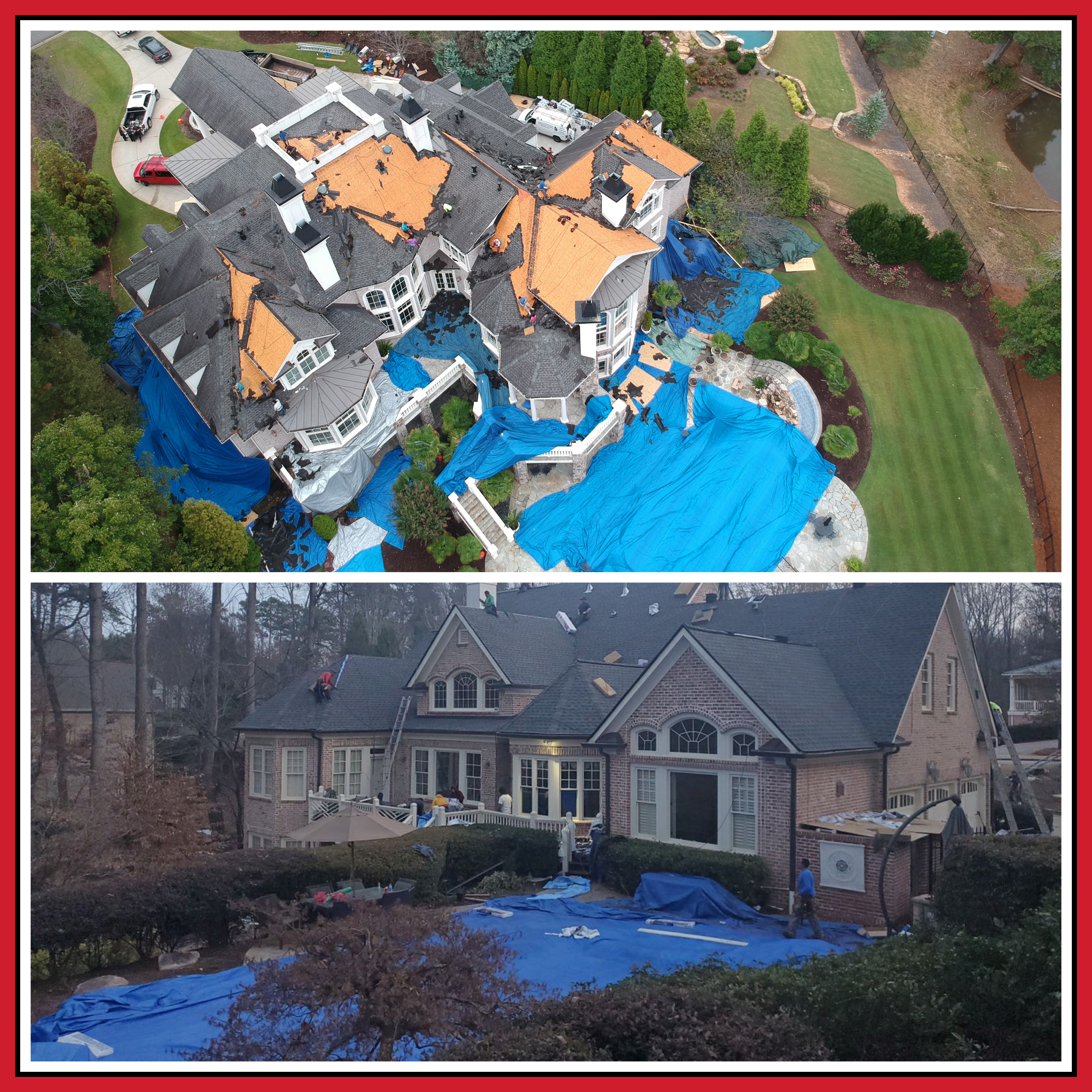
Attic restoration is not the same as restoring a flooded first floor. The confined space, extreme temperatures, limited access, and unique structural components require a crew that knows what they are doing in that environment. Our technicians work in metro Atlanta attics year-round and carry equipment designed specifically for attic access.
Here is how we approach every attic water damage call:
- Emergency assessment and source identification. Before we touch anything, we identify where the water is coming from and stop it. If it is an active roof leak, we tarp or patch the breach. If it is a failed HVAC condensate line, we shut down the system. If storm damage created the opening, we perform emergency repairs to prevent additional water entry. Our lead technician uses infrared thermal imaging to map the full moisture footprint, because water in an attic travels along framing members and spreads far beyond what you can see.
- Contaminated insulation removal. Wet insulation is the first thing that comes out. Saturated blown-in insulation weighs several times its dry weight and holds moisture against every surface it contacts. We use industrial vacuum extraction systems designed for insulation removal. Fiberglass batts are pulled by hand and bagged for disposal. Every square foot of wet insulation must be removed or it will become a mold colony within days.
- Structural drying. With the insulation removed, we can directly access the roof decking, rafters, ceiling joists, and top plates for drying. We position commercial dehumidifiers and high-velocity air movers to pull moisture out of the wood. In summer months, Atlanta attic temperatures actually help the drying process. In winter, we use heated drying systems to maintain optimal evaporation rates. We monitor moisture content daily at dozens of marked points and do not move to the next phase until every surface reads below its dry standard.
- Mold assessment and treatment. If mold is already present on decking or framing, we treat it aggressively. This means mechanical removal of surface mold, application of EPA-registered antimicrobial agents, and HEPA-filtered negative air pressure to prevent spore spread to the living space below. All work follows IICRC S520 mold remediation standards.
- Structural repair. Roof decking that has delaminated or shows signs of rot gets replaced. Rafters or joists that have been structurally compromised are sistered or replaced. We pull permits for structural repairs as required by your local jurisdiction, whether that is Fulton, Gwinnett, DeKalb, or Cobb County.
- Insulation replacement. New insulation goes in to meet or exceed Georgia's current energy code requirements. For most metro Atlanta homes, that means R-38 in the attic floor or R-30 for cathedral ceilings. We install the appropriate type for your attic configuration, whether that is blown-in fiberglass, cellulose, or spray foam for cathedral ceiling applications.
- Ceiling repair below. If the ceiling drywall below the attic sustained water damage, we replace, tape, texture, and paint it to match the existing finish. You should not be able to tell there was ever a problem when we are done.
One company handles every step. No juggling three or four different contractors and hoping they coordinate with each other.
Why Wet Attic Insulation Cannot Be Left in Place
Every few months, a homeowner asks us whether they can just let the insulation dry out instead of replacing it. The answer is no, and here is why that shortcut will cost you far more than replacement.
Fiberglass batt insulation derives its thermal performance from tiny air pockets trapped between glass fibers. When water saturates those fibers, the batts compress and lose their loft. Even after drying, fiberglass batts do not regain their original thickness or R-value. A batt that was R-30 when installed might perform at R-12 or less after a water event. Your energy bills go up, your HVAC system works harder, and you have a hidden comfort problem that persists for years.
Blown-in cellulose insulation is made from recycled paper treated with fire retardant. Paper absorbs water aggressively. Wet cellulose compresses into a dense, heavy mat that sits on your ceiling drywall like a wet blanket. That weight can collapse ceilings. Even if the ceiling holds, the compressed cellulose loses most of its thermal value and becomes an incubator for mold. The fire retardant chemicals leach out when the cellulose gets wet, reducing fire resistance as well.
Blown-in fiberglass handles moisture slightly better than cellulose, but still compresses and loses R-value when saturated. It also holds moisture against the ceiling drywall below, promoting mold growth on the drywall paper facing.
In a typical Sandy Springs or Johns Creek home with 2,000 square feet of attic space, insulation replacement is a significant line item. But leaving wet insulation in place creates ongoing energy waste, mold risk, and potential structural problems that cost far more over the next 5 to 10 years than replacing it now.
Georgia's current energy code (based on IECC 2015 with amendments) requires R-38 for attic insulation in climate zone 3, which covers all of metro Atlanta. When we replace your insulation, we bring it up to current code. Many homes built before 2000 had R-19 or R-24 in the attic. Upgrading to R-38 during restoration represents a genuine improvement in your home's energy performance.
Attic Mold in Georgia: A Problem Built Into the Climate
Georgia's combination of high humidity, warm temperatures, and frequent rain makes attic mold one of the most common problems we encounter across metro Atlanta. You do not need a catastrophic flood to develop attic mold. A slow roof leak, a disconnected exhaust vent, or a single storm event with delayed cleanup can produce a mold problem that costs thousands to remediate.
Attics are the most mold-prone space in any Georgia home for several reasons:
- Trapped heat amplifies mold growth. Summer attic temperatures in Atlanta regularly hit 130 to 150 degrees. Mold species that thrive in Georgia grow fastest between 77 and 86 degrees. Even at the fringes of that range, the elevated temperature accelerates colonization compared to a climate-controlled room below.
- Moisture has nowhere to go. Unlike a flooded living room where you can open windows and run fans, attic moisture is trapped by roofing above and insulation below. Without active mechanical drying, that moisture stays put. Natural ventilation through soffit and ridge vents moves some moisture, but nowhere near enough to dry a water-damaged attic before mold takes hold.
- Organic food sources surround the moisture. Wood rafters, OSB roof decking, paper-faced drywall, cardboard storage boxes, and organic insulation materials are all food for mold. An attic is essentially a buffet for mold spores.
- Spores spread downward through the ceiling. Mold in your attic does not stay in your attic. Spores migrate through ceiling penetrations, recessed light housings, HVAC return air paths, and eventually through the drywall itself. The first sign of attic mold is often a musty smell in the bedroom below or allergy symptoms that worsen at night.
If you suspect mold in your attic, do not go up there without proper respiratory protection. Disturbing an active mold colony releases millions of spores into the air. Call (404) 277-1377 and let our trained remediation crew handle it safely.
Atlanta attics reach 140 to 160 degrees in summer. When water intrusion meets these temperatures, mold growth accelerates dramatically. The combination of extreme heat and trapped moisture makes Georgia attics the fastest environment for mold colonization in the entire home.
Attic Water Damage Spreads Fast. Call Now.
Our emergency crews respond within 60 minutes anywhere in metro Atlanta. We stop the water, remove contaminated insulation, dry the structure, and restore your attic to pre-damage condition.
Attic Water Damage Insurance Claims in Georgia
Filing an insurance claim for attic water damage requires specific documentation that many homeowners and even some contractors fail to provide. The attic is a space your adjuster may not physically enter, which means the evidence you submit with your claim carries even more weight than usual.
Here is how we protect your claim from day one:
- Source documentation. We photograph and document the source of the water intrusion before any repairs begin. A missing shingle, cracked flashing, failed HVAC condensate line, or storm-damaged ridge vent gets photographed in its failed state with timestamps. This establishes the "sudden and accidental" standard that Georgia insurers require for coverage.
- Moisture mapping. We take moisture readings at dozens of points throughout the attic space and create a detailed moisture map showing the full extent of the damage. This map proves to your adjuster that the damage extends beyond what is visible to the naked eye.
- Thermal imaging. Infrared images showing moisture patterns in decking, framing, and insulation provide objective evidence that supports every line item on the restoration estimate. Adjusters respond to data. We give them data.
- Insulation quantification. We measure the total square footage of insulation that must be removed and replaced, document its condition, and reference the Georgia energy code requirements for replacement. This prevents scope disputes about whether insulation replacement is "necessary" or "optional."
- Adjuster coordination. Our project manager meets your adjuster on-site with the complete documentation package. We walk the adjuster through the damage, explain the restoration scope, and ensure every affected area is included in their assessment.
Most standard Georgia homeowners policies cover attic water damage from storms, sudden leaks, and accidental events. Long-term neglect and deferred maintenance are typically excluded. That distinction matters, and our documentation makes it clear which category your damage falls into.
If your claim has already been denied or underpaid, read our guide to denied insurance claims in Georgia. We also offer guidance on insurance claims assistance to help you through the process.
Attic Water Damage Often Means Roof Damage Too
We are a roofing company first. That matters when your attic has water damage, because in the majority of cases we see, the water entered through a roof failure. Most general restoration companies can extract water and dry a space. Very few of them can also identify the roof deficiency that let the water in and fix it properly.
When our crew assesses your attic, we inspect the entire roof system from the inside out:
- Decking condition. Plywood and OSB roof decking that has been wet multiple times develops delamination, soft spots, and rot. You cannot install new roofing on compromised decking. We check every sheet for integrity and replace what needs replacing.
- Rafter and truss condition. Sustained moisture above 20% in wood framing begins the decay process. We measure moisture content in every rafter and truss member in the affected area. Compromised members get sistered or replaced per Georgia building code.
- Ventilation assessment. Improper attic ventilation traps moisture and accelerates damage from any water event. We assess your soffit intake vents, ridge vents, and any powered ventilation to ensure the attic can properly regulate moisture going forward.
- Flashing and penetration inspection. Every roof penetration (chimneys, plumbing vents, HVAC curbs, skylights) gets inspected for flashing failure. If flashing is the source, we repair or replace it with materials rated for Georgia's temperature extremes.
Fixing the water damage without fixing the roof is like mopping a floor while the faucet is still running. We solve both problems in a single scope of work so you do not end up calling us again six months later for the same issue.
Why Atlanta Attics Are More Vulnerable Than You Think
Metro Atlanta's geography and building patterns create attic water damage risks that homeowners in other regions do not face. Understanding these risks helps explain why attic problems develop so quickly here and why professional restoration is not optional.
The red clay factor. Georgia's red clay soil has poor drainage characteristics. During heavy rain events, water pools around foundations and the hydrostatic pressure pushes moisture upward. This seems unrelated to attics until you consider that improperly graded lots and clogged gutters force water against the structure. That water wicks up through wall cavities and reaches the attic through capillary action in framing lumber. We see this regularly in older Buckhead and Roswell neighborhoods where original grading has settled over decades.
Severe storm frequency. Metro Atlanta sits in the northern reach of the Southeast severe storm corridor. We average 50+ thunderstorm days per year, with several producing hail and straight-line winds above 60 mph. Each event is a potential roof breach. Homes in Marietta and Alpharetta with mature tree canopies face the added risk of limb strikes that puncture decking.
Builder shortcuts in 1990s and 2000s construction. The massive building boom across North Fulton, Gwinnett, and Cobb counties during the 1990s and early 2000s produced thousands of homes where builders cut corners on attic details. Bath fan vents terminating inside the attic instead of through the roof. Inadequate soffit ventilation. HVAC ductwork with poor connections that leak conditioned air and moisture into the attic space. These shortcuts create chronic moisture problems that set the stage for catastrophic damage when an acute water event occurs.
The humidity baseline. Even without any water intrusion, metro Atlanta attics carry elevated moisture levels for 8 to 9 months of the year. Average outdoor relative humidity runs 65% to 75% from March through November. Inside an attic, that number can be even higher due to trapped moisture from daily temperature cycling. This means your attic starts from a moisture deficit, and any additional water pushes it over the threshold for mold growth almost immediately.
Mistakes Homeowners Make With Attic Water Damage
We see these mistakes repeatedly from well-intentioned homeowners who try to handle attic water damage on their own. Every one of them makes the situation worse or costs more money in the long run.
- Laying tarps over wet insulation. This traps the moisture underneath and prevents any natural evaporation. The insulation stays wet longer, the mold grows faster, and the ceiling drywall below takes more damage from prolonged moisture contact. If insulation is wet, it needs to come out. Period.
- Running attic fans to dry things out. Attic ventilation fans pull air from the soffit vents and push it out through the roof. When your attic has active mold, running these fans spreads mold spores through the soffit system and potentially into your living space through gaps in the ceiling. Do not run any ventilation fans until the attic has been professionally assessed.
- Walking on wet ceiling drywall from above. Drywall that has been saturated from above loses most of its structural strength. We have responded to calls where homeowners fell through their ceiling while trying to assess attic damage. If the drywall below the attic access point looks wet or stained, stay out of the attic until a professional can assess walking surfaces.
- Removing materials before the adjuster documents the damage. Your insurance claim depends on evidence of the damage. If you rip out wet insulation and damaged drywall before anyone documents it, you have weakened your claim. We document everything with timestamped photos and moisture data before touching any materials.
- Assuming the attic will dry on its own because it is hot up there. Yes, Georgia attics are hot. But heat alone does not remove moisture from inside wood fibers or compressed insulation. It actually helps mold grow faster. Professional drying equipment pulls moisture out of materials at the molecular level. Heat just makes the surface feel dry while the interior remains wet.
The right move is simple: call (404) 277-1377 and let professionals handle it from the start.
Attic Water Damage Restoration Across Metro Atlanta
Our crews respond to attic water damage emergencies 24 hours a day, 7 days a week, across every community within our 30-mile metro Atlanta service radius. We know the building patterns, common roof systems, and specific attic challenges in each area we serve:
- Alpharetta: Large estate homes with expansive attic spaces, complex roof lines, and multiple HVAC systems in the attic. Homes in Windward, The Manor, and Country Club of the South are frequent service calls after storm events.
- Buckhead: Historic homes with original slate and tile roofs alongside newer construction. Attic access is often limited in older Buckhead estates, requiring specialized equipment for insulation removal and structural drying.
- Sandy Springs: Executive homes along the Chattahoochee corridor with steep-pitched roofs and cathedral ceiling spaces that require different drying approaches than standard vented attics.
- Johns Creek: Newer construction in planned communities with attic-mounted HVAC systems. Condensate failures are a leading cause of attic water damage in Johns Creek homes built after 2000.
- Roswell: A mix of 1980s and 1990s homes along Highway 9 with aging roofing systems and homes in newer developments like Brookfield and Crabapple. Both vintage homes and newer builds face attic water risks.
- Marietta: From the historic district to East Cobb neighborhoods, attic water damage from storm events and aging roofs keeps our crews busy across all of Cobb County.
If your attic is wet right now, call (404) 277-1377. We will be there within the hour.
Attic Water Damage Restoration FAQ
How do I know if my attic has water damage?
Look for water stains on your ceiling below the attic, peeling paint, sagging drywall, musty odors from above, or daylight visible through the roof decking. Dark stains on rafters or decking, wet or compressed insulation, and visible mold on wood surfaces are all signs of active or recent water intrusion. If you spot any of these, call (404) 277-1377 for a professional inspection before the damage spreads.
Does homeowners insurance cover attic water damage in Georgia?
Most Georgia homeowners policies cover sudden and accidental attic water damage, such as a tree limb puncturing your roof during a storm or a sudden pipe failure in the attic space. Damage from long-term neglect is typically denied as a maintenance issue. We document every job with timestamped photos, moisture readings, and thermal imaging so your adjuster can verify the damage was sudden and accidental.
How quickly does mold grow in a wet Atlanta attic?
In metro Atlanta's humidity, mold spores can colonize wet attic wood and insulation within 24 to 48 hours. Attics are especially vulnerable because they trap heat and moisture, creating the exact conditions mold needs to thrive. By 72 hours, visible mold colonies are common on roof decking, rafters, and organic insulation material. Immediate professional drying is the only reliable way to prevent mold colonization.
Can wet attic insulation be saved or does it need replacement?
In most cases, wet attic insulation must be replaced. Fiberglass batts lose their loft and R-value permanently when saturated. Blown-in cellulose absorbs water and compresses into a dense mat that will not recover. Even after drying, the thermal performance is significantly degraded and the material has become a mold risk. We recommend full removal and replacement to current Georgia energy code standards.
How long does attic water damage restoration take?
A typical attic water damage restoration in metro Atlanta takes 1 to 3 weeks depending on scope. Emergency extraction and insulation removal happen on day one. Structural drying runs 3 to 5 days with daily moisture monitoring. Roof repair, decking replacement, insulation installation, and ceiling repair follow once all materials reach their dry standard. We handle every phase in-house.
More Water Damage and Emergency Resources
Roof Leak Water Damage
Emergency response for active roof leaks flooding your attic and living spaces.
Burst Pipe Emergency
24/7 emergency extraction and restoration for burst pipe flooding.
Bathroom Water Damage
Restoration for bathroom flooding, pipe failures, and fixture leaks.
Kitchen Water Damage
Emergency restoration for kitchen flooding and appliance failures.
Basement Flooding
Full-service basement water extraction, drying, and restoration.
Water Damage Restoration
Full-service water damage restoration for metro Atlanta homeowners.
Insurance Claims Help
We handle your insurance claim paperwork, documentation, and adjuster meetings.
Insurance Claim Denied?
Steps to take when your Georgia insurance claim gets denied or underpaid.
Your Attic Is Feeding Mold Right Now. Stop It Today.
Every hour water sits in your attic, the damage compounds. Insulation fails. Wood rots. Mold colonizes. Call 1 Source Roofing and Restoration right now for 24/7 emergency response.