

Roof Flashing Repair in Sandy Springs, GA
Manufacturer-specification flashing repair for Sandy Springs' luxury homes and mid-century renovations. Stucco, stone, and brick expertise. Lasting waterproofing.
Certified by Industry-Leading Manufacturers
Why Roof Flashing Fails on Sandy Springs Homes
Sandy Springs sits at the southern edge of North Fulton County, bordered by the Chattahoochee River to the north and Buckhead to the south, and its housing stock reflects a residential evolution that creates some of metro Atlanta's most varied flashing challenges. The city's residential core includes thousands of mid-century ranch homes built in the 1950s and 1960s along the Powers Ferry and Mount Vernon Highway corridors, many of which have been substantially renovated or expanded over the past two decades. These renovations are where flashing problems originate. When a 1960s ranch gets a second-story addition, a new roofline extension, or a sunroom that connects to the original roof, every junction between old construction and new construction becomes a high-risk point for water infiltration if the flashing is not installed to manufacturer specification.
The exterior material landscape in Sandy Springs compounds the challenge. The original mid-century ranches were predominantly brick — straightforward for flashing integration. But the renovations and new luxury builds that now surround them have introduced stucco and stone veneer as dominant exterior materials throughout the Riverside neighborhood, along Mount Vernon Highway, and in the newer developments near the city center. Stucco and stone present the most complex flashing scenarios of any exterior materials. Neither can be removed and reinstalled the way you handle Hardie board planks or vinyl siding. Flashing work on stucco requires cutting into the wall surface, and stone veneer demands careful integration behind the mortar bed without disturbing the stone facing. Both require a contractor who understands masonry as well as roofing.
Sandy Springs also has a significant inventory of luxury new builds constructed since the city's incorporation in 2005. These homes often feature complex architectural designs with multiple roofline intersections, dormers, covered entries, and mixed exterior materials on a single structure — stone on the front elevation, stucco on the sides, and Hardie board on the rear. Each material transition creates an additional flashing junction, and each junction is a potential failure point. A home with four or five different roof-to-wall transitions has four or five opportunities for water infiltration if any of those junctions was not flashed to spec during original construction.
GAF manufacturer specifications require ice and water shield to extend a minimum of 5 inches up the sidewall at every roof-to-wall junction. That membrane creates a waterproof barrier beneath the step flashing that prevents wind-driven rain from reaching the wall sheathing even if the metal flashing is compromised. Contractors who skip this step or who run the membrane only 2 or 3 inches up the wall create an installation that looks correct on the surface but will fail under Georgia storm conditions. 1 Source follows manufacturer specifications without shortcuts on every flashing project in Sandy Springs. Call (404) 277-1377 to schedule your free inspection.
How We Repair Roof Flashing the Right Way
Flashing repair is not a tube of caulk and a hope for the best. When 1 Source repairs flashing on a Sandy Springs home, we trace the water path to the root cause and rebuild the flashing system to manufacturer specification. Here is how our process works from initial call through final documentation:
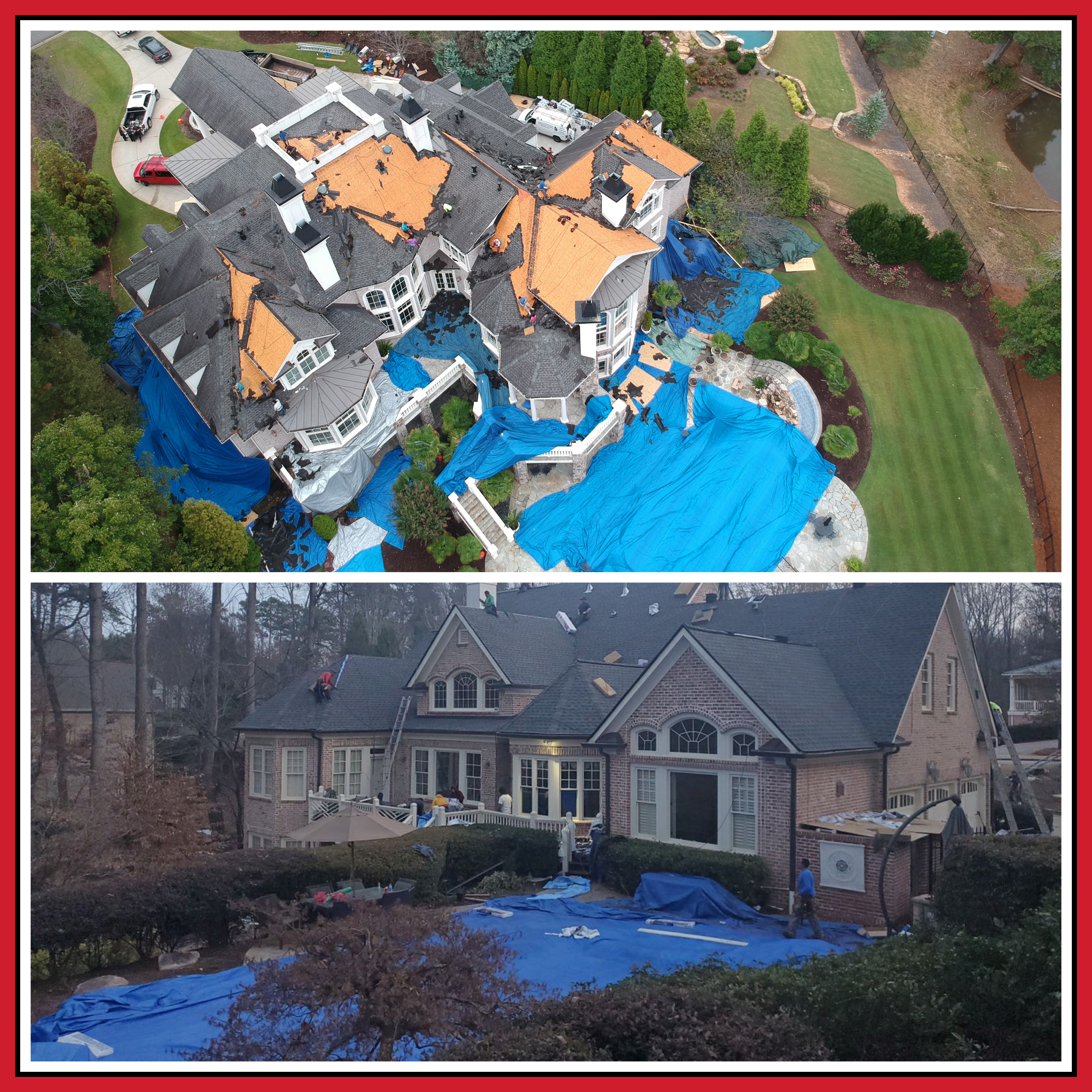
- Free Flashing Inspection We examine the entire roof-to-wall junction system, chimney surrounds, and all penetration points on your Sandy Springs home — not just the area where you noticed water. We pay particular attention to junctions between original construction and additions, which are the highest-risk points on renovated mid-century homes along the Powers Ferry and Mount Vernon corridors. Drone photography documents conditions on steep-pitch and multi-level homes where ladder access is limited.
- Damage Assessment & Documentation Every area of concern is photographed and documented in a written report. If the damage qualifies as storm-related, this documentation becomes the foundation of your insurance claim. We note the exterior wall material at each junction — brick, stucco, stone veneer, or Hardie board — because each material dictates the repair methodology and the scope of work required.
- Siding Removal or Stucco Cutting (When Required) On Sandy Springs homes with Hardie board, vinyl, or other removable cladding, the siding must be removed above and adjacent to the flashing repair area. Step flashing installed over the top of siding rather than behind it will leak. On stucco homes, we cut into the stucco to access the flashing plane rather than attempting a surface-mounted repair that will fail. On stone veneer, we work behind the stone facing through the mortar bed to integrate flashing without disturbing the stone.
- Ice & Water Shield Application GAF-specification ice and water shield membrane is applied a minimum of 5 inches up the sidewall, extending onto the roof deck surface. This creates the waterproof underlayment that protects the junction even under the wind-driven rain conditions that hit Sandy Springs during summer thunderstorms and fall storm systems moving through the Chattahoochee corridor.
- Step Flashing Installation New step flashing is woven into the shingle courses and integrated with the wall cladding per manufacturer specifications. Each piece overlaps the one below it by the prescribed minimum distance, and kick-out flashing is installed at the base of every step flashing run to direct water into the gutter system rather than behind the exterior wall cladding. This kick-out detail is frequently omitted by contractors and is one of the primary causes of wall cavity moisture damage on Sandy Springs homes.
- Exterior Restoration & Final Inspection Removed siding is reinstalled and sealed. On stucco homes, the stucco is patched and finished to match the existing wall texture and color. On stone veneer, mortar joints are repointed to their original appearance. We conduct a final walkthrough with the homeowner and provide written documentation of all work performed, materials used, and warranty terms.
Flashing Repair by Exterior Type in Sandy Springs
Sandy Springs' housing stock encompasses nearly every exterior material used in residential construction over the past seven decades. The original mid-century ranches, the renovation-era additions, and the luxury new builds each bring different materials to the table, and each material demands a specific flashing integration approach.
Stucco Exteriors
Stucco has become the dominant exterior material on luxury homes and high-end renovations throughout Sandy Springs, particularly in the Riverside neighborhood and along Mount Vernon Highway. The Mediterranean, European farmhouse, and contemporary designs that define Sandy Springs' newer housing stock rely heavily on stucco for their exterior aesthetic. Stucco is also the highest-risk exterior material for flashing failures because it completely conceals the flashing integration. When a stucco home's flashing fails, you do not see it from the outside. The first visible sign is water damage on interior walls, and by the time that damage appears, moisture has been infiltrating the wall cavity for months. Flashing repair on stucco homes requires cutting into the stucco, performing the flashing work behind the wall surface, and then patching and finishing the stucco to match the existing texture and paint color. This is specialized work that sits at the intersection of roofing and stucco trades. We detail this process on our dedicated stucco flashing page.
Stone Veneer and Natural Stone
Stone veneer is the other signature material of Sandy Springs' luxury market. You see it on front elevations throughout the Powers Ferry corridor, on estate homes near the river, and mixed with stucco on contemporary builds near the city center. Stone veneer presents a unique flashing challenge: the stone is adhered to the wall with a mortar bed, and the flashing must integrate behind the stone facing without disturbing the mortar bond. Counter flashing on stone walls is set into a reglet cut in the mortar joint between stone pieces, similar to the approach on brick but requiring more precision because the mortar joints between stones are often irregular in width and depth. When stone veneer flashing fails, repair involves carefully removing mortar around the counter flashing, resetting the flashing in fresh mortar, and repointing the joint to match the surrounding stonework. This is detail work that cannot be rushed without risking the stone facing.
Brick Ranch Homes
The original mid-century brick ranches along Powers Ferry Road, Roswell Road, and throughout Sandy Springs' established neighborhoods offer the most straightforward flashing integration. Step flashing tucks into reglet cuts in the mortar joint, and counter flashing is set in mortar and sealed. Brick does not need to be removed for flashing access. However, many of these ranches have been renovated with additions that use different exterior materials than the original brick. The junction between the original brick wall and a Hardie board or stucco addition is a high-risk flashing point because the materials require different integration approaches, and the transition between them must be waterproofed with particular care at the material change. Our sidewall flashing page covers these multi-material transitions in detail.
Hardie Board and Mixed Cladding
Sandy Springs' renovated homes frequently combine multiple exterior materials — brick on the original structure, Hardie board on the addition, stucco on a second-story bump-out. Each material transition creates an additional flashing consideration, and the point where two different cladding types meet on the same wall is often the weakest link in the flashing system. Hardie board planks must be removed to access the flashing behind them, and they need to be reinstalled after the flashing work is complete. The planks are fastened with blind nails and can be carefully removed without damage when handled by a crew familiar with the product. The critical detail is ensuring the step flashing integrates behind the Hardie board — not over it — so that water running down the wall face cannot reach the flashing junction beneath the cladding.
Flashing Challenges on Renovated Mid-Century Homes
Sandy Springs' mid-century ranch homes represent a particular flashing challenge that deserves focused attention. Thousands of these homes were built along Powers Ferry Road, Mount Vernon Highway, and the residential streets between them during the 1950s and 1960s. They were constructed as single-story brick ranches with simple rooflines — typically a single gable or hip roof with minimal roof-to-wall junctions. The original flashing on these homes was often basic by today's standards: a single piece of counter flashing set in the mortar joint with minimal or no ice and water shield beneath it.
Over the past 20 years, many of these ranches have been substantially renovated. Second-story additions, rear extensions, covered porches, mudroom bump-outs, and detached garage connections have transformed simple single-story structures into complex multi-level homes with numerous new roof-to-wall junctions. Each of those junctions is a potential failure point, and the quality of the flashing at each junction depends entirely on the skill and diligence of the renovation contractor who built the addition.
We see a consistent pattern on renovated Sandy Springs ranches: the original brick portions of the home have adequate flashing that has held up for decades, while the newer addition sections — particularly where they connect to the original roofline — show flashing failures within 10 to 15 years. The reason is straightforward. The original flashing was installed by crews who specialized in new construction and understood how to integrate flashing with brick. The renovation additions were often built by general contractors whose crews may not have had the same flashing expertise, particularly when the addition used stucco or Hardie board rather than the original brick. The result is a home where the 60-year-old flashing on the original structure is outperforming the 12-year-old flashing on the addition.
1 Source inspects these renovation junctions with particular scrutiny on every Sandy Springs project. The transition point between original construction and addition is always the first area we examine, because it is statistically the most likely failure point on a renovated mid-century home. Call (404) 277-1377 to schedule your inspection.
Why Proper Siding Integration Is Non-Negotiable for Flashing
The single most common shortcut in residential flashing work is installing step flashing over existing siding rather than behind it. Contractors take this shortcut because removing siding adds labor hours, requires familiarity with the specific cladding material, and sometimes reveals additional damage beneath the siding that expands the project scope. The homeowner receives a flashing installation that appears complete from the exterior but has a fundamental flaw: water running down the wall face can flow behind the step flashing and reach the roof-to-wall junction that the flashing was supposed to protect.
On Sandy Springs homes — where stucco, stone veneer, and Hardie board are the predominant non-masonry materials — this shortcut takes different forms depending on the cladding. On stucco homes, the shortcut is surface-mounting flashing against the stucco face with a bead of sealant rather than cutting into the stucco to integrate the flashing behind the wall plane. That sealant will crack and separate within two to three Georgia summers, and the flashing becomes nothing more than a decorative strip with no waterproofing function. On Hardie board homes, the shortcut is running step flashing over the planks rather than removing the planks to install flashing against the wall sheathing beneath them.
1 Source does not take these shortcuts on any Sandy Springs project. On stucco homes, we cut into the stucco, install ice and water shield up the wall the full 5 inches required by GAF specifications, install the step flashing against the sheathing, and patch the stucco to match the existing wall texture and color. On Hardie board homes, we remove the planks, perform the flashing work against the sheathing, and reinstall the planks over the completed flashing system. The additional labor is built into our estimates from the beginning. When insurance is covering the repair, we document the full scope — including stucco cutting, patching, and repainting — in the initial claim submission so the adjuster approves the complete cost before work begins.
When the stucco patching or siding reinstallation is extensive enough that the repaired sections will not match the surrounding wall, insurance policies may also cover the cost of painting the affected wall sections to restore uniform appearance. This is a legitimate component of restoring the home to its pre-damage condition, and 1 Source includes it in the scope documentation submitted to your insurance carrier. Learn more about our approach to insurance claims assistance.
Concerned About Flashing on Your Sandy Springs Home?
Free inspections for homeowners in Riverside, Powers Ferry, Mount Vernon Highway, and all Sandy Springs neighborhoods. We examine every roof-to-wall junction including renovation transitions and multi-material exteriors.
Schedule Your Free InspectionThe GAF Ice and Water Shield Requirement Explained
Every major shingle manufacturer publishes installation specifications that define exactly how flashing must be integrated with the roof system to maintain warranty coverage. GAF — whose products are installed on a substantial percentage of Sandy Springs homes — requires that ice and water shield membrane extend a minimum of 5 inches up the sidewall at roof-to-wall junctions before step flashing is applied. This is not a recommendation or a suggested best practice. It is a specification, and failing to follow it voids the manufacturer warranty on the affected area of the roof system.
The ice and water shield creates a self-sealing, waterproof membrane at the roof-to-wall junction. When step flashing is installed over this membrane, the junction has two layers of defense: the metal flashing that directs water down the roof surface, and the membrane beneath that prevents any water passing the flashing from reaching the wall sheathing. Without adequate ice and water shield, the step flashing is the sole barrier — and a single point of failure at any flashing piece allows direct water contact with the wall structure behind it.
We encounter Sandy Springs homes regularly where the original flashing installation or a renovation-era flashing job used ice and water shield but applied it only 2 to 3 inches up the wall instead of the required 5 inches. On stucco homes, where the flashing integration is hidden behind the wall surface, this shortfall is invisible from the exterior. The only way to know whether the ice and water shield extends the full 5 inches is to cut into the stucco and check — or to wait until water damage appears on the interior wall and trace it back to the source. The 5-inch minimum exists because manufacturers tested the conditions under which water bypasses step flashing, and 5 inches provides the necessary safety margin for high-wind rain events common during Atlanta-area storm seasons.
1 Source measures and photographs ice and water shield application height on every flashing installation. This documentation is included in your project file and serves as proof of manufacturer-specification compliance if a warranty claim ever becomes necessary. For more on our flashing installation standards across metro Atlanta, see our comprehensive flashing guide. Our commitment to specification compliance is documented on our technical standards page.
Storm Damage, Flashing Claims, and Insurance in Sandy Springs
Sandy Springs receives the same severe weather that tracks through the metro Atlanta corridor — hail, high winds, and fallen tree debris that impacts roofing surfaces and flashing components with regularity. The mature tree canopy throughout Sandy Springs' established neighborhoods, particularly the towering oaks and pines along Mount Vernon Highway and through the Powers Ferry area, produces storm debris with every significant weather event. Branches, limbs, and displaced pine cones impact flashing at chimney surrounds, sidewall junctions, and pipe boots, and the damage is covered under standard Georgia homeowner's insurance policies when properly documented and tied to a specific storm event.
The critical factor in any flashing-related insurance claim is documentation quality. Many homeowners do not realize that flashing damage is often part of a larger storm damage claim, and the scope of flashing repair — particularly on stucco and stone homes where exterior restoration is required — can significantly increase the total claim value when it is properly identified and documented. A flashing repair on a stucco Sandy Springs home that includes stucco cutting, patching, and repainting of the affected wall section represents a materially different claim value than a simple metal flashing replacement on a brick wall.
1 Source provides photo and written documentation of every damaged flashing point, cross-referenced to the storm event date and local weather records from the National Weather Service. We attend the adjuster meeting at your Sandy Springs home with this documentation organized and ready, and we walk the adjuster through each damaged area to ensure the claim scope reflects the full repair needed — including exterior material removal or cutting, ice and water shield application, step flashing replacement, exterior restoration, and painting when required by the scope of work.
When extensive stucco work or stone veneer repointing is required to properly repair flashing, insurance may cover painting of the affected wall sections to restore the home to pre-damage condition. Mismatched stucco patches or visible mortar repairs do not meet that standard, and 1 Source includes painting scope in the initial claim documentation rather than discovering it as a mid-project afterthought. For details on how we manage the full claims process, see our insurance claims assistance page.
Types of Flashing Repair We Perform in Sandy Springs
Flashing is not a single component. It is a system of integrated metal pieces that protect every junction, penetration, and transition on your roof. Each type serves a distinct purpose and fails in characteristic ways. Here is how we approach each type on Sandy Springs homes.
Step Flashing at Sidewalls
Step flashing is the L-shaped metal piece woven into each shingle course where the roof meets a vertical wall. On Sandy Springs homes with stucco exteriors, step flashing repair requires cutting into the stucco, applying ice and water shield 5 inches up the wall, installing new step flashing woven with the shingle courses, and patching the stucco to match the existing finish. On Hardie board homes, the process involves removing the siding planks, performing the flashing work, and reinstalling the planks. Kick-out flashing at the base of every step flashing run directs water into the gutter system rather than behind the exterior cladding. This detail is frequently omitted by other contractors and is one of the primary causes of wall cavity moisture damage on Sandy Springs homes. Learn more about our sidewall flashing installation approach.
Chimney Flashing
Chimney flashing failures are the most common source of interior water damage on Sandy Springs homes with masonry chimneys. The mid-century ranches and their renovated successors often feature brick chimneys with flashing systems that have been in service for 40 to 60 years on the original portions of the home. The flashing system includes base flashing around the chimney perimeter, step flashing along the sides, counter flashing set into the mortar joints, and a cricket or saddle on the upslope side that diverts water around the chimney mass. When any component fails, water enters through the chimney chase and damages ceilings, walls, and structural framing around the chimney opening. We detail our chimney-specific methodology on our chimney flashing installation page.
Valley Flashing
Where two roof planes meet to form a valley, flashing directs the concentrated water flow down and off the roof. Valley flashing on Sandy Springs homes with complex rooflines — particularly the multi-gable luxury builds near Riverside and the expanded ranches with additions that create new valley intersections — handles high-volume water flow during heavy rainfall. Corroded, creased, or improperly overlapped valley flashing allows water beneath the shingle field, causing deck rot and interior leaks that are often misidentified as shingle failure when the actual problem is at the valley flashing junction beneath the shingle overlap.
Pipe Boot and Penetration Flashing
Every plumbing vent, HVAC penetration, and exhaust port through your roof is sealed with a flashing boot or custom-fabricated flashing collar. The rubber gaskets on standard pipe boots degrade in Georgia's UV exposure within 10 to 15 years. Sandy Springs' mid-century ranches that have not had a full roof replacement are well past this threshold, and even renovated homes may have original pipe boots on the portions of the roof that were not touched during the renovation work. Cracked and split pipe boots are one of the most common and most easily prevented sources of roof leaks on Sandy Springs properties. Replacement is straightforward and should be included in any comprehensive flashing evaluation. Read more about our standards on the step flashing installation page.
Flashing Repair Across Sandy Springs Neighborhoods
Sandy Springs stretches from the Chattahoochee River on its northern border southward to the Buckhead city limit, encompassing neighborhoods that range from original mid-century residential developments to luxury new construction. The flashing challenges vary with the age, construction style, and exterior materials of each area. 1 Source has repaired and replaced flashing on homes throughout Sandy Springs and understands the specific building stock in each neighborhood.
Riverside
The Riverside neighborhood occupies some of Sandy Springs' most coveted real estate along the Chattahoochee River. The homes here are predominantly luxury construction from the 1990s through the 2010s, featuring stucco and stone exteriors with complex rooflines and multiple sidewall junctions. The river proximity means elevated humidity at the roof surface, which accelerates corrosion of exposed metal flashing and degrades sealant compounds faster than homes further from the water. Flashing on Riverside homes requires the stucco and stone expertise that most general roofing contractors lack. We inspect every junction on these properties and provide detailed documentation of each flashing point's condition so homeowners understand the full scope of any needed repairs.
Powers Ferry Corridor
The residential areas along Powers Ferry Road include a cross-section of Sandy Springs' housing evolution. Original 1950s and 1960s brick ranches sit alongside extensively renovated properties and new-construction luxury homes. The renovated ranches present the most interesting flashing challenges — junctions between original brick construction and newer additions, transitions between different roof pitches where the original structure meets the expansion, and mixed exterior materials where the original brick gives way to stucco or Hardie board on the expanded portions of the home. We have worked on numerous renovation-era flashing repairs along the Powers Ferry corridor and understand the specific failure patterns these transitional structures exhibit.
Mount Vernon Highway Area
The neighborhoods flanking Mount Vernon Highway feature some of Sandy Springs' most architecturally diverse residential construction. You will find preserved mid-century ranches next to teardown-and-rebuild luxury homes, with renovated properties at every point between those extremes. The newer builds in this area frequently feature mixed cladding — stone veneer on the front elevation, stucco on the sides, and Hardie board on the rear. Each material transition creates a flashing consideration, and the point where two cladding types meet is often the weakest link in the entire roofing system. Our crews have direct experience with the multi-material transitions common on Mount Vernon Highway area properties.
North Sandy Springs
The northern sections of Sandy Springs approaching the Roswell border include established neighborhoods with larger lots and mature landscaping. These properties often feature traditional colonial and transitional designs with brick and stone exteriors, steep-pitch rooflines, and multiple chimney penetrations. The mature tree canopy drops organic debris onto roof surfaces throughout the year, and that debris accumulates at flashing junctions where it traps moisture against the metal and accelerates the corrosion that leads to flashing failure. We recommend annual flashing inspections for north Sandy Springs properties with heavy tree coverage to catch deterioration before it leads to interior water damage.
Whether your home is an original ranch along Roswell Road, a renovated property near Powers Ferry, or a luxury new build in the Riverside area, 1 Source provides the same manufacturer-specification flashing repair on every project. We are based in Lawrenceville and our crews work in Sandy Springs regularly. Call (404) 277-1377 to schedule your inspection. For a comprehensive look at all our services in your area, visit our Sandy Springs roofing services page.
Sandy Springs Homeowners on Their 1 Source Experience
"We had a stucco home near Riverside with water stains appearing on the master bedroom wall after every hard rain. Two contractors wanted to tear off sections of the roof. 1 Source identified the flashing failure at the sidewall, cut into the stucco, installed the ice and water shield properly, and patched the stucco so well you cannot tell the wall was touched. Problem solved."
Robert K. — Riverside, Sandy Springs
"Our 1960s ranch had a second-story addition built in 2010, and the junction between the original roof and the addition leaked every spring. 1 Source found the step flashing at the transition was installed over the Hardie board instead of behind it. They did it right — removed the siding, ran ice and water shield up the wall, rewove the step flashing. Insurance covered the full repair."
Catherine D. — Powers Ferry area, Sandy Springs
Frequently Asked Questions About Roof Flashing Repair in Sandy Springs
Answers to the questions Sandy Springs homeowners ask most about flashing repair
Why do Sandy Springs homes with stucco and stone exteriors need specialized flashing repair?
Sandy Springs has a high concentration of stucco and stone-veneer homes, particularly along Mount Vernon Highway and in the Riverside and Powers Ferry neighborhoods. Stucco cannot be removed and reinstalled like Hardie board — flashing repair requires cutting into the stucco, performing the flashing work behind the wall surface, and then patching and finishing the stucco to match. Stone veneer presents similar challenges because the flashing must integrate behind the stone facing without disturbing the mortar bed. Both require a contractor with roofing and masonry skills. Call 1 Source at (404) 277-1377 for a free inspection.
How much does roof flashing repair cost in Sandy Springs?
Flashing repair costs in Sandy Springs depend on the flashing type, your home's exterior material, and the extent of water damage already present. A step flashing repair on a brick ranch along Powers Ferry Road costs considerably less than a full sidewall flashing replacement on a stucco home near Riverside that requires stucco cutting, patching, and repainting. We provide detailed written estimates before any work begins. Call (404) 277-1377 to schedule your free inspection.
Does insurance cover roof flashing repair in Sandy Springs?
If your flashing damage resulted from a storm event — wind, hail, or fallen debris — your homeowner's insurance policy typically covers the repair. When extensive stucco or siding work is required to properly install new flashing, insurance may also cover the cost of painting the affected wall sections to match the existing exterior. 1 Source attends every adjuster meeting to ensure your claim scope includes all necessary work. Call (404) 277-1377.
What is the GAF ice and water shield requirement for roof flashing?
GAF manufacturer specifications require ice and water shield membrane to extend a minimum of 5 inches up the sidewall before step flashing is installed. This creates a waterproof barrier at the critical roof-to-wall junction where most flashing leaks originate. Many contractors skip this step or apply insufficient coverage, which voids the manufacturer warranty. 1 Source follows GAF specifications exactly on every flashing installation in Sandy Springs and documents the application height photographically.
How do I know if my Sandy Springs home's roof flashing needs repair?
Common signs of flashing failure on Sandy Springs homes include water stains on interior walls near where the roof meets a sidewall, damp spots in the attic along wall junctions, peeling paint on exterior walls below roofline intersections, and visible rust or separation in exposed flashing metal. Mid-century ranch renovations along Powers Ferry and Mount Vernon Highway are particularly susceptible because renovation additions often create flashing junctions that were not installed to current manufacturer specifications. Schedule a free inspection by calling (404) 277-1377.