

Roof Flashing Repair in Marietta, GA
From historic Marietta Square homes to East Cobb estates — manufacturer-specification flashing repair for every era of Marietta construction.
Certified by Industry-Leading Manufacturers
Why Marietta's Housing Stock Creates Unique Flashing Challenges
Marietta's residential landscape spans a wider range of construction eras than almost any other metro Atlanta community. Within a 15-minute drive, you move from the historic homes surrounding Marietta Square — some built in the 1920s and 1930s with original brick, wood siding, and lime mortar — through the mid-century ranch neighborhoods of the 1960s and 1970s, into the sprawling subdivisions of East Cobb developed from the 1980s through the 2000s, and finally to the recent luxury builds in neighborhoods near Indian Hills Country Club and the Walton High School district. Each era of construction brought different flashing materials, installation methods, and exterior cladding standards.
The practical implication is that a roofing contractor working in Marietta must be competent with flashing systems that span 80 years of building practice. Original flashing on a 1950s ranch home near Marietta Square may be tin or terne-coated steel, set in lime-based mortar on the chimney. The same contractor's next project may be a 2005-era Hardie board colonial in East Cobb that requires modern step flashing woven behind fiber cement siding with ice and water shield membrane on the sheathing. These are fundamentally different repair scenarios, and a crew that excels at one may be unfamiliar with the other.
Cobb County's storm exposure adds urgency to flashing maintenance. The county sits in one of metro Atlanta's most active severe weather corridors. Hail events, high-wind thunderstorms, and occasional tornado activity affect Marietta with enough regularity that storm-related flashing damage is a persistent concern. Homes on exposed ridgelines in East Cobb — particularly in the neighborhoods south of Johnson Ferry Road and east of Roswell Road — experience amplified wind exposure that accelerates flashing deterioration and increases the probability of wind-driven rain penetration at compromised junctions.
The mix of traditional brick construction and newer siding-clad homes throughout Marietta means that the siding removal requirement affects a substantial portion of the housing stock. Homes with vinyl siding, Hardie board, cedar shake, or any non-masonry cladding require siding removal for proper step flashing installation. Contractors who install flashing over the top of siding — rather than behind it — create an installation that will fail under Cobb County storm conditions. 1 Source removes siding on every non-masonry flashing repair in Marietta. Call (404) 277-1377 to schedule your inspection.
Flashing Repair on Older Marietta Homes
The neighborhoods within a mile of Marietta Square contain some of the most architecturally significant residential properties in Cobb County. These older homes present flashing challenges that newer construction does not: original flashing metals that have corroded over decades, lime-based mortar that crumbles when disturbed, wood structural members that may have sustained concealed moisture damage over years of slow flashing deterioration, and construction details that predate modern building codes and manufacturer specifications.
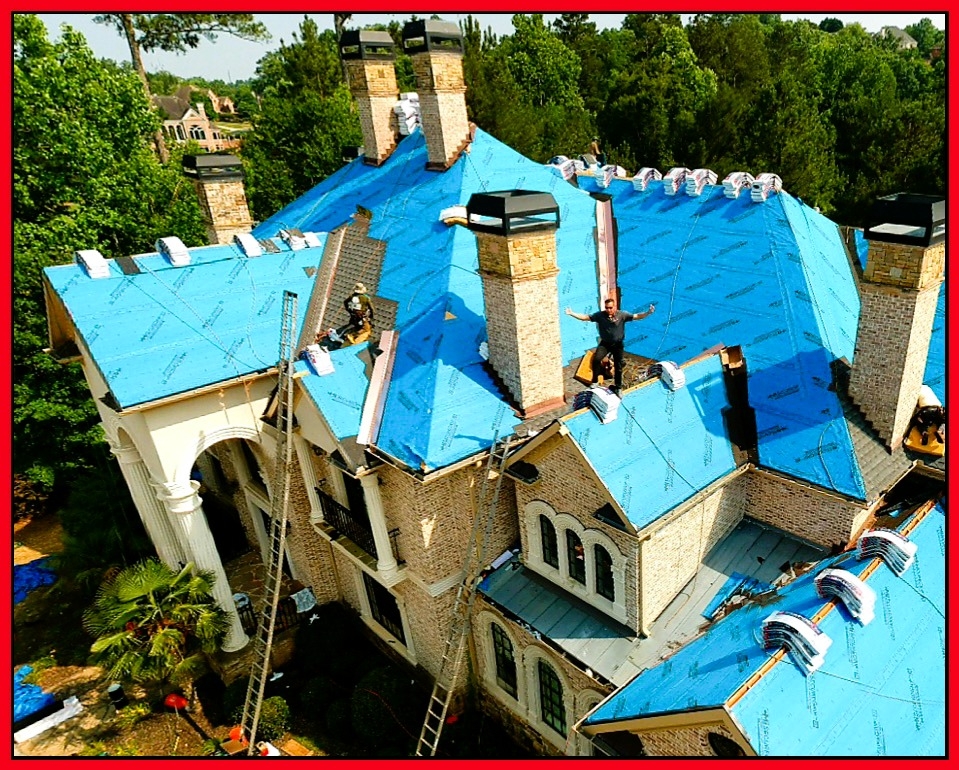
Chimney flashing on historic Marietta homes is often the most pressing concern. Masonry chimneys on homes built before 1960 typically used tin or terne-coated steel flashing set in lime mortar. The mortar deteriorates over decades, loosening the counter flashing from the chimney face. The original flashing metal may be corroded beyond functional life. Repairing these chimneys requires repointing mortar joints with lime-compatible mortar — not modern portland cement, which is too rigid for older brick and causes cracking — and installing new counter flashing that integrates with the chimney's aged masonry without causing further damage.
Homes built in the 1960s and 1970s throughout Marietta's mid-century ranch neighborhoods often have minimal flashing systems by modern standards. Single-story ranch homes with simple gable roofs may have only a chimney, one or two pipe boots, and perhaps a single sidewall junction as their entire flashing inventory. But these limited flashing points have been exposed to 50 or more years of Georgia weather, and the original materials — galvanized steel in many cases — have long since exhausted their corrosion resistance. Replacement with modern aluminum or coated steel flashing, combined with ice and water shield membrane that the original installation lacked, brings these homes up to current manufacturer specifications.
1 Source has repaired flashing on homes across Marietta's full construction spectrum. Our crews understand the difference between working on a 1940s brick bungalow near Kennesaw Avenue and a 2010 Hardie board colonial in East Cobb. Each requires different materials, different techniques, and a different level of care with the existing structure. For more on our approach to flashing across different construction eras, see our Atlanta flashing installation guide.
How 1 Source Repairs Flashing on Marietta Homes
Whether your home is a 1970s ranch in Marietta or a 2015 colonial in East Cobb, our flashing repair process ensures manufacturer-specification results:
- Comprehensive Inspection We examine every flashing junction — chimney surrounds, sidewall transitions, pipe boots, valleys — and identify the construction era and exterior materials at each junction. Drone photography documents upper-story and steep-pitch areas.
- Written Assessment & Estimate Every area of concern is documented with photos and a written report. The estimate specifies the repair methodology for each junction based on its exterior material and current condition. No vague allowances — every cost is defined before work begins.
- Siding Removal (Non-Masonry Walls) On Marietta homes with vinyl, Hardie board, cedar shake, or any non-masonry cladding, siding is removed to access the flashing layer. This step is required for proper step flashing integration behind the wall cladding.
- Ice & Water Shield Application GAF-specification ice and water shield extends 5 inches minimum up the sidewall. On older Marietta homes that predated this specification, the membrane is installed for the first time — bringing the flashing system up to current manufacturer standards.
- Flashing Installation New step flashing is woven into shingle courses. Counter flashing is set into mortar joints on brick and stone — using lime-compatible mortar on older masonry. Kick-out flashing is installed at every run termination.
- Siding Reinstallation & Final Walkthrough Removed siding is reinstalled and sealed. Stucco is patched where applicable. A final walkthrough confirms performance and aesthetic standards are met. Written documentation with photos is provided.
Flashing Repair in East Cobb
East Cobb is the residential heart of Marietta's luxury housing market. The neighborhoods east of Roswell Road and south of Lower Roswell Road — including the communities near Indian Hills Country Club, the subdivisions within the Walton High School district, and the established neighborhoods along Paper Mill Road — contain some of the largest and most architecturally detailed homes in Cobb County. These homes present flashing challenges that scale with their size and complexity.
The dominant exterior material in East Cobb's established neighborhoods is brick — full brick construction on homes built from the 1980s through the early 2000s. Brick homes offer straightforward flashing integration through mortar reglet cuts, but the age of these homes means that the original mortar around counter flashing has been weathering for 20 to 30 years. When that mortar deteriorates, the counter flashing loosens from the brick face, creating a gap that allows water behind the flashing assembly. Repointing the mortar joint and resetting the counter flashing is a standard repair that resolves the immediate problem and extends the flashing lifespan by another 15 to 20 years.
Newer East Cobb construction — from roughly 2005 forward — introduces Hardie board, engineered stone, and mixed-material facades that require the siding removal methodology described above. These newer homes may still be within their original flashing lifespan, but storm damage can compromise even relatively new installations. High winds peel back improperly sealed counter flashing, hail dents and creases metal flashing to the point where it no longer creates a watertight seal, and fallen tree debris can displace step flashing at any age.
1 Source serves East Cobb homeowners throughout the area. Our crews are familiar with the construction patterns in every East Cobb neighborhood, and we bring the same manufacturer-specification standards to a flashing repair on a 1990 brick colonial as we do to a 2018 Hardie board farmhouse. The exterior material determines the methodology; the quality standard does not change.
Need Flashing Repair on Your Marietta Home?
Free inspections for homeowners in East Cobb, Indian Hills, Marietta Square, and all Marietta neighborhoods. From historic homes to new construction — we handle every era of building.
Schedule Your Free InspectionCobb County Storm Damage and Flashing Claims
Cobb County's position in metro Atlanta's storm corridor means that Marietta homeowners deal with weather-related flashing damage on a regular basis. The severe thunderstorms that track through Cobb County bring hail, sustained high winds, and wind-driven debris — all of which directly affect flashing systems. Hail dents metal flashing, creating stress points that eventually crack and allow water entry. High winds lift improperly sealed counter flashing away from wall surfaces. Fallen branches impact step flashing at sidewall junctions, displacing individual pieces from their weave pattern.
When flashing damage is storm-related, it is covered under standard Georgia homeowner's insurance policies. The claim documentation must connect the damage to a specific storm event, which is why 1 Source cross-references damage conditions with storm date records when preparing the initial claim submission. Our documentation includes photographs of every damaged flashing point, a written assessment of the failure mode at each junction, and a line-item estimate that specifies the repair methodology and materials for each affected area.
On Marietta homes where siding removal is required for proper flashing repair, the insurance claim scope includes the siding work. When that work is extensive enough to create a visible mismatch between repaired and existing wall sections, insurance may also cover painting. 1 Source includes all necessary scope items in the initial claim submission and attends every adjuster meeting in person to ensure the settlement reflects the full repair cost. For details on our claims process, see our insurance claims assistance page.
Types of Flashing Repair for Marietta Homes
Chimney Flashing
Marietta's housing stock includes thousands of homes with masonry chimneys spanning every construction era from the 1920s to the present. Older chimneys require mortar-compatible repointing; newer chimneys use standard counter flashing techniques. The chimney cricket — the small peaked structure on the upslope side that diverts water around the chimney — is critical on every chimney wider than 30 inches. See our chimney flashing page for detailed methodology.
Sidewall Step Flashing
Sidewall junctions are the most common flashing failure point on Marietta homes with additions or multi-level construction. Where a first-story roof meets a second-story wall, step flashing must integrate with the wall cladding behind the siding or into brick mortar. Kick-out flashing at the base prevents water from running behind the siding at the gutter line. Our sidewall flashing page covers this in detail.
Valley Flashing
Traditional Marietta homes with cross-gable designs create valley systems that concentrate water flow. On older homes, original valley flashing may be undersized by current standards, handling volume that overwhelms the metal during heavy Georgia rainfall. Replacement with properly sized valley flashing reduces the risk of deck rot and interior damage.
Pipe Boots
The rubber gaskets on pipe boot flashing degrade under Georgia UV exposure within 10 to 15 years. Marietta homes built between 2000 and 2015 are entering the window where pipe boot replacement should be evaluated as part of any comprehensive flashing inspection.
Flashing Repair Across Marietta Neighborhoods
Marietta Square Historic District
The neighborhoods radiating from Marietta Square contain Cobb County's oldest residential architecture. Flashing repair on these properties requires sensitivity to aged masonry, original wood siding, and construction details that predate modern standards. 1 Source approaches these homes with materials and techniques appropriate to their era — lime mortar for repointing, careful handling of aged brick, and integration methods that respect the original construction while bringing flashing performance up to current waterproofing standards.
East Cobb / Indian Hills Area
The established neighborhoods near Indian Hills Country Club feature predominantly brick colonial and traditional homes built in the 1980s and 1990s. These homes are at the age where original counter flashing mortar is deteriorating and step flashing at dormers and sidewalls is approaching the end of its effective lifespan. Proactive inspection and targeted repair at this stage prevents the interior water damage that follows full flashing failure.
Walton High School District
The residential areas within the Walton High School attendance zone represent some of East Cobb's most desirable addresses. A mix of established brick homes and newer siding-clad construction creates a neighborhood where flashing repair methodology varies from one property to the next. 1 Source adapts our approach to each home's specific exterior material and construction era.
Whether your home is in historic downtown Marietta, established East Cobb, or a newer community along Shallowford Road, 1 Source provides manufacturer-specification flashing repair. Call (404) 277-1377 to schedule your free inspection. For a full view of our Marietta services, visit our Marietta roofing services page.
Marietta Homeowners on Their 1 Source Experience
"Our 1992 brick colonial in East Cobb had counter flashing pulling away from the chimney mortar. 1 Source repointed the joints, reset the counter flashing, and replaced the cricket. The workmanship on the brick was careful — you cannot tell where the old mortar ends and the new begins."
Kevin R. — East Cobb, Marietta
"We bought a 1960s ranch near the Square and the inspector flagged the chimney flashing. 1 Source understood the older construction methods and repaired it properly without damaging the original brick. Very different from the modern-only contractors we talked to first."
Amanda S. — Historic Marietta
Frequently Asked Questions About Roof Flashing Repair in Marietta
Answers to the questions Marietta homeowners ask most about flashing repair
Why do older Marietta homes near the Square have different flashing needs than newer East Cobb homes?
Older homes used different flashing metals — tin or terne-coated steel — and lime-based mortar that requires gentler repointing techniques. Newer East Cobb homes use modern cladding like Hardie board and engineered stone that follow current flashing integration standards. Each era requires its own repair approach. Call (404) 277-1377 for an honest assessment.
Does Marietta get enough severe weather to damage roof flashing?
Cobb County sits in one of metro Atlanta's most active storm corridors with regular hail, 50+ mph wind gusts, and occasional tornado activity. These storms damage flashing through hail impacts, wind-driven debris, and wind uplift that displaces improperly sealed counter flashing. East Cobb homes on ridgelines are especially vulnerable.
Does insurance cover roof flashing repair in Marietta?
Storm-related flashing damage is covered under standard Georgia policies. When siding must be removed and reinstalled, insurance covers that scope. If repaired sections create a visible mismatch, insurance may cover painting. 1 Source attends every adjuster meeting. Call (404) 277-1377.
What is the ice and water shield requirement for Marietta roof flashing?
GAF specifications require ice and water shield to extend 5 inches minimum up the sidewall at every roof-to-wall junction. Many older Marietta homes predate this specification and lack this critical membrane layer — making them more vulnerable to leaks during severe weather. 1 Source installs ice and water shield to spec on every flashing repair.
How do I know if my Marietta home's roof flashing needs repair?
Look for water stains on interior walls near roofline junctions, damp attic spots along wall lines, peeling exterior paint below the roofline, and visible rust or gaps in exposed flashing. Marietta homes built before 2000 are at elevated risk. Call (404) 277-1377 for a free inspection.