
How Mold Forms After Water Damage in Atlanta Homes
Mold is already growing. Every hour of delay means deeper contamination, higher remediation costs, and increasing health risks for your family. Georgia's subtropical climate turns minor water damage into a full-blown mold problem faster than anywhere else in the country.
Certified & Trusted Emergency Restoration
The Biology Behind Mold Growth After Water Intrusion
Mold is not a single organism. It is a kingdom of over 100,000 fungal species, and dozens of them are ready to colonize your home the moment moisture levels rise above normal thresholds. In metro Atlanta, the three species we encounter most frequently after water damage are Aspergillus, Penicillium, and Stachybotrys chartarum (commonly called black mold).
Here is what actually happens at the microscopic level: Mold spores are already present in every home. They float in from outdoor air, ride in on clothing, and settle on surfaces throughout your house. Under normal conditions, these spores remain dormant and harmless. They are waiting for one thing — moisture.
When water damage occurs — a burst pipe, a roof leak, or basement flooding — those dormant spores suddenly have everything they need to germinate. The spore absorbs water, swells, and sends out thread-like structures called hyphae. These hyphae penetrate the surface material, secreting enzymes that break down organic matter into food. Within hours, the hyphae branch outward, forming a network called mycelium. This is the fuzzy or slimy growth you eventually see on walls, ceilings, and wood framing.
The entire germination-to-visible-colony process takes between 24 and 72 hours in Atlanta's climate. That is not a theoretical number. We have documented it on hundreds of restoration jobs across Alpharetta, Buckhead, Sandy Springs, Roswell, Marietta, and Johns Creek. Georgia's baseline humidity gives mold a running start that homes in drier climates simply do not experience.
Why Atlanta's Climate Makes Mold Growth Faster and More Aggressive
Georgia sits in USDA Hardiness Zone 8a, a subtropical region where average relative humidity exceeds 70% for most of the year. From May through September, outdoor humidity regularly surpasses 85%. Even in winter months, Atlanta rarely drops below 50% relative humidity for extended periods.
This matters because mold requires a relative humidity above 60% to actively grow. In Phoenix or Denver, a small water leak might dry on its own before mold colonizes. In Atlanta, that same leak feeds mold growth that accelerates with every passing hour because the ambient air is already saturated with moisture.
Three climate factors unique to Georgia compound the problem:
- Temperature range: Atlanta's average temperatures sit between 62°F and 82°F for eight months of the year — the exact range where mold metabolism is most active. Aspergillus species grow fastest between 68°F and 77°F, which is the thermostat setting in most Atlanta homes.
- Dew point elevation: Summer dew points in metro Atlanta frequently exceed 70°F, meaning moisture condenses on any surface cooler than the surrounding air. Air-conditioned walls, cold water pipes, and ductwork become condensation magnets.
- Soil moisture: Georgia's red clay soil retains water for weeks after rain events. This keeps crawl space humidity elevated long after the rain stops, creating a persistent mold incubator beneath your home.
When water damage strikes an Atlanta home, you are not fighting just the water. You are fighting a climate that actively works against you. Professional structural drying using commercial dehumidifiers and air movers is not optional here — it is the only way to bring moisture levels down fast enough to prevent colonization. If your home has experienced any water intrusion, call (404) 277-1377 immediately.
The 24-48-72 Hour Mold Growth Timeline in Water-Damaged Homes
Every restoration contractor in the Southeast knows this timeline by heart. It governs how we prioritize every emergency call, and it should govern how quickly you pick up the phone.
0-24 Hours: Water saturates building materials. Drywall absorbs moisture and wicks it upward — sometimes 12 to 18 inches above the visible water line. Carpet padding acts like a sponge and holds water against the subfloor. Dormant mold spores on these surfaces begin absorbing moisture and swelling. Hyphae emerge from germinating spores and begin penetrating the substrate. No visible growth yet, but the biological clock is running.
24-48 Hours: Hyphae networks expand rapidly. Under a microscope, you would see branching filaments spreading across drywall paper and wood grain. In Atlanta's humidity, Aspergillus and Penicillium colonies can reach detectable levels on air quality tests during this window. Musty odors become noticeable. Hidden areas — wall cavities, beneath cabinets, behind baseboards — are already colonized even if visible surfaces look clean.
48-72 Hours: Visible mold colonies appear. Green, white, or gray patches on drywall. Dark spots on wood framing. Fuzzy growth on carpet backing. Stachybotrys chartarum (black mold), which grows more slowly than Aspergillus, begins producing the dark, slimy colonies it is known for. At this stage, the mold is mature enough to produce and release its own spores, which become airborne and spread contamination to unaffected rooms through your HVAC system.
72+ Hours: Mold colonies produce mycotoxins — toxic secondary metabolites that cause the health symptoms associated with mold exposure. Spore counts in indoor air can exceed outdoor baseline levels by 10x or more. Structural materials begin degrading. Remediation scope and cost increase exponentially. What started as a water extraction job becomes a full-scale mold remediation project.
This timeline is not a scare tactic. It is documented in IICRC S500 (water damage restoration) and S520 (mold remediation) standards, the same standards our crews are trained and certified under. The math is simple: the faster we extract water and dry your home, the less mold you will have to deal with.
0-24 hours: Spores germinate on wet surfaces. 24-48 hours: Hidden colonies form behind walls. 48-72 hours: Visible mold appears. 72+ hours: Mycotoxin production begins and spores spread through HVAC. Every hour of delay increases remediation costs by 30-50%.
Where Mold Colonizes First in Atlanta Homes After Water Damage
Mold does not grow randomly. It follows moisture, and moisture follows gravity and building material absorption rates. Knowing where to look is half the battle — and it is one reason professional assessment matters more than a visual spot-check.
Behind baseboards and drywall: Water wicks up through drywall via capillary action. The paper facing on the backside of the drywall — the side you cannot see without removing it — is the first surface to colonize. We regularly find extensive mold growth behind drywall that looks completely clean from the room side.
Under carpet and pad: Carpet padding is the single worst material for water retention. It holds moisture against the subfloor for days, creating a dark, warm environment that mold thrives in. Even after the carpet surface feels dry to the touch, the pad underneath can remain saturated.
Inside wall cavities: When water enters through the attic or a roof leak, it runs down wall cavities between studs. Fiberglass insulation becomes saturated and holds moisture indefinitely. The enclosed space has no air movement and stays humid long after other areas dry out.
HVAC systems and ductwork: Ductwork running through unconditioned spaces — attics, crawl spaces, and between floors — is a major condensation point. When water damage raises indoor humidity, the temperature differential between conditioned air in the ducts and warm humid air outside them creates condensation inside the ducts. Mold then spreads spores to every room connected to that duct system.
Crawl spaces: Georgia's red clay and high water table make crawl spaces chronically damp even without a specific water event. Add a flood or plumbing failure, and crawl space humidity can hit 90%+ and stay there for weeks. Floor joists, subfloor sheathing, and HVAC equipment in the crawl space are all vulnerable.
Kitchen and bathroom cabinets: Toe kicks and the enclosed space under cabinets trap moisture from sink leaks and dishwasher failures. We have pulled out kitchen islands in Buckhead and Sandy Springs homes where the entire subfloor was colonized while the homeowner had no idea.
Which Building Materials Are Most Susceptible to Mold Colonization
Not all building materials attract mold equally. The key factor is organic content — mold feeds on cellulose, a component of wood, paper, cotton, and similar natural materials. Understanding this hierarchy helps explain why some water damage events produce extensive mold growth while others produce minimal colonization.
Highest vulnerability (colonizes within 24-48 hours):
- Paper-faced drywall — the paper backing is pure cellulose and the number one substrate for mold growth in residential construction
- Carpet padding — polyester and foam pads absorb water and hold it against organic subflooring
- Ceiling tiles — compressed fiber tiles used in basements and commercial spaces are mold magnets
- Cardboard and stored paper goods — boxes in garages, basements, and closets colonize quickly
Moderate vulnerability (colonizes within 48-96 hours):
- Wood framing and studs — solid wood resists penetration longer than paper products, but once moisture reaches the grain, hyphae establish rapidly
- OSB and plywood subflooring — layered construction traps moisture between glue lines
- Fabric materials — upholstered furniture, drapes, and clothing in closets
- Fiberglass insulation — the fiberglass itself does not feed mold, but the paper facing and trapped dust provide organic material
Lower vulnerability (but not immune):
- Concrete and masonry — mold cannot digest these materials, but it can grow on dust, dirt, and organic films deposited on concrete surfaces
- Metal and glass — non-porous surfaces that mold cannot penetrate, though surface growth is possible when coated with organic residue
- Ceramic tile — resistant, but grout lines are porous and can harbor mold
In luxury homes across Alpharetta, Johns Creek, and Roswell, we regularly see custom millwork, hardwood floors, and built-in cabinetry affected by mold after water events. These materials represent significant investment, and the faster we begin drying, the more of them we can save.
Mold Is Growing Right Now — Every Hour Matters
If your home has experienced any water intrusion, the mold clock is already ticking. Our IICRC-certified crews respond within 60 minutes across metro Atlanta with commercial-grade drying equipment that stops mold before it takes hold.
Understanding Mold Spore Counts and What They Mean for Your Home
Mold spore counts are measured in spores per cubic meter of air. A professional mold inspection uses air cassette sampling to capture a known volume of air, which is then analyzed under a microscope to identify and count spore types.
In the Atlanta metro area, outdoor baseline spore counts typically range from 1,000 to 5,000 spores per cubic meter, depending on the season. Summer counts run higher due to increased fungal activity. The general rule: indoor spore counts should be at or below outdoor levels. When indoor counts exceed outdoor counts, especially for specific species like Stachybotrys or Chaetomium, there is an active indoor mold source.
After water damage, we have measured indoor spore counts exceeding 50,000 spores per cubic meter in homes where water sat for more than 72 hours. For context, levels above 10,000 spores per cubic meter are associated with respiratory symptoms in sensitive individuals. Levels above 25,000 can trigger reactions in people with no prior mold sensitivity.
The species composition matters as much as the total count. Cladosporium and Alternaria are common outdoor molds that regularly appear indoors and are generally low-concern. Aspergillus and Penicillium at elevated indoor levels indicate active water damage and indoor growth. Stachybotrys (black mold) at any detectable indoor level is significant because it does not occur naturally outdoors in meaningful quantities — its presence means there is a wet, cellulose-rich surface feeding it inside your home.
We work with certified industrial hygienists and third-party labs to document spore counts before and after remediation. This documentation is not just for your peace of mind — it is the evidence your insurance adjuster needs to approve remediation costs and verify the work was completed to IICRC S520 standards.
Detecting Hidden Mold Growth Behind Walls and Under Floors
The mold you can see is only part of the problem. In our experience restoring water-damaged homes across metro Atlanta, the visible mold typically represents 20% to 30% of the total contamination. The rest is hidden in wall cavities, under flooring, above ceiling tiles, and inside HVAC systems.
Several signs indicate hidden mold growth after water damage:
- Persistent musty odor — Mold produces microbial volatile organic compounds (mVOCs) that create a distinctive earthy, musty smell. If you smell it but cannot see mold, it is growing behind a surface.
- Allergic reactions that worsen indoors — Sneezing, watery eyes, coughing, or sinus congestion that improves when you leave the house points to an indoor allergen source like hidden mold.
- Warped or buckled flooring — Subfloor moisture causes wood and laminate flooring to swell. If your floor feels uneven weeks after a water event, moisture is still trapped below.
- Paint bubbling or peeling — Moisture migrating through drywall from behind pushes paint off the surface. This is a reliable indicator of elevated moisture in the wall cavity.
- Staining on walls or ceilings — Yellow or brown stains that appear or darken over time indicate ongoing moisture intrusion feeding mold growth.
Our detection process uses three technologies that go beyond visual inspection:
Infrared thermal imaging: Moisture evaporation creates temperature differentials on wall and floor surfaces. Our FLIR cameras detect these temperature variations and map moisture patterns that are invisible to the naked eye. We can scan an entire room in minutes and identify every area where moisture is elevated.
Professional moisture meters: Pin-type meters measure moisture content directly in drywall, wood, and other materials. Pinless meters scan larger areas non-destructively. We take readings on a grid pattern and document them for insurance purposes. Normal drywall moisture content in Atlanta homes is 8% to 12%. Anything above 16% supports active mold growth.
Air quality sampling: Spore trap cassettes capture airborne spores for laboratory analysis. Elevated counts of specific species tell us what type of mold is growing and help guide the remediation approach. This is the same evidence used in insurance claims to justify remediation scope.
How the Type of Water Damage Affects Mold Risk and Growth Rate
The IICRC classifies water damage into three categories, and each one carries a different mold risk profile. Understanding these categories helps explain why some water events require more aggressive drying and antimicrobial treatment than others.
Category 1 — Clean Water: Water from a clean source like a broken supply line, faucet, or ice maker line. This water starts with no significant biological contamination. However, within 48 hours in a Georgia home, clean water transitions to Category 2 as bacteria and mold spores multiply in the standing water. A burst pipe that seems like a minor clean-water event can become a biohazard situation if not addressed within the first 24 to 48 hours.
Category 2 — Gray Water: Water with significant contamination — dishwasher discharge, washing machine overflow, toilet overflow with urine but no feces. Gray water already contains bacteria and organic nutrients that accelerate mold growth. In Atlanta's warm temperatures, gray water transitions to Category 3 within 48 hours.
Category 3 — Black Water: Grossly contaminated water — sewage backups, storm flooding, and river or creek water. Black water introduces bacteria, viruses, and fungal spores directly into your home. Mold growth after black water events is aggressive and rapid because the water itself delivers a concentrated dose of organisms and nutrients. All porous materials contacted by Category 3 water typically require removal and disposal.
The transition between categories is time-dependent and temperature-dependent. In Atlanta's warm climate, water that starts as Category 1 can reach Category 3 contamination levels within 72 to 96 hours if left standing. This is another reason why the 24-hour response window matters so much in Georgia — you are not just preventing mold, you are preventing a clean-water event from becoming a biohazard event.
How Your HVAC System Spreads Mold Throughout Your Entire Home
Your heating and cooling system is the single most effective mold distribution mechanism in your house. When water damage triggers mold growth in one room, your HVAC system can spread spores to every room in the house within hours of turning on.
Here is the mechanism: Your return air registers pull air from the affected room back to the air handler. Spores travel through the return ductwork and pass through the air filter — standard fiberglass filters capture only 10% to 20% of mold spores, which are typically 2 to 10 microns in diameter. The spores that pass through the filter enter the blower compartment and are pushed through the supply ductwork to every register in the house.
Meanwhile, the air handler itself becomes a colonization site. The evaporator coil produces condensation during cooling cycles, and the drain pan collects this moisture. Dust and organic debris on the coil and in the pan provide food. The dark, moist interior of the air handler becomes a mold incubator that produces spores continuously and distributes them through your entire duct system.
We instruct all Atlanta-area homeowners to shut off their HVAC system immediately after discovering water damage. This is counterintuitive — your first instinct is to turn on the AC to help dry things out. But running the system before mold contamination is addressed only spreads the problem. Our crews bring commercial dehumidifiers and air scrubbers with HEPA filtration that dry the space without cross-contaminating other rooms.
If your HVAC system ran during a water damage event, we recommend a full duct inspection and cleaning as part of the remediation process. Ignoring ductwork contamination is one of the most common reasons homeowners experience recurring mold problems after initial remediation.
Normal Atlanta outdoor baseline: 1,000-5,000 spores/m³. Indoor counts above 10,000 trigger symptoms in sensitive individuals. Above 25,000 affects healthy adults. After 72+ hours of standing water, we have measured 50,000+ spores/m³ inside Atlanta homes.
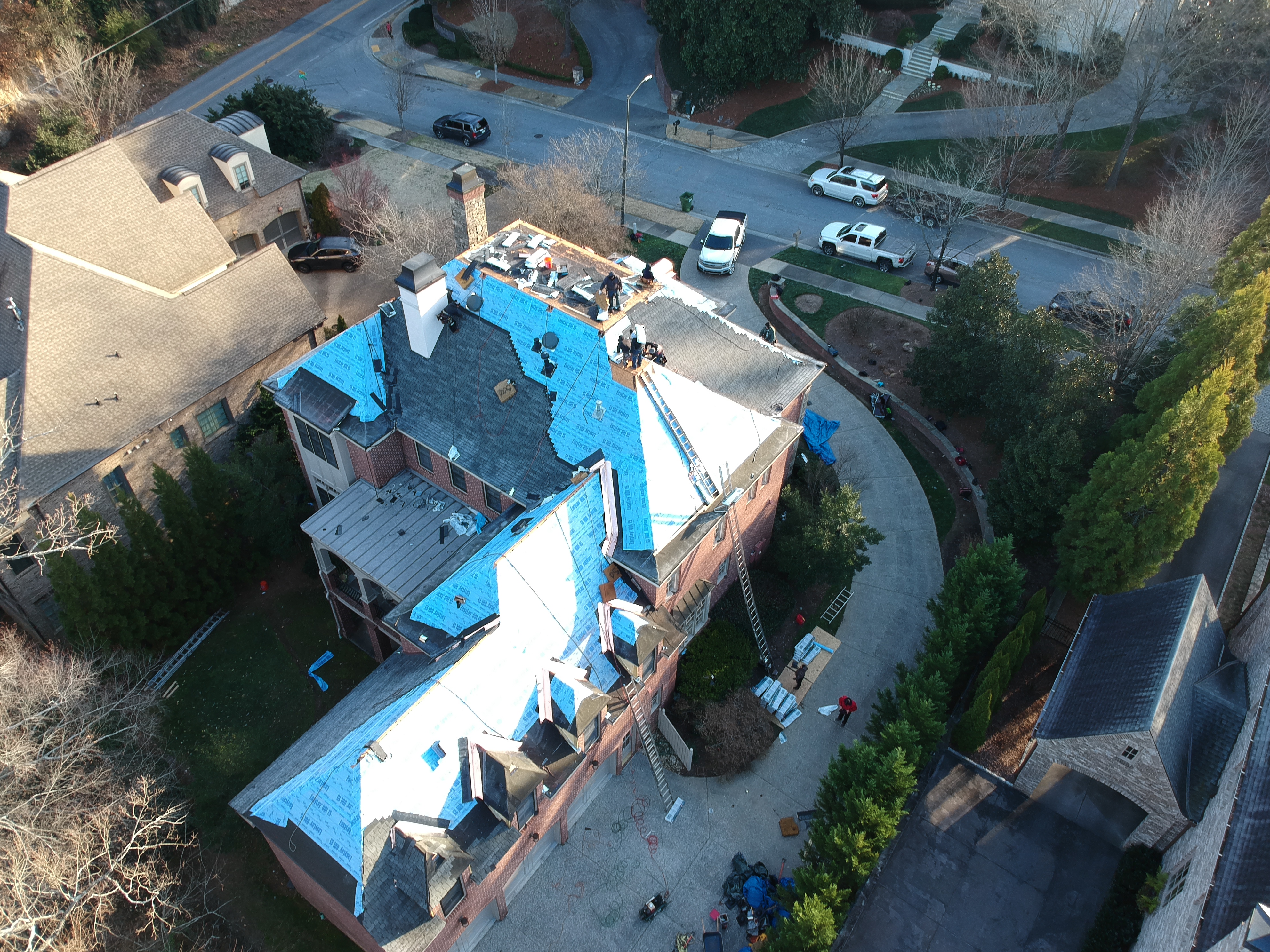
Documenting Mold Formation for Georgia Insurance Claims
Insurance companies in Georgia have become increasingly aggressive about denying or limiting mold claims. The most common basis for denial is the argument that the mold resulted from long-term neglect or failure to mitigate — not from the sudden water event covered by your policy. Beating this argument requires detailed documentation from the moment you discover the water damage.
Our documentation protocol starts the instant we receive your call:
- Timestamped arrival photos: We photograph the water damage on arrival with GPS-tagged, timestamped images that prove the damage was recent and that you called for mitigation immediately.
- Moisture mapping: Moisture meter readings taken on a grid pattern across all affected areas, documented on a floor plan. This creates a forensic record of the moisture extent at the time of our arrival.
- Material identification: We catalog every affected material — drywall, carpet, pad, insulation, framing — with individual photos and moisture readings.
- Drying logs: Daily moisture readings throughout the drying process, proving that professional drying equipment was deployed and that moisture levels were brought to acceptable ranges within the IICRC-recommended timeframe.
- Air quality testing: Pre- and post-remediation spore counts from an independent lab, proving that the remediation returned indoor air quality to normal levels.
This documentation package does two things. First, it proves you acted promptly — which is your obligation under the policy's "duty to mitigate" clause. Second, it establishes a clear causal link between the covered water event and the resulting mold, making it difficult for the adjuster to reclassify the damage as maintenance-related.
If you have already received a claim denial for mold damage, our team can help. We work with public adjusters and insurance attorneys across Georgia to challenge denials with technical evidence. Read more about this process on our denied claims guide or call (404) 277-1377 to discuss your situation.
Stopping Mold Before It Starts: The Professional Drying Process
Mold prevention after water damage comes down to one principle: remove the moisture faster than mold can colonize. In Georgia's climate, that means reducing relative humidity in affected areas to below 50% and material moisture content to below 16% within 48 hours of the water event.
Achieving those numbers requires commercial-grade equipment that operates at a completely different scale than household fans and dehumidifiers. Our standard deployment for a water-damaged Atlanta home includes:
- Truck-mounted extractors: High-suction units that pull hundreds of gallons of standing water per hour from carpets, hard floors, and crawl spaces.
- LGR dehumidifiers: Low Grain Refrigerant dehumidifiers rated for 14 to 30 gallons of water removal per day. We place one unit per 1,000 to 1,500 square feet of affected area. A typical residential job requires three to five units running continuously for 72 to 96 hours.
- High-velocity air movers: These fans accelerate evaporation from wet surfaces by increasing airflow across them. Proper placement creates a drying vortex that pulls moisture out of materials and feeds it to the dehumidifiers. We place one air mover per 10 to 16 linear feet of wet wall.
- Antimicrobial treatment: After extraction, we apply EPA-registered antimicrobial agents to all affected surfaces. These products do not kill established mold colonies — nothing topical does once hyphae have penetrated a substrate — but they prevent new spore germination during the drying period.
- HEPA air scrubbers: Portable units with true HEPA filtration that capture 99.97% of particles 0.3 microns and larger, including mold spores. These units create negative air pressure in the affected area, preventing spore migration to clean rooms.
We monitor this equipment daily, taking moisture readings and adjusting placement until every material in the affected area reaches dry standard. Only then do we remove equipment and begin reconstruction. Pulling equipment too early — because the surface looks dry or the homeowner wants their house back to normal — is the number one cause of post-restoration mold problems.
Common Mold Species Found in Water-Damaged Atlanta Homes
Not all mold is created equal. The species growing in your home determines the health risk, the remediation approach, and the urgency of response. Here are the species our crews encounter most frequently in metro Atlanta water damage situations:
Aspergillus: The most common indoor mold genus worldwide. Multiple species exist, with A. niger (black), A. flavus (yellow-green), and A. fumigatus (blue-green) being the most prevalent in Atlanta homes. Aspergillus colonizes quickly — often within 24 hours on wet drywall — and produces large quantities of airborne spores. Most species are allergenic; A. fumigatus can cause serious lung infections (aspergillosis) in immunocompromised individuals.
Penicillium: Recognizable by its blue-green color and musty odor. Penicillium grows rapidly on water-damaged materials and is a major contributor to the "musty house" smell homeowners report after flooding. It produces allergens and can trigger asthma episodes. Multiple Penicillium species produce mycotoxins, though at lower concentrations than Stachybotrys.
Stachybotrys chartarum (black mold): The species that generates the most concern — and for good reason. Stachybotrys requires sustained moisture over multiple days to colonize, which is why it typically appears 5 to 7 days after water damage on materials that stayed wet. It is a heavy spore producer once established and produces satratoxins and other trichothecene mycotoxins linked to serious health effects. Its dark, slimy appearance on wet drywall is distinctive. Read our detailed black mold identification guide for more information.
Chaetomium: A cellulose-degrading mold that often grows alongside Stachybotrys on the same water-damaged drywall. It produces a strong musty odor and degrades building materials aggressively. Its presence is a reliable indicator of prolonged water damage.
Cladosporium: Primarily an outdoor mold but commonly found indoors at elevated levels after water damage. It colonizes HVAC systems and window frames. Generally less toxic than Aspergillus or Stachybotrys but a significant allergen that triggers respiratory symptoms in sensitive individuals.
Identifying the species growing in your home requires laboratory analysis of air or surface samples. Visual identification alone is unreliable — many mold species look similar to the naked eye. Professional mold testing with laboratory confirmation is the only way to know exactly what you are dealing with and to establish the proper remediation protocol.
Mold Formation After Water Damage: Your Questions Answered
How quickly does mold form after water damage in Atlanta?
In Atlanta's subtropical climate with 70%+ average humidity, mold spores begin germinating on wet surfaces within 24 hours. Visible colonies typically appear between 48 and 72 hours after water exposure. By day five, extensive colonization can spread through wall cavities and under flooring. This accelerated timeline is specific to Georgia's warm, humid conditions and makes rapid water extraction and structural drying absolutely critical.
What materials in my home are most vulnerable to mold after water damage?
Paper-faced drywall is the most vulnerable material because its paper backing provides cellulose that mold feeds on. Carpet padding absorbs and holds moisture for days against the subfloor. OSB subflooring swells and traps water between layers. Wood framing becomes a colonization site within 48 hours. HVAC ductwork spreads spores throughout the house once contaminated. We prioritize these materials during extraction and drying.
Can mold grow inside walls where I cannot see it?
Yes. Hidden mold inside wall cavities is one of the most common problems we encounter after water damage. Water wicks up through drywall and saturates insulation, creating a dark, humid environment where mold thrives. You may smell a musty odor without seeing any visible growth. We use infrared thermal imaging and professional moisture meters to detect hidden moisture and mold behind walls, above ceilings, and under floors.
Does my insurance cover mold that formed after water damage?
Most Georgia homeowners policies cover mold remediation when it results from a sudden, accidental water event like a burst pipe or storm damage. The policy typically excludes mold from neglect, slow leaks, or maintenance failures. Many policies cap mold coverage between $5,000 and $25,000. We document every job with timestamped photos, moisture readings, and spore counts so your adjuster can clearly link the mold to the covered water event.
What temperature and humidity conditions cause mold growth in Georgia homes?
Mold requires three conditions: moisture above 60% relative humidity, a food source like wood and drywall paper, and temperatures between 60 and 80 degrees Fahrenheit. Atlanta's climate delivers all three for roughly nine months of the year. Summer humidity regularly exceeds 80%, and indoor temperatures sit in mold's preferred range. This is why water damage in Georgia homes must be addressed within hours, not days.
Water Damage and Mold Restoration Resources
Black Mold Identification
How to identify Stachybotrys and other dangerous mold species in your home after water damage.
Mold Prevention After Flooding
Proven strategies to stop mold growth after flooding events in Atlanta-area homes.
Health Risks of Mold Exposure
Understand the respiratory, neurological, and immune system risks of mold exposure after water damage.
Mold Remediation Process
Step-by-step breakdown of professional mold remediation in Atlanta homes.
Mold Testing and Inspection
Professional mold testing methods, spore counts, and what the lab results mean.
Water Damage Restoration Services
Full-service water damage restoration for metro Atlanta — extraction, drying, rebuild.
Insurance Claims Assistance
We handle your insurance claim from first call to final payment. Documentation, negotiation, and advocacy.
Emergency Roof Leak Restoration
Roof leaks cause hidden water damage and mold in attics and wall cavities. Emergency tarping and restoration.
Mold Does Not Wait. Neither Should You.
Every hour that passes after water damage gives mold another foothold in your home. Our crews are standing by 24 hours a day, 7 days a week, ready to respond anywhere in metro Atlanta within 60 minutes. We bring the equipment, the expertise, and the insurance documentation to stop mold growth and protect your family.