

Water Damage Insurance Claim Denied in Georgia
A denial letter does not mean the fight is over. We overturn denied water damage claims with professional evidence, targeted appeals, and aggressive follow-through that forces carriers to reconsider.
Certified & Trusted Emergency Restoration
Approximately 30-40% of denied claims are overturned on appeal when homeowners provide additional documentation. With professional restoration company evidence including moisture data, thermal imaging, and Xactimate estimates, the reversal rate is even higher.
A Denial Letter Is Not the Final Answer
When that denial letter arrives. And the frustration and anger set in. Your first instinct might be to accept it and move on. Do not do that. Insurance carriers deny water damage claims knowing that a significant percentage of homeowners will simply accept the denial without challenging it. The carrier saves money every time a homeowner gives up. That is exactly why they deny claims that should have been paid.
We have seen denial letters from every major carrier operating in Georgia. State Farm, Allstate, Liberty Mutual, Nationwide, USAA, Farmers, and more. The denial language varies but the underlying strategy is the same: find a policy exclusion that can be argued, cite it in the denial letter, and hope the homeowner does not push back. When we push back with professional evidence and a targeted appeal, those denials get reversed.
The numbers tell the story. According to industry data, approximately 30 to 40 percent of denied claims are overturned on appeal when the homeowner provides additional documentation and a formal written challenge. When a professional restoration company manages that appeal with moisture data, thermal imaging, source analysis, and an Xactimate estimate, the reversal rate is even higher. We do this every month across Buckhead, Alpharetta, Sandy Springs, and all of metro Atlanta.
The Six Most Common Reasons Georgia Water Damage Claims Get Denied
Every denial letter cites a specific policy provision or exclusion. Here are the six reasons we see most frequently on Georgia water damage denials, and our approach to fighting each one:
1. "Gradual damage, not sudden and accidental." This is the number one denial reason. The carrier's adjuster found evidence. Water stains, mineral deposits, mold growth patterns. That suggests the water damage developed over an extended period rather than from a single sudden event. Our response: we provide professional moisture analysis, material condition assessment, and source documentation that establishes the specific sudden event. A pipe that corrodes over decades but fractures in a single moment is a sudden event. We build the evidence to prove it.
2. "Maintenance and neglect exclusion." The carrier argues that you knew about a water problem and failed to maintain your home. Maybe there was a prior water stain you did not address. Maybe the roof had visible deterioration. Our response: we separate the pre-existing condition from the current loss event. The fact that a homeowner had a minor water stain in 2023 does not mean the catastrophic pipe failure in 2026 is a maintenance issue. Different cause, different loss, different claim.
3. "Excluded peril. Flood water." The carrier classifies the water as external flood water rather than internal water damage. This matters because standard HO-3 policies exclude flood. Our response: we document the actual water source with technical evidence. If water entered through a roof breach during a storm, that is wind-driven rain covered under your wind/hail peril, not flood. If water backed up through a drain, that is sewer backup, which may be covered if you carry the endorsement. Proper source identification defeats incorrect peril classification.
4. "Excluded peril. Sewer backup without endorsement." If sewage or drain backup caused the damage and your policy does not include the sewer backup endorsement, the denial is technically correct. However, we have seen carriers classify non-sewer water events as sewer backup to trigger this exclusion. When the actual source is a clean water supply line failure or an appliance malfunction, the sewer backup exclusion does not apply. We establish the correct water source through on-site analysis.
5. "Damage occurred before policy inception." The carrier claims the damage pre-dates your current policy. This denial is common when homeowners recently switched carriers. Our response: we provide timestamped documentation proving when the damage occurred relative to your policy period. Moisture readings, material condition analysis, and photographic evidence establish the timeline that defeats this denial.
6. "Failure to mitigate." The carrier argues that you did not take reasonable steps to prevent additional damage after the initial loss. If you waited days to address standing water, the carrier reduces or denies the claim for the incremental damage that occurred during the delay. Our response: when we manage the claim from the beginning, this denial never happens because we respond within 60 minutes and document every mitigation step. If you come to us after a denial for failure to mitigate, we work to prove that the delay was reasonable under the circumstances.
How We Overturn Denied Water Damage Claims
Our appeals process is systematic, evidence-based, and aggressive. We do not write a polite letter asking the carrier to reconsider. We build a case that makes the denial indefensible.
Step 1. Denial analysis. We obtain the complete denial letter and the adjuster's field report. We identify the specific policy provision cited, the evidence the adjuster relied on, and the logical chain the carrier used to reach the denial. We look for weaknesses in their reasoning. And there are almost always weaknesses.
Step 2. Site reinspection. Even if the original damage has been partially cleaned up, we return to the property with our full equipment suite. Moisture meters, thermal cameras, atmospheric instruments. We take new readings, document current conditions, and identify evidence that the original adjuster missed or misinterpreted. In many cases, we find hidden damage that was never documented during the initial inspection.
Step 3. Evidence package assembly. We compile a formal appeal package that includes: our professional damage documentation, moisture data with analysis, thermal images with interpretation, material condition assessment, source identification with technical evidence, and a point-by-point rebuttal of every claim the carrier made in the denial letter.
Step 4. Formal written appeal. We submit a written appeal to the carrier's claims department that presents our evidence and requests claim reversal. The appeal is addressed to the claims supervisor, not the original adjuster who wrote the denial. We cite relevant Georgia statutes. O.C.G.A. § 33-4-6 (bad faith penalties) and O.C.G.A. § 33-6-34 (unfair claims settlement practices). To signal that we know the homeowner's rights and we will pursue them.
Step 5. Follow-up and escalation. We follow up in writing every 7 business days. If the carrier does not respond within 30 days, we escalate. First to the carrier's regional claims manager, then to the Georgia Department of Insurance if necessary. Persistent, documented follow-up is what separates successful appeals from letters that get filed in a drawer and forgotten.
Under O.C.G.A. 33-4-6, if a carrier denies a valid claim without reasonable basis, they face penalties up to 50% of the claim amount plus attorney fees. On a $30,000 claim, that is $15,000 in additional penalties.
Georgia Laws That Protect You Against Wrongful Claim Denials
Georgia has strong consumer protection statutes that penalize insurance carriers for wrongful claim denials. Understanding these laws gives you use that most homeowners do not realize they have.
O.C.G.A. § 33-4-6. Bad faith penalty. This is Georgia's primary weapon against carriers who deny valid claims. If the carrier refuses to pay a claim and a court later determines there was no reasonable basis for the denial, the carrier may be liable for up to 50 percent of the claim amount as a bad faith penalty, plus reasonable attorney's fees and litigation costs. On a $30,000 water damage claim, that is an additional $15,000 in penalties. Carriers know this statute exists, and citing it in an appeal letter gets their attention.
O.C.G.A. § 33-6-34. Unfair claims settlement practices. This statute prohibits carriers from: misrepresenting policy provisions to deny claims, failing to acknowledge and act promptly on claims, refusing to pay claims without a reasonable investigation, offering substantially less than the loss amount when liability is clear, and failing to settle claims promptly when liability is clear. Each of these violations can be grounds for a regulatory complaint and potential penalties.
Georgia Department of Insurance complaint process. You can file a formal complaint with the Consumer Services Division of the Georgia Department of Insurance. The Commissioner's office reviews complaints, investigates carrier conduct, and can impose fines and corrective actions. While the complaint process does not directly pay your claim, it creates regulatory pressure that motivates carriers to resolve disputes. We have filed complaints that resulted in carrier call-backs within days of submission.
Appraisal clause. When the dispute is about the amount of damage (not coverage), most Georgia policies include a binding appraisal clause. Either party can invoke this process, which uses independent appraisers and an umpire to determine the fair loss amount. Appraisal is typically faster and less expensive than litigation, and the result is binding on both parties.
For more on Georgia insurance protections across all claim types, see our Georgia insurance claim denial guide.
Fighting the "Gradual Damage" Denial. Our Most Common Battle
The gradual damage exclusion is the insurance industry's favorite tool for denying water damage claims. Carriers use it so aggressively because it is subjective. The line between "sudden" and "gradual" is not always clear, and carriers exploit that ambiguity.
Here is how they build the gradual damage argument: The adjuster photographs water stains on the ceiling and notes discoloration that "appears aged." They find mineral deposits on pipe fittings near the failure point and document them as evidence of "chronic seepage." They photograph mold growth and argue it indicates "prolonged moisture exposure inconsistent with a sudden event." Based on these observations, the examiner writes a denial citing the gradual damage exclusion.
Here is how we dismantle that argument: We conduct independent moisture testing across the entire affected area and demonstrate moisture levels consistent with a recent, significant water event. Not the low-level readings you would see from a slow drip. We analyze the failed pipe or component and document the specific mechanical failure that caused the sudden release. We assess the material condition of water-stained surfaces and distinguish between fresh damage and aged cosmetic staining. We review weather data if the damage was storm-related to establish the specific event date.
The carrier's gradual damage argument relies on visual observations by an adjuster who spent 30 minutes in your home. Our counter-argument relies on calibrated instruments, technical analysis, and professional expertise developed over hundreds of water damage claims. When the carrier reviews our appeal package, they frequently reverse the denial because our evidence is stronger than their adjuster's observations.
When to Escalate Beyond the Internal Appeal
If the carrier upholds the denial after our initial appeal, we have additional options. The right next step depends on the claim amount, the denial reason, and the strength of our evidence.
Reinspection request. We can request a second inspection by a different adjuster. This is effective when the original adjuster made factual errors. Missed damage, incorrect measurements, wrong water source identification. A fresh set of eyes combined with our documentation often produces a different conclusion.
Georgia Department of Insurance complaint. Filing a formal complaint triggers a regulatory investigation. The carrier must respond to the Commissioner's office with a detailed explanation of the denial. This creates pressure that internal appeals alone do not generate. We prepare the complaint with all supporting documentation and file it on your behalf.
Appraisal demand. If the dispute is about damage amount rather than coverage, invoking the appraisal clause removes the carrier from the decision-making process entirely. An independent appraiser evaluates the damage, and the result is binding. This is often the fastest path to resolution for claims where the carrier acknowledges coverage but disputes the amount.
Public adjuster engagement. For larger claims, a licensed public adjuster can take over the negotiation with the carrier. Public adjusters typically charge 10 to 15 percent of the recovered amount. On a $30,000 claim, that is $3,000 to $4,500. We work alongside public adjusters and provide the technical documentation they need.
Attorney referral. For claims involving potential bad faith. Where the carrier denied a clearly valid claim without reasonable basis. An insurance attorney can pursue the bad faith penalties under O.C.G.A. § 33-4-6. The potential 50 percent penalty plus attorney's fees makes this a powerful option for larger claims. We provide the technical evidence the attorney needs to build the case.
How to Prevent Your Next Water Damage Claim from Being Denied
If you have been through a denial, you know the frustration. Here is how to protect yourself going forward so your next water damage claim gets paid the first time:
Call us before you call your insurance company. We respond within 60 minutes, document the damage professionally, and then help you file the claim using precise language that matches your policy's covered perils. When the claim is filed correctly from the start, the carrier has far less room to deny. See our guide on filing water damage claims in Georgia.
Never clean up before documenting. The initial condition of the damage is the strongest evidence for your claim. Once you start cleaning, that evidence disappears. Our team documents everything before beginning extraction and restoration.
Know your policy. Read your declarations page and understand your coverage limits, deductible, exclusions, and endorsements before a loss occurs. If you do not carry the sewer backup endorsement, add it now. It costs $50 to $150 per year and prevents one of the most common denial scenarios. Review what your insurance covers for water damage.
Maintain your home and document the maintenance. Keep records of plumbing inspections, roof maintenance, appliance servicing, and any repairs. If the carrier tries to argue deferred maintenance, your maintenance records prove otherwise.
Mitigate immediately. The faster you respond to water damage, the harder it is for the carrier to argue failure to mitigate. Our 60-minute response time eliminates this denial basis entirely.
Common Georgia Denial Scenarios We Have Overturned
Every denied claim has its own story, but certain patterns repeat across metro Atlanta. Here are scenarios we handle regularly:
The bathroom supply line failure. A homeowner in Roswell came home to find water pouring through the first-floor ceiling. A toilet supply line connector had failed while the family was at work. The carrier denied the claim, arguing that corrosion on the connector indicated gradual deterioration. We documented the specific fracture point on the connector, showed that the corrosion was normal surface oxidation (not indicative of a slow leak), and provided moisture readings consistent with a single sudden release. The denial was reversed within 21 days of our appeal. Claim value: $18,000.
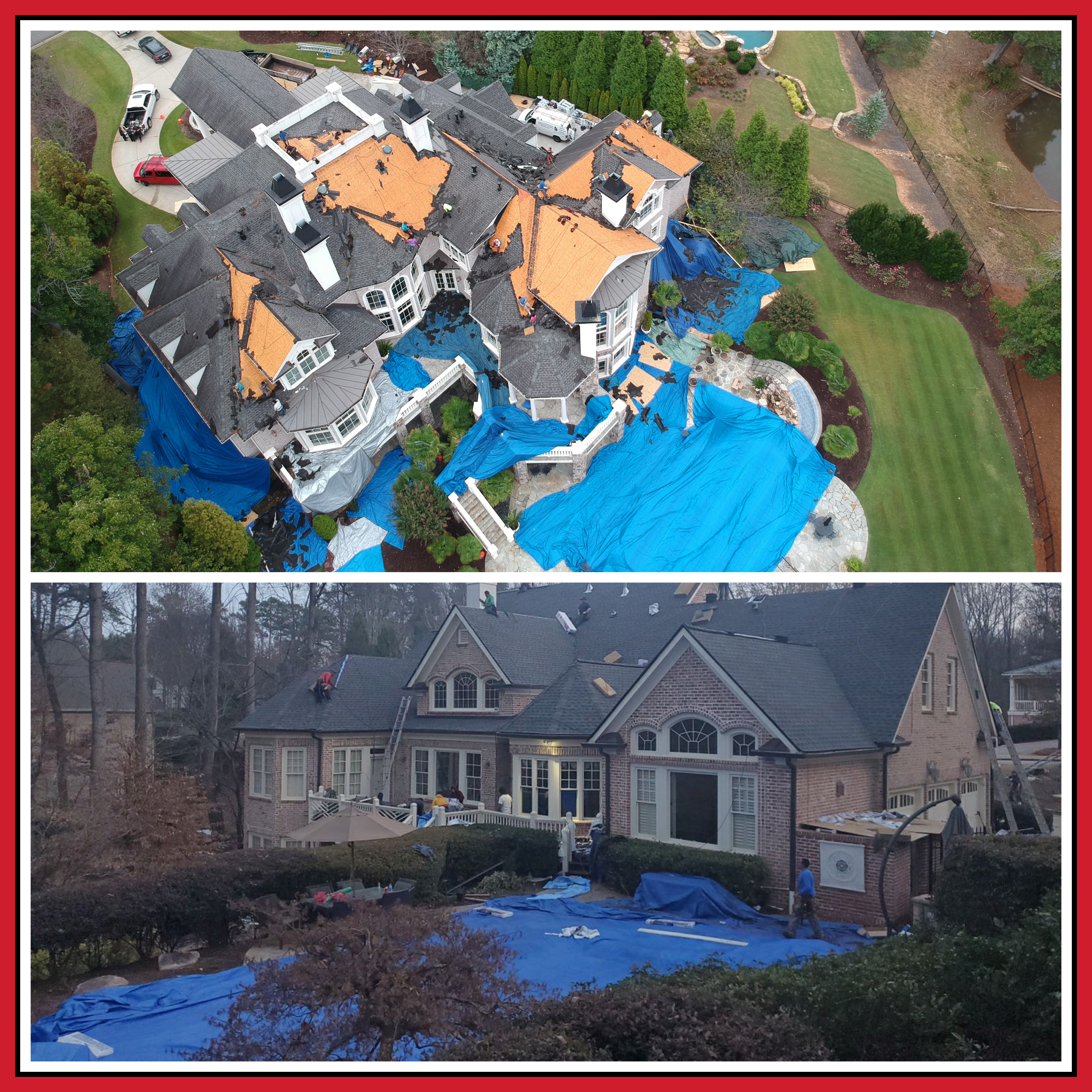
The storm-related roof leak. After a severe thunderstorm, a Johns Creek homeowner filed a claim for interior water damage from a roof breach. The carrier denied, claiming the roof was "pre-existing deterioration" rather than storm damage. We performed a forensic roof inspection that documented specific wind-lifted shingles, fresh granule loss consistent with recent hail impact, and the direct water path from the breach to the interior damage below. We cross-referenced the damage timeline with National Weather Service storm data for the area. The carrier reversed the denial and approved $32,000 in combined roof and interior water damage restoration.
The HVAC condensate overflow. A Marietta homeowner's HVAC condensate drain clogged, causing water to overflow from the air handler in the attic into the ceiling below. The carrier denied, arguing that the clogged drain was a maintenance issue. We documented the specific blockage (insect nest in the drain line, not sediment buildup from lack of maintenance), provided evidence that the HVAC system had been serviced within the past 12 months, and demonstrated that the overflow was sudden once the blockage became complete. The denial was reversed. Claim value: $12,000.
Related Water Damage Insurance Guides
- Filing a Water Damage Insurance Claim. File correctly from the start to prevent denials
- What Insurance Covers for Water Damage. Understanding coverage before you appeal
- How to Document Water Damage. The documentation that overturns denials
- Meeting the Insurance Adjuster. Preventing denials during the inspection
- Supplementing Water Damage Claims. When the claim is approved but underpaid
- Emergency Tarping and Coverage. Mitigation that prevents "failure to mitigate" denials
- Out-of-Pocket vs. Insurance Claim. Your options when a claim is denied
See also: Georgia Insurance Claim Denied | Insurance Claims Assistance | Water Damage Restoration
Frequently Asked Questions: Denied Water Damage Claims in Georgia
Why was my water damage insurance claim denied in Georgia?
The most common denial reasons in Georgia are: the carrier classified the damage as gradual rather than sudden, the carrier cited a maintenance or neglect exclusion, the damage type is excluded from your policy such as flood or sewer backup without the proper endorsement, or the carrier disputes the cause of the water damage. We review your denial letter, identify the specific basis, and build a targeted appeal that addresses the carrier's stated reason with professional evidence.
Can a denied water damage claim be overturned?
Yes. Many denied water damage claims are overturned on appeal. The key is providing additional evidence that directly contradicts the carrier's denial rationale. If they denied on gradual damage grounds, we provide moisture data and material analysis establishing sudden onset. If they denied on maintenance grounds, we document the specific mechanical failure that caused the loss. We have overturned denials across metro Atlanta by replacing insufficient original documentation with professional-grade evidence.
How long do I have to appeal a denied water damage claim in Georgia?
Georgia does not have a single statutory deadline for all claim appeals. Your policy language controls the timeline. Most Georgia homeowner policies allow 1 to 2 years from the date of denial to file a lawsuit. However, internal appeals should be filed as quickly as possible. We recommend filing your appeal within 30 days of the denial letter to keep pressure on the carrier and preserve the freshness of the evidence.
Should I hire a public adjuster or attorney for a denied water damage claim?
It depends on the claim amount and complexity. For claims under $20,000, our internal appeals process often resolves the dispute without additional cost to you. For larger claims or claims involving bad faith by the carrier, a public adjuster or insurance attorney may be appropriate. We work alongside both and can recommend professionals we trust in the Atlanta market. We provide the technical documentation and damage evidence that the public adjuster or attorney needs to build their case.
Can I file a complaint with the Georgia Department of Insurance?
Yes. If your carrier denied your claim without conducting a reasonable investigation, misrepresented your policy provisions, or engaged in other unfair settlement practices, you can file a formal complaint with the Georgia Department of Insurance Consumer Services Division. The Commissioner's office investigates complaints and can impose fines and corrective actions. We help you prepare and file the complaint with supporting documentation.