

Meeting the Insurance Adjuster for Water Damage Claims
The adjuster meeting is where your claim gets won or lost. We attend every adjuster inspection, present professional documentation, and make sure the carrier accounts for the full scope of your water damage.
Certified & Trusted Emergency Restoration
Homeowners who face the adjuster alone typically receive 20 to 40 percent less than those with professional contractor representation. Our presence, documentation, and Xactimate estimates close that gap on every claim.
Why the Adjuster Meeting Is the Most Decisive Moment of Your Claim
The insurance adjuster inspection is the one event that determines more about your claim outcome than anything else in the process. This is where the adjuster physically inspects your property, evaluates the damage, forms their opinion about the cause and scope, and writes the estimate that becomes the basis for your payout. Everything that happens after the adjuster meeting. The estimate, the approval, the payment. Flows from what the adjuster sees, hears, and documents during this inspection.
Most Georgia homeowners walk into the adjuster meeting unprepared. They open the door, follow the adjuster around, answer questions on the fly, and hope for the best. The adjuster. Who inspects water damage professionally every day. Controls the conversation, directs the inspection route, and decides what areas to include and what areas to skip. The homeowner does not know what the adjuster is looking for, does not know what questions to ask, and does not know when the adjuster is about to overlook $5,000 worth of hidden damage in a wall cavity.
When we attend the adjuster meeting. And we attend every single one. The dynamic changes completely. We control the inspection route. We present our professional documentation. We point out damage the adjuster would have missed. We answer technical questions with data, not guesses. The adjuster walks away with a complete picture of the loss, and that complete picture translates into a complete payout.

Types of Insurance Adjusters You May Encounter
Not all adjusters are the same. The type of adjuster assigned to your claim affects the inspection process, the timeline, and the payout. Here is who you may be dealing with:
Staff adjusters. These adjusters work directly for the insurance company as full-time employees. They handle claims exclusively for one carrier. State Farm adjusters, Allstate adjusters, Nationwide adjusters. Staff adjusters follow their company's specific guidelines and pricing schedules. They tend to be well-organized but conservative in their estimates because they answer directly to the carrier's claims management team. When we meet a staff adjuster, we bring our Xactimate estimate printed and ready to compare line by line.
Independent adjusters. During heavy storm seasons or major loss events, carriers hire independent adjusting firms to handle overflow claims. These adjusters are licensed professionals but they work on contract, not salary. They may handle claims for multiple carriers simultaneously. Independent adjusters are often under time pressure to close claims quickly, which can mean rushed inspections. When we see an independent adjuster assigned, we prepare extra documentation to ensure nothing gets overlooked in a fast-paced inspection.
Desk adjusters. For smaller claims, some carriers attempt to handle the entire claim remotely. The desk adjuster reviews photos and documentation without ever visiting the property. If your carrier assigns a desk adjuster to a significant water damage claim, we push for a field inspection. Remote reviews consistently undervalue claims because the adjuster cannot see hidden damage, cannot verify moisture levels, and must rely entirely on submitted documentation. Which, if you filed without professional help, may be incomplete.
Catastrophe (CAT) adjusters. After major Georgia storm events. The kind that affect hundreds of homes simultaneously. Carriers deploy CAT teams. These adjusters fly in from other states, handle enormous workloads, and are under extreme pressure to close claims quickly. They may spend 20 minutes at your property before moving to the next one. CAT adjusters are not the enemy, but they are working under conditions that do not favor thorough inspections. Our presence ensures the inspection is complete even when the adjuster is under time pressure.
How We Prepare for Your Adjuster Meeting
We do not walk into adjuster meetings and wing it. Every meeting is prepared with the same rigor we bring to the documentation and restoration process. Here is what happens before the adjuster arrives at your home in Buckhead, Alpharetta, Sandy Springs, or anywhere in metro Atlanta:
Documentation package assembly. We compile our complete documentation package: initial condition photos, moisture map, thermal images, atmospheric readings, material inventory, and Xactimate estimate. This package is organized in a logical sequence that walks the adjuster through the damage from the water source to the furthest point of penetration. We print a copy for the adjuster and keep a digital copy for our records.
Policy review. We review your declarations page and policy language to identify your coverage limits, deductible, endorsements, and any sub-limits that apply. We note any policy language that supports coverage for your specific type of water damage. When the adjuster raises a coverage question during the inspection, we have the answer ready.
Inspection route planning. We plan the physical route through your home that shows the damage in its proper context. We start at the water source, trace the water path through every affected area, and end at the furthest extent of moisture penetration. This route tells a story that the adjuster can follow. And a story is harder to dispute than a random collection of damage observations.
Talking points. We prepare specific talking points for areas where we expect the adjuster to push back. If the water source was a pipe that could be interpreted as gradual deterioration, we prepare our evidence that the failure was sudden. If the damage extends into areas that look unaffected from the surface, we prepare the moisture data that proves otherwise. We do not get surprised in adjuster meetings.
What Happens During the Adjuster Inspection
The adjuster meeting typically lasts 1 to 3 hours for a significant water damage claim. Here is how we manage the process from arrival to departure:
Introduction and context. We introduce ourselves, establish our role as your restoration contractor, and provide the adjuster with our documentation package. We give a brief overview of the loss. The date and time of discovery, the water source, the affected areas, and the mitigation steps we have already taken. This sets the frame for the inspection.
Guided walkthrough. We walk the adjuster through the property following our planned inspection route. At each affected area, we point out the visible damage, share the corresponding moisture readings from our moisture map, and show relevant thermal images. We make sure the adjuster inspects above ceiling level, behind access panels, inside wall cavities where we have opened inspection cuts, and under flooring where moisture has migrated.
Source identification. We take the adjuster directly to the water source and present our documentation of the failure. For a burst pipe, we show the fracture point. For an appliance failure, we show the failed component. For a roof breach, we show the storm damage that allowed water entry. Establishing the source establishes the covered peril, and that is the foundation of the entire claim.
Hidden damage presentation. This is where our presence adds the most value. We present thermal images showing moisture behind walls that look dry from the surface. We share moisture readings from areas the adjuster would not have checked. We point out wet insulation visible through inspection cuts. Every hidden damage item we present is an additional line item on the claim that would not have been included without our involvement.
Estimate discussion. We review our Xactimate estimate with the adjuster and discuss any line items where we expect disagreement. Because we use the same software and pricing databases, the conversation is productive rather than adversarial. Where we disagree on scope, we present the documentation that supports our position. Where we disagree on pricing, we reference Xactimate's built-in market-rate databases for the Atlanta metro area.
Post-inspection documentation. After the adjuster leaves, we document the meeting in writing. What was inspected, what was discussed, what the adjuster agreed to, and what remains disputed. This written record is valuable if the claim is later underpaid and we need to reference what happened during the inspection.
When the adjuster's initial estimate falls short, our supplements typically increase the approved amount by 25 to 60 percent. On a $15,000 initial approval, that means $4,000 to $9,000 in additional coverage.
Common Adjuster Tactics and How We Counter Them
Insurance adjusters are trained professionals. They use specific techniques to minimize claims. We see the same tactics on water damage inspections across metro Atlanta every week. Here is what to expect and how we handle it:
The rushed inspection. Some adjusters try to get in and out in 20 to 30 minutes, checking only the obviously damaged areas and writing a quick estimate. We counter this by managing the inspection pace. We have a planned route. We have documentation to present at each stop. We politely insist that every affected area gets inspected. An adjuster who tries to skip the guest bedroom because "it looks fine" will find us standing in that room with a moisture meter showing 28 percent moisture content in the subfloor.
The "it was pre-existing" argument. Adjusters look for any evidence that the damage preceded the reported loss. Discolored ceiling tiles, mineral staining on pipes, or mold growth can all be used to argue that the damage is old. We counter this with our documentation that establishes the timeline of the current event. Timestamped photos taken hours after the loss, moisture readings consistent with fresh saturation, and source documentation showing a specific, dateable failure.
The scope reduction. The adjuster may acknowledge the damage but argue that the affected area is smaller than we have documented. They might agree that the bathroom floor is damaged but insist the hallway outside is fine. We counter with our moisture map showing exact readings in the hallway subfloor that prove moisture has migrated beyond the visible damage boundary.
The "repair instead of replace" call. Adjusters prefer to approve repair over replacement because it is cheaper. They may argue that saturated drywall can be dried in place rather than removed, or that warped hardwood can be sanded rather than replaced. We counter with IICRC S500 restoration standards that specify when materials must be removed based on contamination category, saturation duration, and material type. These industry standards carry weight with carriers because they represent the accepted science of water damage restoration.
The lowball estimate. The adjuster's initial estimate is almost always below the actual restoration cost. This is not malice. It is standard operating procedure. The first number is the opening position. We counter with our own Xactimate estimate, line by line, and supplement the claim for every shortfall.
What You Should Never Say to the Insurance Adjuster
The words you use during the adjuster meeting can make or break your claim. Adjusters document everything you say, and the carrier can use your own statements against you. Here are the phrases we coach our clients to avoid:
"It's been leaking for a while." Even if you just mean you have been dealing with cleanup for a few days, this phrase triggers the gradual damage exclusion. The adjuster writes down "homeowner stated the leak has been ongoing" and the carrier uses it to deny the claim. Instead: "We discovered the water damage on [specific date]."
"I noticed some water stains last month." This tells the adjuster you were aware of a water problem and failed to act. That is neglect, and it is excluded. Even if the current damage is from a completely different source, the carrier will connect the old stains to the new damage and argue deferred maintenance. Instead: let us present the technical evidence that distinguishes the current loss from any prior condition.
"I don't really know what happened." Uncertainty gives the adjuster room to fill in the blanks with the least favorable interpretation. If you do not know the water source, say so. But let us present our technical findings about the source before you say anything about your own uncertainty.
"The house is old, things break." This characterizes the loss as expected wear and tear rather than a sudden event. Adjusters love hearing this because it supports the maintenance exclusion. Age of the home is relevant but the characterization matters. A 30-year-old pipe that suddenly fails is a covered event. A 30-year-old pipe that "things break" suggests foreseeable deterioration.
This is why we attend every adjuster meeting. We handle the technical conversation. You do not need to say anything beyond confirming the basic facts of when you discovered the damage.
What Happens After the Adjuster Meeting
The adjuster inspection is not the end of the process. Here is what happens next and how we continue managing your claim:
Adjuster report submission (1-5 business days). The field adjuster compiles their notes, photos, and estimate into a report submitted to the carrier's claims department. This report is the primary document the claims examiner uses to make the coverage determination. We follow up within 3 business days to confirm the report has been submitted and request a copy.
Carrier determination (5-15 business days). The claims examiner reviews the adjuster report and issues a determination. Full approval, partial approval, or denial. If the amount differs from our estimate, we receive the carrier's estimate and begin line-by-line comparison. Under Georgia's unfair claims settlement practices statute (O.C.G.A. § 33-6-34), the carrier must provide a reasonable explanation for any claim reduction.
Supplement filing (if needed). If the carrier's approved amount falls short of our estimate, we file a supplement immediately. We provide additional documentation, reference our meeting notes, and request an itemized explanation of every line item the carrier reduced or denied. Most supplements result in a meaningful increase to the approved amount.
Denial response (if needed). If the carrier denies the claim based on the adjuster's findings, we prepare a formal written appeal with additional evidence that addresses the specific denial rationale. Read our full guide on overturning denied water damage claims.
Restoration coordination. Once the claim is approved or the supplement is resolved, we begin full restoration work. We coordinate timing with the carrier's payment schedule so you are not waiting with a damaged home while checks clear. Our water damage restoration team handles the entire rebuild from demolition through final finishing.
Adjuster Meetings for Storm and Roof-Related Water Damage
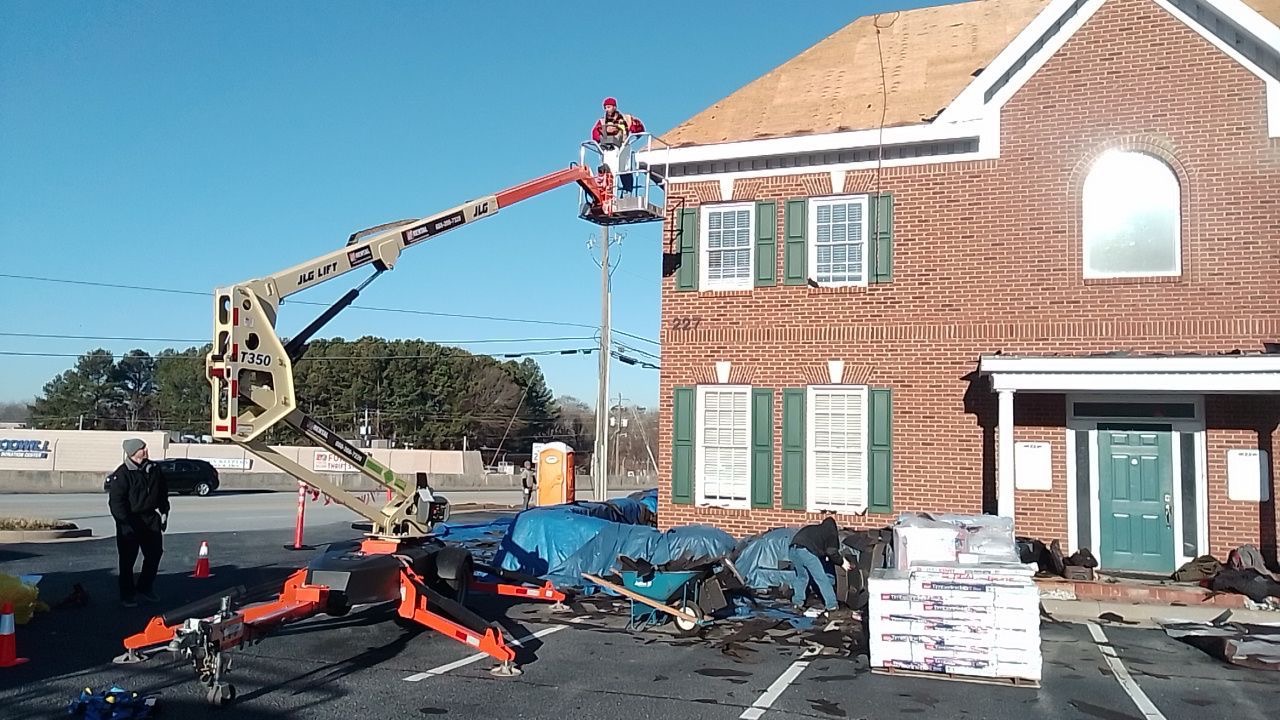
Water damage that originates from a roof breach. Whether caused by a storm, fallen tree, or wind-driven rain. Involves a dual inspection. The adjuster needs to evaluate both the exterior roof damage and the interior water damage. We handle both components during a single coordinated meeting.
On the roof, we show the adjuster the specific damage that allowed water entry. Missing shingles, cracked flashing, lifted ridge caps, punctures from debris. We document each point of entry and correlate it to the interior water damage directly below. This causal connection between the exterior breach and the interior damage is what ties the water damage to the covered wind/hail peril on your policy.
On the interior, we present the same moisture data, thermal imaging, and material documentation we prepare for any water damage claim. The additional complexity with roof-related water damage is proving that the water entered through storm damage specifically, not through pre-existing roof deterioration. Our documentation distinguishes between fresh storm damage and normal roof aging using material analysis and damage pattern assessment.
For more on storm-related claims, see our insurance adjuster meeting for roofing guide and our storm damage restoration services.
Your Rights as a Georgia Homeowner During the Adjuster Meeting
Georgia law protects you during the insurance claims process. Understanding your rights prevents carriers from taking advantage during the adjuster meeting:
Right to have a representative present. You have the right to have your contractor, a public adjuster, or an attorney present during any adjuster inspection. No carrier can require you to meet the adjuster alone. We exercise this right on every claim we manage.
Right to a thorough inspection. The adjuster must conduct a reasonable investigation before making a determination on your claim. Under O.C.G.A. § 33-6-34, failing to conduct a reasonable investigation is an unfair claims settlement practice. If the adjuster tries to rush through your inspection, we document the areas they skipped and request a follow-up inspection or submit our own documentation for those areas.
Right to an itemized explanation. If the carrier reduces or denies your claim, you are entitled to a written explanation of the specific reasons. "Claim denied" with no further explanation violates Georgia regulations. We demand itemized explanations on every reduction so we can address each point in our supplement or appeal.
Right to the appraisal process. If you and the carrier cannot agree on the loss amount after the adjuster meeting and supplement process, most Georgia policies include an appraisal clause. This binding process uses independent appraisers and an umpire to determine the fair amount. We guide you through appraisal when negotiation reaches an impasse.
For more on Georgia insurance protections, see our Georgia insurance claim denial guide.
Adjuster Meeting Representation Across Metro Atlanta
We attend adjuster meetings at homes throughout the 30-mile metro Atlanta radius. Whether your water damage occurred in a luxury estate in Buckhead, a family home in Roswell, a new construction in Johns Creek, or a ranch-style home in Marietta, we provide the same level of professional representation.
We know the local adjusters who work these areas. We have worked with the same State Farm adjusters in Alpharetta and Sandy Springs dozens of times. That professional familiarity means the inspection goes smoothly and the adjuster trusts our documentation. When a new adjuster encounters our claim packages for the first time, they quickly learn that our documentation is thorough, our estimates are fair, and our approach is professional.
This reputation matters. Adjusters who know and respect us spend less time questioning our documentation and more time confirming scope. That translates into faster claim processing and higher approval rates for our clients.
Related Water Damage Insurance Guides
- Filing a Water Damage Insurance Claim. The complete claims process from first call to final payment
- What Insurance Covers for Water Damage. Understanding your Georgia policy coverage
- How to Document Water Damage. The documentation we bring to the adjuster meeting
- Water Damage Claim Denied. What to do when the adjuster's report leads to a denial
- Supplementing Water Damage Claims. Getting paid when the adjuster's estimate falls short
- Emergency Tarping and Coverage. Mitigation documentation for the adjuster
- Out-of-Pocket vs. Insurance Claim. When the adjuster's estimate affects your decision
See also: Insurance Adjuster Meeting for Roofing | Insurance Claims Assistance | Water Damage Restoration
Frequently Asked Questions: Insurance Adjuster Water Damage Meeting
Should I have my contractor present when the insurance adjuster inspects water damage?
Absolutely. The adjuster works for the insurance company. Their job is to assess the damage and write the lowest defensible estimate. Your contractor works for you. When we attend the adjuster meeting, we walk the adjuster through every damaged area, present our moisture data and thermal images, and make sure nothing gets missed or minimized. Homeowners who face the adjuster alone typically receive 20 to 40 percent less than those who have professional representation.
What does the insurance adjuster look for during a water damage inspection?
The adjuster evaluates the water source, the category and extent of contamination, the affected area and materials, evidence of pre-existing damage or deferred maintenance, and whether mitigation was performed promptly. They also verify that the loss matches the claim description. We prepare for every one of these evaluation points before the adjuster arrives so there are no surprises.
How long does a water damage adjuster inspection take?
A thorough water damage adjuster inspection typically takes 1 to 3 hours depending on the size of the loss. Some adjusters try to rush through in 30 minutes. When we are present, we make sure the adjuster takes the time to inspect every affected area, review our documentation, and account for hidden damage identified by our moisture meters and thermal cameras. A rushed inspection almost always results in an undervalued claim.
Can the insurance adjuster deny my claim during the inspection?
The field adjuster typically does not have authority to deny claims on the spot. They collect information and submit their report to the claims examiner at the carrier. However, the adjuster's observations and notes heavily influence the final decision. If the adjuster documents concerns about maintenance, gradual damage, or an excluded peril, the examiner will likely deny the claim. This is why having us present matters. We address potential denial triggers in real time during the inspection.
What if the adjuster's estimate is lower than the actual repair cost?
This happens on the majority of water damage claims. The adjuster's initial estimate is designed to close the claim at the lowest defensible number. When their estimate falls short of the actual restoration cost, we file a supplement with additional documentation supporting our Xactimate estimate. We have supplemented hundreds of water damage claims across metro Atlanta and typically increase the approved amount by 25 to 60 percent over the initial adjuster estimate.