
Storm Flooding Your Home? Emergency Water Extraction Now
Floodwater is contaminated, dangerous, and destroying your home by the minute. Our emergency crews extract the water, eliminate the hazards, and restore the damage.
Certified & Trusted Emergency Restoration
Storm Floodwater Is Not Just Water. It Is a Health Hazard.
A burst pipe dumps clean water from your supply line. A storm dumps something far worse into your home. Storm floodwater is contaminated. It picks up sewage from overwhelmed municipal systems, lawn chemicals from every yard it crosses, petroleum from driveways and roadways, animal waste, and bacteria from every source between the storm drain and your front door.
The water damage restoration industry classifies water into three categories, and storm flooding falls into the worst one:
- Category 1 (Clean Water): Supply line breaks, faucet overflows. Low health risk. Materials can often be dried and saved.
- Category 2 (Gray Water): Washing machine overflows, dishwasher leaks. Moderate contamination. Some materials salvageable with treatment.
- Category 3 (Black Water): Storm flooding, sewage backups, river overflow. This is what is in your home right now. High contamination. Virtually all porous materials that contacted this water must be removed and replaced. Period.
Here is what Category 3 storm floodwater does to your home on a timeline:
- Immediate contact: Carpet, padding, upholstered furniture, mattresses, clothing, and any porous item touched by this water is contaminated beyond salvage. Do not try to dry and keep these materials. They harbor bacteria that no amount of cleaning eliminates.
- 2 to 6 hours: Drywall wicks contaminated water upward. The industry standard is to remove all drywall at least 12 inches above the visible flood line because capillary action pulls contamination higher than the water actually reached.
- 12 to 24 hours: Bacteria and mold begin aggressive colonization. In Georgia's warm climate, these organisms multiply at rates that colder states do not experience. Contaminated surfaces become biological hazards.
- Beyond 24 hours: Structural framing absorbs contaminated water. Without proper antimicrobial treatment and drying, wood framing becomes permanently compromised. The smell alone makes the home uninhabitable.
Do not walk through this water. Do not try to mop it up. Call (404) 277-1377 and let professionals with proper equipment handle it.
Storm floodwater is classified Category 3 (black water) under IICRC standards. It contains sewage, chemicals, and bacteria. Do not walk through it without protective equipment.
How Georgia Storms Flood Metro Atlanta Homes
Metro Atlanta receives an average of 50 inches of rain per year, concentrated heavily in the spring thunderstorm season (March through May) and again during tropical storm remnants in the fall (September through October). Unlike coastal cities where flooding comes from storm surge, Atlanta's flooding comes from three distinct mechanisms. Each one hits homes differently.
- Flash flooding from intense rainfall: Georgia thunderstorms routinely drop 2 to 4 inches of rain in under an hour. The metro Atlanta drainage infrastructure was designed for the development density of the 1980s. Today's impervious surface coverage (driveways, roofs, parking lots, roads) is dramatically higher, and the existing storm drains cannot handle the volume. Water backs up, overflows curbs, and enters homes through garage doors, basement windows, and foundation cracks. Neighborhoods in Sandy Springs along the Chattahoochee floodplain and low-lying areas of Roswell along Big Creek are especially vulnerable.
- Wind-driven rain penetration: Severe thunderstorms and tropical remnants bring horizontal rain that drives water through gaps and vulnerabilities that vertical rain never touches. Siding joints, window frames, door thresholds, soffit vents, and roof-wall intersections all become entry points when rain comes sideways at 40 to 60 mph. This type of flooding is covered under standard homeowners insurance because it is wind-related damage.
- Combined roof and ground flooding: The worst scenario. The storm damages your roof (wind, hail, debris) while simultaneously overwhelming ground drainage. Water enters from above through the compromised roof and from below through saturated foundation walls or backed-up floor drains. Your home floods from both directions at once. We see this during major storm events across Gwinnett County, North Fulton, and the I-285 corridor.
The cause of the flooding determines your insurance coverage, the cleanup protocol, and the restoration scope. Getting this right on day one saves weeks of insurance disputes later. Our teams document the specific cause of water entry at every point, which is the foundation of a successful claim.
Your Safety Comes First. Read This Before Entering Floodwater.
Storm flooding creates hazards that kill people every year in Georgia. Before you do anything else, understand these dangers:
- Electrical shock: If floodwater has reached electrical outlets, appliances, or your breaker panel, the water may be electrically charged. Standing in electrified water is fatal. Do not enter a flooded area until the electricity is turned off at the main breaker. If the breaker panel is in the flooded area and you cannot reach it safely, call your power company for an emergency disconnect or call 911.
- Contamination: Storm floodwater contains raw sewage, chemical runoff, and biological contaminants. Skin contact causes infections. Ingestion causes severe gastrointestinal illness. Open wounds exposed to floodwater require medical attention. Wear rubber boots and gloves at minimum if you must move through the water. Better yet, stay out and let us handle it.
- Structural compromise: Water undermines foundations, saturates load-bearing walls, and weakens floor systems. Floors that look solid may have softened underneath. Walls that appear stable may have lost their structural connection to the foundation. Move cautiously and avoid areas where the floor feels soft or spongy.
- Gas leaks: Floodwater can shift or damage gas line connections. If you smell gas (rotten egg odor), leave the home immediately, do not operate any electrical switches or devices, and call your gas utility from outside.
- Animals and debris: Storm flooding displaces snakes, rodents, and fire ants. In Georgia, copperheads, water moccasins, and brown recluse spiders are common flood evacuees. Submerged debris creates puncture and laceration hazards. Never wade through floodwater you cannot see the bottom of.
If the water level is above 6 inches and rising, or if you cannot safely reach your electrical panel, get everyone out of the home and call 911 for immediate safety, then call us at (404) 277-1377 for restoration.
What Our Storm Flooding Emergency Response Looks Like
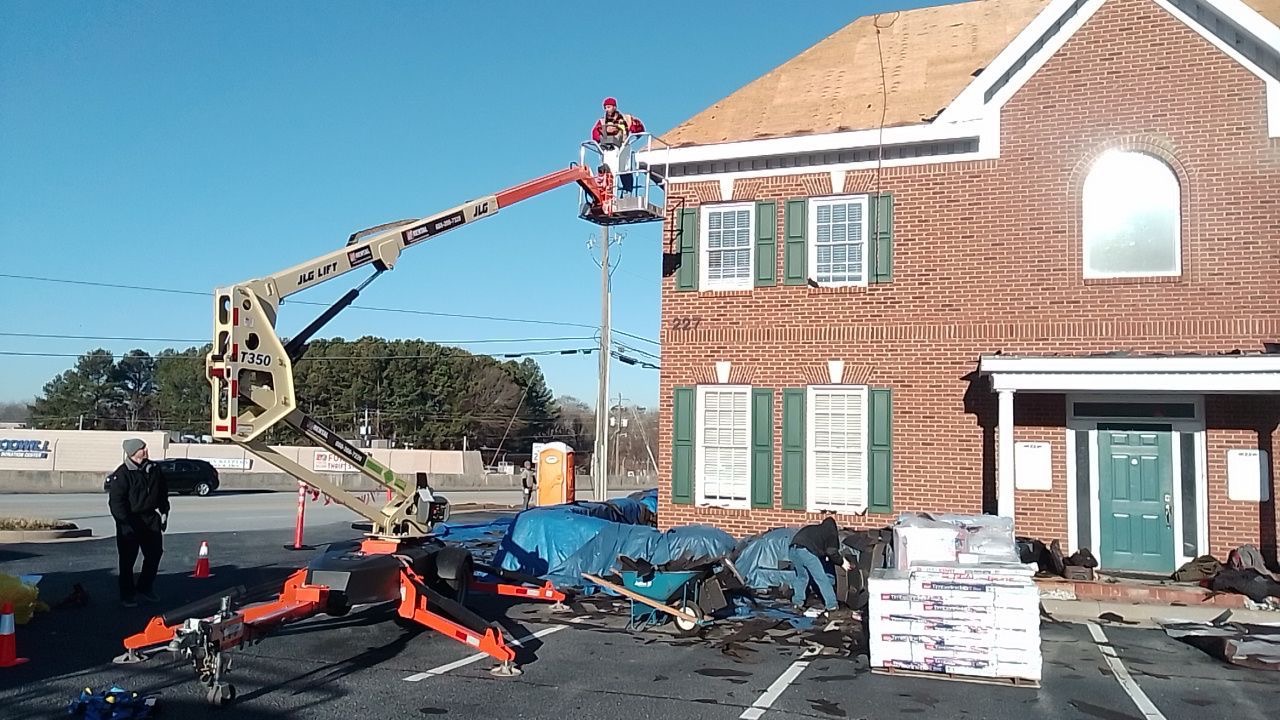
Storm flooding response is more complex than a standard water damage call. Contamination, larger volumes, and the possibility of ongoing weather all change the playbook. Here is how our crews operate when we roll on a storm flooding emergency:
- Safety assessment (first 15 minutes on site): Before anyone enters the structure, our lead technician assesses electrical status, structural integrity, gas service, and contamination level. If the main breaker has not been shut off, we coordinate with the power company or make the disconnect ourselves. Nobody enters contaminated floodwater without proper PPE (personal protective equipment).
- Contamination classification: We test the water to confirm the contamination category. Category 3 black water (the norm for storm flooding) triggers a specific protocol under IICRC S500 standards. All porous materials that contacted the water must be removed. There is no drying and saving carpet, padding, or drywall that sat in sewage-contaminated floodwater.
- High-volume water extraction: Storm flooding means volume. We deploy truck-mounted extraction units with 2-inch and 3-inch suction lines capable of removing thousands of gallons per hour. For deep flooding (12 inches or more), submersible pumps go in first to reduce the water level before our crews can safely work inside.
- Contaminated material removal: Every piece of carpet, every square foot of pad, every section of drywall below the flood line plus 12 inches above, all insulation in affected wall cavities, and any contaminated personal property gets removed and bagged for disposal. This is not optional with Category 3 water. Trying to save contaminated materials is a health violation.
- Antimicrobial treatment: After contaminated materials are out, all remaining structural surfaces (studs, sill plates, subfloor, concrete) receive antimicrobial treatment to eliminate bacteria and prevent mold colonization during the drying phase.
- Industrial drying: Commercial dehumidifiers and air movers go in for 5 to 7 days of continuous drying. Storm flooding typically saturates masonry, concrete, and framing to a deeper level than clean water events, requiring extended drying time.
We document every step with timestamped photos, moisture readings, and contamination test results. This documentation package is what your insurance adjuster needs to approve the claim.
What Storm Floodwater Destroys and What Can Be Saved
After a storm flooding event, one of the hardest conversations we have with homeowners is about what cannot be saved. Nobody wants to hear that their hardwood floors, their finished basement, or their family room furniture is a total loss. But with Category 3 contaminated water, the science is clear.
Materials that MUST be removed after storm flooding:
- Carpet and carpet padding: No exceptions. The padding absorbs contaminated water like a sponge and cannot be decontaminated. The carpet fibers trap bacteria. Both are disposed of.
- Drywall below the flood line: Drywall is removed to at least 12 inches above the highest water mark. The paper facing on drywall is mold food when wet, and contaminated drywall cannot be treated in place.
- Fiberglass and cellulose insulation: Both absorb contaminated water and must be removed from any wall cavity that was flooded.
- Particleboard and MDF: Cabinets, shelving, and furniture made from particleboard or MDF swell when wet and disintegrate. They cannot be dried back to usable condition.
- Upholstered furniture and mattresses: Porous materials that absorbed contaminated water are a biological hazard. Insurance typically covers replacement value.
Materials that CAN typically be saved with proper treatment:
- Solid wood framing: Studs, joists, and structural framing can be treated with antimicrobial solutions and dried to safe moisture levels. Wood that has not begun rotting is structurally sound after proper drying.
- Concrete and masonry: Foundation walls, slab floors, and concrete block can be decontaminated and dried. These materials do not support mold growth but they hold moisture for weeks without commercial drying equipment.
- Hard-surface flooring: Ceramic tile, porcelain, and natural stone can usually be decontaminated if the subfloor beneath them is structurally sound. The grout may need replacement.
- Metal and glass items: Non-porous materials that contacted floodwater can be cleaned and disinfected.
- Hardwood flooring (sometimes): Solid hardwood that was submerged for less than 24 hours and is dried with commercial equipment can sometimes be saved. It depends on the species, the finish, and how quickly extraction begins. Engineered hardwood with a plywood core is almost never salvageable.
Our technicians make these determinations based on material type, contamination exposure, and moisture readings. We do not tear out more than necessary, and we do not leave contaminated materials in place. The goal is accurate, honest assessment backed by data.

Water Damage Gets Worse Every Minute. Call Now.
Our emergency crews are standing by 24 hours a day, 7 days a week. We arrive within 60 minutes anywhere in metro Atlanta.
Storm Flooding Insurance: What Georgia Homeowners Need to Know
Storm flooding insurance in Georgia is confusing by design. Insurance carriers draw sharp lines between different types of water entry, and the difference between a covered claim and a denial can come down to whether water entered from above (covered) or below (often not covered). Here is the breakdown:
Typically COVERED under standard homeowners insurance:
- Wind-driven rain: Water that enters your home because wind damaged the building envelope (blew off shingles, broke a window, breached siding) is wind damage. Wind damage is a named peril on virtually all Georgia homeowners policies. The interior water damage resulting from the wind breach is part of the same claim.
- Roof damage with resulting interior water damage: Storm damages your roof, rain enters through the damage, and floods your interior. This is a standard storm damage claim. Both the roof repair and the interior water damage restoration are covered.
- Fallen tree damage: A storm knocks a tree onto your home, breaching the structure and allowing water in. Covered as a windstorm event.
Typically NOT covered under standard homeowners insurance:
- Rising water / ground flooding: Water that rises from the ground and enters through your foundation, basement, or ground-floor openings is classified as flood damage. Standard homeowners policies in Georgia exclude flood damage. You need a separate National Flood Insurance Program (NFIP) policy or a private flood policy for this coverage.
- Sewer backup: Storm-overwhelmed sewers that back up into your home through floor drains are excluded from most standard policies. Some carriers offer sewer backup endorsements for additional premium.
- Sump pump failure: If your sump pump could not keep up with storm water infiltration, this is a separate coverage endorsement that most homeowners do not carry.
The critical gray area: Many storm flooding events involve both wind-driven water entry from above and rising water from below. Our documentation process maps every water entry point individually. If wind-driven rain entered through a damaged roof and caused 60% of the interior damage, that 60% is covered under your homeowners policy even if the remaining 40% entered from ground level and requires a flood policy.
This granular documentation is the difference between getting a partial claim paid and getting nothing. We have been through this process with hundreds of Atlanta homeowners and we know how to build the evidence package that maximizes your coverage.
Learn more about insurance versus out-of-pocket options or read our guide for denied claims in Georgia.
Water extraction: 1-2 days. Material removal and antimicrobial treatment: 2-3 days. Structural drying: 5-7 days. Rebuild: 2-4 weeks. Total: 4-6 weeks from emergency call to completion.
Basement and Crawl Space Flooding: The Hidden Disaster Below Your Home
Across Alpharetta, Roswell, Sandy Springs, and Johns Creek, thousands of homes have finished basements that double the usable square footage of the house. When a storm floods that basement, the financial damage is staggering. Media rooms, home offices, guest suites, wine cellars, and workout rooms can represent hundreds of thousands of dollars in finishes and furnishings.
What happens when your basement floods:
- Immediate losses: Everything at floor level and below the water line is contaminated or destroyed. Electronics, furniture, stored belongings, carpet, and anything touching the floor.
- Drywall and framing: Finished basement walls absorb water rapidly. Because basements have limited airflow, they dry very slowly without commercial equipment. Mold colonizes basement drywall faster than any other location in the home because basements are already the highest-humidity zone.
- Flooring: Basement carpet over concrete is the worst-case scenario for storm flooding. The carpet pad traps contaminated water against the concrete, creating a bacteria incubator. Luxury vinyl plank (LVP) over concrete fares better because it does not absorb water, but the concrete beneath must still be dried and treated.
- HVAC equipment: Furnaces, water heaters, and air handlers located in basements are often damaged by flooding. Electrical components, gas valves, and control boards cannot tolerate submersion. Replacement is typically required.
Crawl space flooding is equally destructive but harder to detect:
- Standing water in a crawl space creates a humidity engine that drives moisture through the floor system above. First-floor hardwood buckles, subfloor swells, and mold grows on the underside of the floor sheathing.
- Crawl space insulation saturated with floodwater hangs from the floor joists like wet blankets, losing all thermal value and incubating mold.
- Crawl space flooding often goes undetected for days or weeks after a storm because homeowners do not check crawl spaces. By the time the musty smell reaches the living space above, the damage is extensive.
Our crews inspect crawl spaces on every storm damage call, even when the homeowner does not report below-grade flooding. We know from experience that if the storm was big enough to flood the yard, water found its way into the crawl space.
Storm Flooding Plus Georgia Humidity Equals Mold Explosion
Storm flooding creates the most aggressive mold growth conditions of any water damage scenario. The combination of warm temperatures, contaminated water loaded with organic nutrients, and Georgia's baseline humidity produces mold growth that is faster, more widespread, and more difficult to remediate than what you see after a clean-water event like a burst pipe.
Why storm flood mold is worse:
- Contaminated water feeds mold faster. Category 3 floodwater is loaded with organic matter (sewage, plant material, animal waste) that serves as a nutrient accelerant for mold colonies. Clean water mold grows on the organic material in your building materials. Contaminated water mold grows on the building materials AND the organic contaminants coating them.
- Larger affected areas. A burst pipe might affect one room. Storm flooding can affect an entire floor level. The sheer square footage of wet material creates exponentially more surface area for mold colonization.
- Harder to dry. Storm flooding events often coincide with continued high humidity and subsequent rain events. The drying environment is working against you. Commercial dehumidifiers have to overcome both the structural moisture and the ambient humidity pouring in from outside.
- Hidden moisture reservoirs. Floodwater gets into wall cavities, behind cabinets, under flooring, and into crawl spaces. These hidden pockets dry last and grow mold first. Without infrared detection and systematic moisture mapping, these reservoirs get missed and become mold factories.
The mold timeline after storm flooding is accelerated compared to clean water events. Visible mold can appear within 24 hours on contaminated surfaces. Within 48 to 72 hours, it spreads aggressively. Beyond 72 hours, full containment and remediation protocols become necessary, adding significant cost and time to the restoration.
Speed is your only defense. Call (404) 277-1377 now.
Storm Flooding Restoration From Start to Finish
Storm flooding restoration is the most intensive water damage work we perform. The contamination factor, the volume of material removal, and the extended drying requirements make these jobs longer and more complex than other water damage events. Here is the full scope for a typical storm flooding restoration in metro Atlanta:
Week 1: Emergency Mitigation
- High-volume water extraction using truck-mounted and submersible pump systems
- Removal of all contaminated porous materials (carpet, pad, drywall, insulation, furnishings)
- Antimicrobial treatment of all remaining structural surfaces
- Installation of commercial drying equipment (dehumidifiers, air movers, air scrubbers)
- Full documentation package for insurance including moisture mapping, contamination testing, and photo/video evidence
Weeks 1 through 2: Structural Drying and Clearance
- Daily moisture monitoring at all documented measurement points
- Equipment repositioning based on drying progress
- Air quality testing for mold spore counts
- Clearance testing to confirm all surfaces have reached dry standard
- Third-party mold clearance if required by insurance or local authority
Weeks 2 through 4: Rebuild Phase
- Electrical inspection and repair per Georgia code
- Plumbing inspection and repair as needed
- Insulation replacement to current energy code standards
- Drywall installation, finishing, and painting
- Flooring installation (hardwood, tile, LVP, carpet)
- Cabinet replacement or refinishing
- Trim, baseboard, and fixture reinstallation
- HVAC system inspection and service
Week 4 through 6: Final Completion
- Final punch list walkthrough with homeowner
- Touch-up painting and detail work
- Final cleaning and debris removal
- Certificate of completion for insurance carrier
- Post-restoration moisture verification
We manage this entire process with a single project manager who serves as your point of contact from day one through final walkthrough. You do not juggle contractors. You do not chase subcontractors. You deal with one company and one person.
Storm Flooding Emergency Response Across Metro Atlanta
When severe weather hits metro Atlanta, our crews pre-stage across the service area based on National Weather Service tracking data. We deploy the moment conditions allow safe travel. Here is what we see in the communities we serve:
- Alpharetta: Newer construction with finished basements along Windward and Northpoint. Storm drainage infrastructure in rapid-growth areas often lags behind development, making flash flooding a recurring problem after heavy rain events.
- Buckhead: Low-lying properties near Peachtree Creek are historically vulnerable to flash flooding. High-value finished basements and ground-floor living spaces make rapid response critical to limit financial losses.
- Sandy Springs: Homes along the Chattahoochee River corridor and its tributaries face the highest storm flooding risk in our service area. Many executive homes have walk-out basements at grade level, making them direct targets for rising water.
- Johns Creek: Master-planned communities with extensive detention ponds that sometimes exceed capacity during extreme rainfall events. Homes adjacent to these ponds and along Johns Creek itself are most vulnerable.
- Roswell: Big Creek and Vickery Creek flood zones affect properties throughout the city. Historic homes near the Roswell Mill area sit in a particularly flood-prone corridor. Newer developments along Highway 9 handle drainage better but are not immune during major events.
- Marietta: Rottenwood Creek and Sope Creek drainage basins affect homes from the Marietta Square through East Cobb. Cobb County's clay soils drain poorly, pushing surface water into basements and crawl spaces during sustained rainfall.
No matter which community you are in, call (404) 277-1377 the moment storm water enters your home. Every hour of delay increases contamination, mold risk, and restoration cost.
Storm Flooding Emergency FAQ
Does homeowners insurance cover storm flooding in Georgia?
Standard Georgia homeowners insurance covers water damage from storm-related causes like wind-driven rain entering through roof damage, but typically does not cover rising water or ground-level flooding. Rising water requires a separate flood insurance policy. However, if a storm damaged your roof and the leak caused interior flooding, that is covered under your homeowners policy. Our documentation maps every entry point to maximize your covered claim.
Is storm floodwater dangerous to my health?
Yes. Storm floodwater is classified as Category 3 black water. It contains sewage, chemicals, bacteria, and debris. Direct contact causes skin infections, gastrointestinal illness, and respiratory problems. Do not walk through it barefoot or attempt cleanup without protective equipment. Our crews arrive with PPE and antimicrobial treatments to handle contaminated water safely.
How quickly can you respond during a major storm event?
We pre-stage crews across metro Atlanta based on storm tracking data and maintain our 60-minute response time for most events. During catastrophic events affecting hundreds of homes, we prioritize based on severity and safety risk. A live dispatcher answers your call at (404) 277-1377 around the clock, including during active severe weather.
What should I do while waiting for your crew during a storm?
Move to the highest floor. Shut off electricity at the breaker panel if water is approaching outlets. Do not walk through standing water. Document damage with your phone camera. Move valuables and important documents above the water line. If water is rising and threatening your safety, call 911 first for rescue, then call us for restoration once safe.
How long does storm flooding restoration take?
Storm flooding restoration is more extensive than clean-water events due to contamination. Water extraction takes 1 to 2 days. Contaminated material removal is immediate. Structural drying runs 5 to 7 days. Antimicrobial treatment and clearance testing add 2 to 3 days. Full rebuild takes 2 to 4 weeks. Total timeline is typically 4 to 6 weeks.
Do I need to leave my home during storm flooding cleanup?
In most cases, yes. Contamination and industrial drying equipment create conditions unsuitable for occupancy. We can help coordinate temporary housing through your insurance carrier's Additional Living Expense (ALE) coverage, which pays for hotels, short-term rentals, and meals while your home is being restored.
More Emergency and Storm Damage Resources
Burst Pipe Emergency
24/7 response for burst pipes flooding your home. Water extraction and full restoration.
Roof Leak Emergency
Emergency tarping and interior water damage restoration for active roof leaks.
Water Damage Restoration
Full-service water damage restoration for metro Atlanta homeowners.
Storm Damage Services
Complete storm damage assessment, repair, and insurance claims support.
Insurance Claims Help
We handle documentation, adjuster meetings, and claims negotiation for you.
Insurance Claim Denied?
Steps to take when your Georgia storm damage claim gets denied or underpaid.
Adjuster Meeting Prep
How to prepare for your insurance adjuster visit after storm damage.
Roof Repair Services
Professional roof repair for storm damage, leaks, and aging roofing systems.
Do Not Wait. Every Hour Costs You Thousands.
Mold starts growing within 24-48 hours. Structural damage compounds by the day. Insurance adjusters want to see that you acted fast. Call 1 Source Roofing and Restoration right now.