
Emergency Sewage Backup Water Damage Restoration in Atlanta
Raw sewage in your home is a biohazard. Every minute you wait, contamination spreads deeper into walls, subfloors, and HVAC ducts. Our crews arrive within 60 minutes with full extraction and decontamination equipment.
Certified & Trusted Emergency Restoration
Why Sewage Backup Is the Most Dangerous Water Damage Event
Not all water damage is the same. The industry classifies water damage into three categories, and sewage backup sits at the top. Category 3, also called "black water." This classification exists for a reason: sewage carries E. coli, Salmonella, Hepatitis A, Giardia, Cryptosporidium, and dozens of other pathogens that pose direct threats to human health.
When a sewer line backs up into your Atlanta home, the contamination goes far beyond what you can see. Sewage water wicks up through drywall, saturates carpet padding, seeps into subfloor cavities, and migrates through the HVAC system. Within hours, your entire home can become a biohazard zone. even areas that never directly touched standing water.
Here is what makes sewage backup different from a burst pipe or roof leak: you cannot dry it out and move on. Every porous material that contacts sewage must be physically removed and replaced. Drying alone does not eliminate bacterial contamination. The EPA's own remediation guidelines require physical removal of contaminated porous materials. there are no shortcuts and no amount of bleach that changes this requirement.
Atlanta's warm, humid climate accelerates every part of this problem. Bacteria multiply faster in heat. Mold colonizes faster in humidity. The window between "recoverable" and "total gut renovation" shrinks from days to hours during Georgia summers. That is precisely why you need a restoration contractor on-site within the first hour. not tomorrow morning, not after the weekend.
Sewage backup is Category 3 black water, the highest contamination level. It contains fecal bacteria, viruses, and parasites. IICRC S500 mandates removal of all contacted porous materials.
Health Hazards You Face Right Now
If sewage has entered your home, your family is facing real health risks. not hypothetical ones. The CDC documents that contact with sewage water causes gastroenteritis, skin infections, respiratory distress, and in immunocompromised individuals, potentially life-threatening systemic infections. Children and elderly family members face the highest risk.
Airborne exposure matters just as much as direct contact. When sewage water sits in a warm environment, bacterial aerosols become suspended in indoor air. Breathing contaminated air causes the same infections as touching contaminated surfaces. This is why professional restoration crews wear full-face respirators, Tyvek suits, and rubber boots. the same PPE we bring to every sewage job.
Here is what you should do right now while waiting for our crew:
- Evacuate the affected area. Move your family and pets away from any room with standing sewage water or visible contamination. Close doors to isolate the area.
- Turn off the HVAC system. Your air handler will spread contaminated air throughout the entire house. Shut it down at the thermostat immediately.
- Do not attempt cleanup. Household mops, towels, and shop vacuums cannot handle Category 3 water. You will spread contamination further and expose yourself to pathogens.
- Shut off the water main if the backup is related to a plumbing failure. The shutoff valve is typically near your water meter at the street.
- Document everything with photos before touching anything. Your insurance adjuster will need visual evidence of the initial conditions.
Our dispatch team walks you through these steps on the phone while our crew is already loading the truck. We have handled hundreds of sewage emergencies across Alpharetta, Buckhead, Sandy Springs, Johns Creek, Roswell, Marietta, and every neighborhood in between. Call (404) 277-1377 right now.
What Happens When Our Crew Arrives
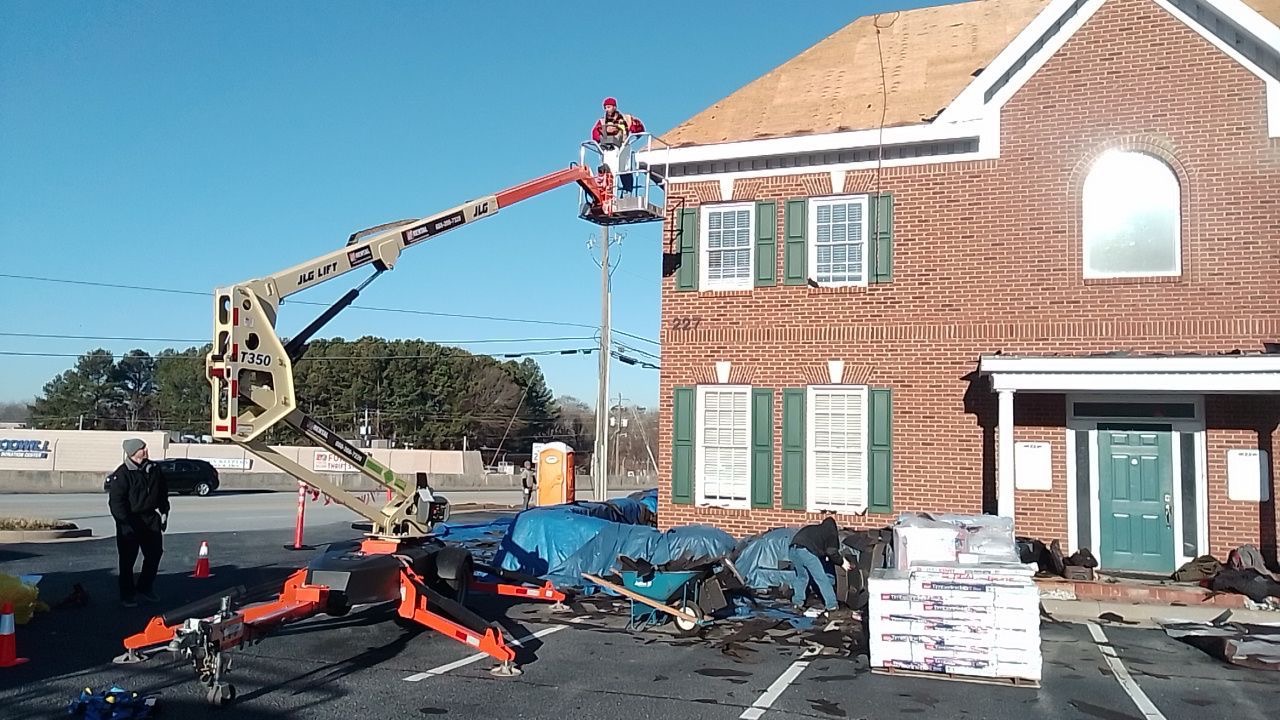
Our sewage restoration crews operate with the same urgency as first responders because, in many ways, that is exactly what this situation demands. Here is the step-by-step process that begins the moment we pull into your driveway:
Safety assessment and containment (first 15 minutes). The crew lead performs a full walkthrough in PPE to assess the extent of contamination. We identify the source of the backup, determine whether it is still active, and establish containment barriers with 6-mil polyethylene sheeting to prevent cross-contamination into unaffected areas. If the backup is ongoing, we coordinate with a licensed plumber or the municipal sewer authority to stop the flow.
Emergency extraction (minutes 15-45). Using truck-mounted extractors that pull 200+ gallons per minute, we remove all standing sewage water. Portable submersible pumps handle tight spaces like crawlspaces and utility closets. Every gallon extracted in the first hour is contamination that will not spread further into your home's structure.
Contaminated material demolition (minutes 30-60). While extraction continues, a second team begins removing contaminated porous materials. Carpet and padding come out immediately. Drywall gets cut 12-18 inches above the visible water line. contamination wicks higher than the watermark you see. Baseboards, toe kicks, and any particleboard cabinetry in the affected area come out. All contaminated debris goes directly into sealed biohazard bags for proper disposal.
Antimicrobial treatment (hour 1). Once contaminated materials are removed, every remaining surface. framing lumber, concrete, subfloor, mechanical systems. receives a full antimicrobial application. We use EPA-registered hospital-grade disinfectants, not consumer products. This treatment kills bacteria, viruses, and fungal spores on contact and provides residual protection during the drying phase.
The 3-5 Day Drying Process That Prevents Mold
Extraction and demolition handle the immediate contamination. Structural drying handles what comes next. and skipping this step or rushing it is where amateur restoration companies create mold problems that cost homeowners tens of thousands of dollars down the road.
Our drying protocol uses commercial-grade equipment that residential contractors and handymen simply do not have. A typical sewage backup drying setup for a 500 square foot affected area includes:
- 4-6 axial air movers positioned to create directional airflow across all wet surfaces. Placement follows psychrometric calculations. not guesswork.
- 1-2 commercial dehumidifiers pulling 30+ gallons of moisture per day from the air. These are not the units you buy at Home Depot. they are LGR (Low Grain Refrigerant) machines designed for restoration work.
- Thermal imaging cameras to identify moisture pockets hidden behind walls and under floors that visual inspection cannot detect.
- Daily moisture meter readings documented at marked test points throughout the affected area. We track moisture content in drywall, framing, and subfloor materials against established dry standards.
The drying phase typically takes 3-5 days depending on the severity and the materials involved. Concrete slab foundations take longer than raised foundations with crawlspace access. Hardwood subfloors dry differently than OSB or plywood. Our project manager monitors readings daily and adjusts equipment placement as conditions change.
We do not pull equipment until moisture readings confirm that every material in the affected area has returned to normal levels. "Feels dry" and "looks dry" are not standards. measured and documented dry standards are what protect you from mold colonization and what your insurance adjuster expects to see in the restoration documentation.

Mold Colonization Timelines After Sewage Exposure
Here is the timeline that keeps restoration professionals up at night. and the reason we push so hard for immediate response on every sewage call:
- 0-24 hours: Bacteria multiply rapidly in the warm, nutrient-rich sewage water. Mold spores, which are already present in every home, begin germinating on wet organic materials.
- 24-48 hours: Visible mold colonies begin forming on drywall paper facing, carpet backing, and wood surfaces. The organic matter in sewage water acts as a food source that accelerates colonization far beyond what occurs with clean water.
- 48-72 hours: Mold growth becomes established and begins producing spores. These spores become airborne and spread to unaffected areas of the home through natural air currents and the HVAC system.
- 72 hours - 1 week: Secondary colonization occurs in areas that never touched sewage water, carried by airborne spores settling on damp surfaces. What started as a localized sewer backup in a basement bathroom is now a whole-house mold problem.
- 1-2 weeks: Hidden mold behind walls and in wall cavities becomes established. At this point, remediation costs can triple because entire wall assemblies, not just drywall, require removal and treatment.
Georgia's average indoor humidity of 55-65% during summer months provides near-ideal conditions for mold growth. Metro Atlanta homes with sewage backup damage face higher mold risk than identical events in drier climates. This is not speculation. it is what we see on job sites year after year, from Alpharetta to Marietta and everywhere in between.
Professional extraction within the first 24 hours reduces your mold risk by roughly 80%. That statistic alone justifies picking up the phone right now.
Do not attempt DIY cleanup of sewage backup. Pathogens including E. coli, Hepatitis A, and Cryptosporidium survive on wet surfaces for days. Our crews use full PPE and EPA-registered antimicrobials.
Sewage in Your Home Right Now?
Every hour you wait, contamination spreads further and restoration costs climb. Our crews are standing by 24/7 with full Category 3 extraction and decontamination equipment. We arrive within 60 minutes anywhere in metro Atlanta.
What Caused the Sewage Backup. And How to Prevent It
Understanding why your sewer backed up matters for two reasons: your insurance adjuster will ask, and preventing recurrence protects your investment in the restoration work we are about to do. The most common causes we see across metro Atlanta:
Municipal sewer main blockage. When the city's main line backs up, sewage enters your home through the lowest drain. typically a basement floor drain, ground-floor shower, or laundry drain. This is not your fault, but your homeowner's insurance may still deny the claim unless you carry a sewer backup endorsement. The city may have separate liability, but collecting from a municipality is a slow process.
Tree root infiltration. Atlanta's mature hardwood trees are beautiful, but their root systems are aggressive. Roots enter sewer lateral lines through joints and cracks, gradually restricting flow until a complete blockage occurs. Homes in established neighborhoods like Buckhead, Sandy Springs, and Roswell are particularly vulnerable because of older clay pipe laterals and large, mature trees.
Grease accumulation. Years of cooking grease poured down kitchen drains builds up inside your lateral line. The grease cools, hardens, and narrows the pipe until a full blockage occurs. We see this constantly in luxury homes where the kitchen gets heavy use.
Collapsed or deteriorated lateral line. Older homes with original clay or cast iron sewer laterals face eventual pipe failure. Gwinnett, Fulton, and DeKalb counties all have neighborhoods with 40-60 year old sewer infrastructure that is reaching end of life.
Prevention for the future: After restoration, we recommend a camera inspection of your sewer lateral to identify the failure point. Install a backwater prevention valve on your main drain line. Georgia plumbing code allows them, and they cost $300-800 installed versus the $15,000-40,000 cost of another sewage backup event.
Filing Your Sewage Backup Insurance Claim in Georgia
Sewage backup insurance claims are among the most commonly denied claims in Georgia. and the denial usually comes down to one of two issues: the homeowner did not carry a sewer backup endorsement, or the restoration was not documented to the standard the adjuster requires.
Here is what you need to know about the insurance process:
Check your policy now. Open your declarations page and look for "sewer and drain backup" or "water backup" coverage. Standard HO-3 policies in Georgia exclude sewer backup. You need a separate endorsement, usually listed as Coverage E or as a named endorsement. If you have it, coverage typically ranges from $5,000 to $25,000 with a separate deductible.
File your claim immediately. Georgia insurance law requires "prompt notice" of loss. Call your carrier's claims line before cleanup begins if possible. Get a claim number. Document everything. the initial conditions, the source of the backup, the progression of damage.
Do not wait for the adjuster before starting mitigation. Georgia law. and your insurance policy. require you to take reasonable steps to prevent further damage. Professional extraction and demolition of contaminated materials is considered mitigation, not repair, and your insurer cannot deny reimbursement for reasonable mitigation costs even if they later deny the underlying claim.
Our team documents every sewage restoration project to insurance-grade standards. That means timestamped photographs at every phase, detailed moisture logs, material inventories, antimicrobial application records, and daily progress reports. When your adjuster reviews the claim file, they see exactly what happened, why each step was necessary, and what it cost. This documentation is what separates approved claims from denied ones.
We work directly with adjusters from State Farm, Allstate, Liberty Mutual, Nationwide, and every major Georgia carrier. If your claim gets complicated, we connect you with public adjusters and insurance attorneys who specialize in Georgia water damage claims. Read more about the claims process in our insurance claims assistance guide, or learn what to do if your claim is denied.
Georgia Code Requirements for Sewage Damage Rebuilds
When we rebuild after sewage damage, the work must meet current Georgia building codes. not the codes that were in effect when your home was originally built. This is called the "improvement" clause, and it means your restoration may actually upgrade certain aspects of your home. Here is what that means in practice:
Drywall. Replacement drywall in wet areas (bathrooms, laundry rooms, kitchens) must be moisture-resistant (green board) or paperless per current Georgia amendments to the IRC. If the original drywall was standard white board, the replacement will be an upgrade.
Insulation. Any insulation removed during demolition gets replaced with current code-minimum R-values. For metro Atlanta (Climate Zone 3A), that means R-13 minimum in 2x4 walls and R-20 in 2x6 walls. Many older homes had R-11 or less. your energy efficiency improves.
Electrical. If electrical outlets, wiring, or panels were exposed to sewage water, Georgia code requires replacement with current NEC standards. This often means adding GFCI protection to outlets that previously lacked it.
Plumbing. Repairs to the sewer lateral or interior drain lines must meet current Georgia plumbing code. If the backup was caused by a deteriorated lateral, the repair or replacement brings that section of pipe up to modern standards.
Our project managers hold Georgia contractor licenses and pull permits when required for structural or mechanical work. We do not cut corners on code compliance. it protects your home's value and prevents issues when you sell.
What Sewage Backup Restoration Actually Costs
Homeowners searching for pricing deserve straight answers, not vague estimates. While every sewage backup is different, here are the cost ranges we see on typical metro Atlanta projects:
- Emergency extraction and antimicrobial treatment: $2,500-$5,000 for a standard basement or ground-floor event affecting 200-500 square feet.
- Contaminated material demolition and disposal: $1,500-$4,000 depending on the scope. Finished basements with full carpet, drywall, and cabinetry run toward the higher end.
- Structural drying (3-5 days): $1,500-$3,500 based on equipment count and duration.
- Mold remediation (if delayed response): $3,000-$12,000 depending on colonization extent. This is the cost you avoid by calling within the first 24 hours.
- Rebuilding (drywall, flooring, paint, trim): $5,000-$20,000 depending on finishes. A basic rebuild with standard materials sits at the low end; matching high-end finishes in luxury homes pushes higher.
Total typical range: $11,000-$40,000 for a complete sewage backup restoration from extraction through finished rebuild. The single biggest factor that drives cost up is delayed response. every day without professional extraction adds thousands in mold remediation and expanded demolition scope.
We provide detailed written estimates before rebuilding work begins. Emergency mitigation (extraction, demolition, drying) starts immediately because delay creates exponentially worse damage, but you approve all reconstruction costs in advance with full line-item transparency.
Why Atlanta Homeowners Call 1 Source for Sewage Emergencies
Sewage backup restoration demands a specific skill set that most general contractors and plumbers do not have. Plumbers fix the pipe. General contractors rebuild the room. But the middle part. the biohazard extraction, antimicrobial treatment, structural drying, mold prevention, and insurance documentation. requires a restoration specialist.
That is exactly what 1 Source Roofing and Restoration has been doing across metro Atlanta for over a decade. Our sewage response teams carry IICRC certifications in Water Damage Restoration (WRT) and Applied Microbial Remediation (AMRT). Our equipment fleet includes truck-mounted extractors, commercial LGR dehumidifiers, axial and centrifugal air movers, hydroxyl generators for odor control, thermal imaging cameras, and professional-grade moisture meters.
More than the equipment, we understand the urgency. Our dispatch operates 24 hours a day, 7 days a week, 365 days a year. When you call at 2 AM on a Saturday because sewage is backing up through your basement floor drain, a real person answers, and a crew is rolling within minutes. We serve the entire metro Atlanta area. Johns Creek, Alpharetta, Buckhead, Sandy Springs, Roswell, Marietta, Lawrenceville, and every community within a 30-mile radius.
We also handle the full scope of work from start to finish. Extraction, demolition, drying, antimicrobial treatment, mold remediation if needed, insurance documentation, and complete rebuilding. one contractor, one point of contact, one company accountable for the entire project. No subcontractor finger-pointing, no gaps in responsibility.
Sewage Backup Restoration FAQ
How dangerous is sewage backup water in my home?
Sewage backup is classified as Category 3 or "black water". the most hazardous classification in the restoration industry. It contains bacteria like E. coli and Salmonella, viruses including Hepatitis A, parasites such as Giardia and Cryptosporidium, and chemical contaminants from household and industrial waste. Direct contact or airborne exposure can cause gastroenteritis, skin infections, and respiratory illness. Children, elderly family members, and anyone with a compromised immune system face the greatest risk. Evacuate the affected area immediately and call our emergency line at (404) 277-1377.
Will my homeowner's insurance cover sewage backup damage?
Standard Georgia HO-3 homeowner's policies exclude sewage backup damage. You need a separate sewer/drain backup endorsement, which typically costs $40-80 per year and provides $5,000-$25,000 in coverage with a separate deductible. Check your declarations page for "sewer and drain backup" or "water backup" language. Even without this endorsement, your policy still requires you to mitigate further damage. so emergency extraction is covered as mitigation regardless. Our team documents everything to insurance-adjuster standards and works directly with all major Georgia carriers.
How fast does mold grow after a sewage backup?
Mold colonization begins within 24-48 hours of sewage exposure. The organic nutrients in sewage water actually accelerate mold growth compared to clean water events. In Atlanta's humid climate, visible mold colonies can establish on drywall, wood, and carpet within 48 hours. By 72 hours, mold is producing airborne spores that spread to unaffected areas. Professional extraction and antimicrobial treatment within the first 24 hours reduces mold risk by approximately 80% and can save you $3,000-$12,000 in remediation costs.
What materials need to be removed after sewage backup?
Any porous material that contacted sewage water must be removed and discarded. there is no way to adequately disinfect porous materials after Category 3 water exposure. This includes all carpet and carpet padding, drywall cut to at least 12 inches above the visible water line, baseboards and trim, insulation, particleboard or MDF cabinetry, and upholstered furniture. Non-porous materials like tile, concrete, metal framing, and solid wood can be professionally cleaned, treated with antimicrobial agents, and retained. Our demolition crews handle all removal and disposal in sealed biohazard containers.
How long does sewage backup restoration take?
A typical sewage backup restoration from emergency call to finished rebuild takes 8-14 business days. The breakdown: emergency extraction and contaminated material demolition on day one, structural drying for 3-5 days with daily monitoring, antimicrobial treatment and clearance verification, then 3-5 days of rebuild work (drywall, flooring, paint, trim). More extensive events involving multiple rooms or finished basements can extend to 3-4 weeks. We provide a detailed timeline after the initial assessment and keep you updated at every stage.
More Water Damage and Restoration Resources
Do Not Wait Until Morning. Call Now
Sewage contamination spreads every hour it sits in your home. Mold starts growing in 24 hours. Restoration costs double after 48 hours. Our emergency crews are ready right now. fully equipped for Category 3 water extraction, antimicrobial treatment, and structural drying. One call gets a team to your door within 60 minutes, anywhere in metro Atlanta.