
Roof Leaking Into Your Home? Emergency Tarping and Restoration
Water pouring through your ceiling destroys everything below it. We tarp the roof, extract the water, and restore the damage. On-site within 60 minutes.
Certified & Trusted Emergency Restoration
Your Ceiling Is Holding Hundreds of Pounds of Water Right Now
When your roof starts leaking during a storm, the water does not fall straight through to your living room. It collects. It pools on top of the ceiling drywall, spreads across the insulation in your attic, and gets heavier by the minute. A single 4-by-8 sheet of drywall can absorb and hold over 50 pounds of water before it fails. Multiply that across a 10-by-12-foot room and you are looking at hundreds of pounds of water-logged drywall hanging over your head.
Here is the progression we see on every roof leak emergency call in metro Atlanta:
- First signs: A brown stain appears on the ceiling. A drip starts. Most homeowners grab a bucket and figure they will deal with it after the rain stops. This is when the damage is still manageable.
- Within 1 to 3 hours: The stain grows. Multiple drip points appear. The ceiling drywall starts sagging visibly. Paint bubbles and peels. The water is now running along ceiling joists and spreading far beyond the original entry point. Insulation in the attic is saturated and has collapsed onto the drywall, adding even more weight.
- 3 to 6 hours of active leaking: The drywall is fully saturated. Screws and nails holding the ceiling are starting to pull through the softened material. Electrical fixtures in the ceiling (recessed lights, junction boxes, ceiling fans) are filling with water. This is a fire and electrocution hazard.
- Ceiling failure: When it goes, it goes all at once. A 10-by-10 section of ceiling crashes down, bringing insulation, water, drywall debris, and everything the water has been carrying (attic dust, rodent droppings, mold spores) with it. We have seen ceiling collapses destroy furniture, electronics, and hardwood floors in seconds.
If you see a bulging or sagging ceiling, get everyone out of that room and call (404) 277-1377 immediately. Do not try to fix this yourself.
A 10-by-10-foot section of saturated ceiling drywall weighs over 300 pounds. If you see sagging or bulging, evacuate the room immediately and call (404) 277-1377.
Emergency Roof Tarping: Stopping the Water at the Source
The first priority on any roof leak emergency is stopping more water from coming in. Every gallon that enters your home through that breach compounds the damage below. Our emergency tarping crews carry commercial-grade materials and deploy them fast.
Our tarping process:
- Roof access and breach identification: Our crew gets on the roof to locate the actual point of water entry. This is often not where homeowners expect it. Water can enter at a failed flashing point 15 feet away from the interior drip location and travel along rafters before dropping through.
- Debris clearing: If storm debris (branches, fallen limbs, displaced shingles) is blocking or causing the breach, we clear it before tarping. Tarping over a branch that has punctured your sheathing creates a false sense of security while the branch continues to hold the hole open.
- Commercial tarp deployment: We use heavy-duty poly tarps rated for extended exposure, not the lightweight blue tarps from the hardware store that rip in the next windstorm. Our tarps extend at least 4 feet beyond the breach in every direction and are mechanically fastened with 2x4 batten strips. This creates a watertight seal that holds through subsequent rain events until permanent repairs can be made.
- Drainage routing: A tarp that pools water is worse than no tarp at all. The accumulated weight can cause structural damage to the roof deck. We install our tarps with proper slope and drainage channels so water sheds off the roof instead of collecting.
A properly installed emergency tarp protects your home for weeks while permanent repair materials are ordered and scheduled. Most insurance companies expect to see an emergency tarp as evidence that you took immediate steps to mitigate the damage. Failing to tarp can give your insurer grounds to deny coverage for damage that occurred after the initial event.
How Roof Leaks Destroy Your Home From the Top Down
A roof leak is not just a roofing problem. It is a whole-house problem. Water enters at the roof and works its way down through every layer of your home, damaging materials as it goes. Here is what we typically find on interior inspections after a significant roof leak in metro Atlanta:
Attic level:
- Insulation: Blown-in cellulose insulation turns to wet mush. Fiberglass batts compress and lose their R-value permanently. Both must be removed and replaced. Wet insulation sitting on ceiling drywall accelerates ceiling failure.
- Roof deck: Plywood or OSB sheathing that stays wet begins delaminating. On homes with board sheathing (common in older Atlanta properties), the boards swell, warp, and develop mold growth on both faces.
- Rafters and trusses: Sustained moisture on structural framing leads to wood rot. A rafter that has been wet for weeks loses structural integrity. Georgia's warm climate accelerates the biological decay process.
- HVAC equipment: Many Atlanta homes have the air handler and ductwork in the attic. Water dripping onto the air handler, into the drain pan, or into ductwork creates an immediate mold distribution system. Every time the HVAC runs, it pushes mold spores through every vent in the house.
Living space level:
- Ceiling damage: Stained, sagging, or collapsed drywall. Even if the ceiling did not collapse, drywall that has been saturated rarely dries flat. It warps, bubbles, and develops mold on the paper facing. Replacement is almost always necessary.
- Wall damage: Water that penetrates the ceiling runs down the inside of walls. It saturates the top plate, runs down studs, and wicks into drywall at every horizontal break. By the time you see water staining on a wall, the damage inside that wall cavity is extensive.
- Flooring damage: If enough water came through the ceiling, your floors are affected too. Hardwood cups and buckles. Carpet padding holds water for days, creating a mold incubator you cannot see.
- Electrical systems: Ceiling-mounted lights, fans, and junction boxes that have been exposed to water require inspection by a licensed electrician per Georgia building code.
We assess all of this with infrared cameras and moisture meters the day we arrive. No guessing. No surprises during reconstruction.
What Causes Emergency Roof Leaks in Atlanta Homes
Metro Atlanta sits in one of the most active severe weather corridors east of the Mississippi. Between spring thunderstorms, summer microbursts, fall tropical weather remnants, and winter ice events, Atlanta roofs take a beating that homeowners in drier climates never deal with. Here are the most common causes of emergency roof leaks we respond to:
- Wind-lifted shingles: Straight-line winds from thunderstorms frequently exceed 60 mph across North Fulton, Gwinnett, and DeKalb counties. When wind gets under shingle edges, it breaks the sealant strip bond and lifts the shingle. Once lifted, the shingle either tears off completely or folds back, exposing the underlayment and nail line. The next rain event drives water directly into the roof deck.
- Failed flashing: Flashing around chimneys, skylights, plumbing vents, and wall-to-roof transitions is the number one source of roof leaks that are not storm-related. Metal flashing corrodes, sealant dries out and cracks, and stepped flashing along chimneys works loose over time. Most flashing failures produce leaks that start small and grow slowly until a heavy rain event turns a trickle into a stream.
- Fallen tree limbs: Georgia's dense tree canopy is a defining feature of metro Atlanta neighborhoods. It is also a constant threat to roofing systems. A limb that falls during a storm can puncture sheathing, strip shingles in a 10-foot swath, or crush a ridge vent. These impacts create immediate, high-volume water entry points.
- Hail damage: Hailstorms cross metro Atlanta multiple times per year. Hail cracks shingles, dislodges granules, and creates impact points where water penetrates the mat. Hail damage often is not visible from the ground and homeowners do not realize their roof is compromised until the next heavy rain.
- Valley failures: Roof valleys concentrate water flow and are under heavy hydraulic pressure during Georgia's intense rainfall events. Improperly woven or cut valleys, deteriorated valley metal, and debris dams in valleys cause water to back up under shingles and into the roof deck.
- Age-related deterioration: Architectural shingles on Atlanta homes last 20 to 30 years depending on quality, installation, and attic ventilation. As shingles age, they lose granules, become brittle, and lose their waterproofing capability. An aging roof that held up fine in normal rain can fail catastrophically during a heavy downpour.
No matter what caused your roof to leak, the response is the same: stop the water now, extract what got in, and dry everything before mold takes hold. Call (404) 277-1377.
Roof Leaks and Mold: Why 24 Hours Matters in Georgia
A roof leak creates the perfect conditions for mold growth in your attic and ceiling cavities. Dark, enclosed, warm, and now wet. Georgia's ambient humidity means those spaces were already running high moisture levels before the leak started. Adding water from a roof breach pushes conditions past the threshold where mold explodes.
Why roof leak mold is particularly dangerous:
- Attic mold is hidden mold. Most homeowners never go in their attic. A roof leak can produce significant mold growth on sheathing, rafters, and insulation for months before anyone notices. By the time you smell a musty odor in the bedrooms below, the mold colony in the attic is well established.
- HVAC distribution. If your air handler is in the attic (as it is in most two-story Atlanta homes), mold spores from the attic get pulled into the return air stream and distributed to every room. You breathe these spores 24 hours a day.
- Ceiling cavity colonization. The space between your ceiling drywall and the subfloor above (or the attic floor) is a dead air zone. Once wet, it dries very slowly on its own. Mold thrives in these stagnant, damp cavities and is completely invisible from both above and below.
Professional drying with commercial dehumidifiers and air movers is the only reliable way to drive moisture out of these enclosed spaces fast enough to beat the 24-to-48-hour mold window. Box fans and open windows are not enough. Not in Georgia. Not in any month of the year.
Call (404) 277-1377 before the mold clock runs out.
Water Damage Gets Worse Every Minute. Call Now.
Our emergency crews are standing by 24 hours a day, 7 days a week. We arrive within 60 minutes anywhere in metro Atlanta.
Your Roof Is Leaking Right Now. Do This Immediately.
While you wait for our crew to arrive (60 minutes or less), take these steps to minimize damage and protect your insurance claim:
- Move valuables out of the affected area. Electronics, artwork, documents, family photos, and anything irreplaceable should be moved to a dry room immediately. Do not stack items in the affected area thinking you will get to them later. Water spreads.
- Place containers under every drip point. Use buckets, trash cans, large pots, anything that holds water. Put towels around the base to catch splashing. Empty containers before they overflow.
- Handle a bulging ceiling safely. If your ceiling is bulging downward, it is holding a pool of water. Place a large tarp or plastic sheet on the floor below it, position a bucket in the center, and carefully puncture the lowest point of the bulge with a screwdriver or awl. This releases the water in a controlled stream instead of a catastrophic collapse. Stand to the side, not directly under.
- Turn off electricity to affected areas. Go to your breaker panel and shut off circuits for any room where water is coming through the ceiling. Water and electrical fixtures are a lethal combination. If you are unsure which breakers serve which rooms, shut off the main breaker for safety.
- Do not go into the attic during an active leak. The attic floor (your ceiling) is weakened. Stepping on saturated drywall between joists can send your foot through the ceiling. The risk of falling through is real.
- Document with your phone. Take photos and video of the leak, the staining, any bulging, and the overall affected area. Timestamp these automatically by using your phone camera. This evidence supports your insurance claim.
- Call 1 Source at (404) 277-1377. Our dispatcher picks up live, 24 hours a day. We start mobilizing a crew while still on the phone with you.
Emergency tarping: same day. Structural drying: 3-5 days. Permanent repair and interior restoration: 1-3 weeks. Total: 2-4 weeks from call to completion.
Roof Leak Insurance Claims: What Gets Covered in Georgia
Insurance coverage for roof leak water damage depends on one critical distinction: was the leak caused by a sudden event, or by gradual deterioration?
Here is how Georgia insurance carriers typically handle roof leak claims:
- Covered: Storm damage causing a sudden leak. Wind lifts shingles, a tree limb punctures the roof, hail cracks the waterproofing layer. These are sudden, accidental events and the resulting interior water damage is covered under virtually all standard homeowner policies. The roof repair itself and all interior water damage restoration are included in the claim.
- Covered: Sudden failure of a roof component. A flashing joint that was intact last week and failed during a rain event can be argued as sudden and accidental. The documentation matters. If our inspection shows the flashing failure is recent and not the result of years of deterioration, the claim has solid footing.
- Often denied: Gradual leak from deferred maintenance. If the adjuster determines that the roof has been leaking for weeks or months and the homeowner failed to act, the carrier will argue this is a maintenance issue, not an insurable event. Staining patterns, mold growth stage, and wood rot severity all tell the adjuster how long water has been present.
- Gray area: Old roof that fails during a storm. A 25-year-old roof that leaks during a storm creates a coverage dispute. The carrier may argue the roof was past its useful life and would have leaked regardless. Our documentation establishes that the specific damage was caused by a specific storm event, not general age-related failure.
Why our documentation saves your claim: From the moment we arrive, we document moisture levels, damage patterns, and the condition of roof components with photographs, infrared imaging, and written assessment. When your adjuster arrives, we present a complete file that connects the damage to a specific cause. This is the difference between a fully paid claim and a denial letter.
We work directly with every major carrier in Georgia. Read more about our insurance claims process or what to do if your claim gets denied.
From Emergency Tarp to Finished Roof: Our Full Restoration Process
Most restoration companies handle water extraction. Most roofers handle roof repair. Very few do both under one roof. That is what separates 1 Source Roofing and Restoration from everyone else in metro Atlanta. We handle the entire job from emergency response through final inspection.
Phase 1: Emergency Response (Hours 0 to 4)
- Emergency tarping of the roof breach
- Interior water extraction from all affected rooms
- Controlled release of ceiling water pockets
- Removal of saturated insulation from the attic
- Infrared moisture mapping of all walls, ceilings, and floors
- Full photo and video documentation for insurance
Phase 2: Structural Drying (Days 1 to 5)
- Commercial dehumidifier and air mover placement throughout affected areas
- Daily moisture monitoring at all documented points
- Antimicrobial treatment on all exposed framing and sheathing
- Controlled demolition of unsalvageable drywall and materials
- HVAC system inspection and ductwork assessment for moisture intrusion
Phase 3: Permanent Roof Repair (Days 5 to 10)
- Removal of emergency tarp
- Replacement of damaged sheathing, underlayment, and shingles
- Flashing repair or replacement at all penetration points
- Ridge vent and attic ventilation inspection and repair
- Full roof system inspection to identify any secondary damage
Phase 4: Interior Restoration (Days 10 to 21)
- New insulation to current Georgia energy code
- Drywall installation, taping, mudding, and sanding
- Ceiling and wall painting to match existing finishes
- Flooring repair or replacement as needed
- Trim, baseboard, and fixture reinstallation
- Final walkthrough and punch list completion
One company. One point of contact. One insurance claim. No juggling contractors or wondering who is responsible for what.
Why Atlanta Homeowners Call 1 Source for Roof Leak Emergencies
When your roof is actively leaking and water is coming through your ceiling, you need a company that answers the phone, shows up fast, and knows what they are doing when they get there. Here is what we bring to every emergency roof leak call:
- GAF Certified and CertainTeed Certified. We hold manufacturer certifications from the two largest roofing material producers in North America. These certifications require training, testing, and demonstrated installation quality. When we repair your roof, the work meets manufacturer specifications, which matters for your warranty and your insurance claim.
- Roofing and restoration under one company. Most restoration companies have to subcontract the roof repair. Most roofers do not do interior water damage work. We do both with our own crews. This eliminates finger-pointing between contractors, speeds up the timeline, and simplifies your insurance claim to a single scope of work.
- Live dispatchers 24/7. When you call (404) 277-1377 at 2 AM during a thunderstorm, a real person answers. Not a voicemail. Not a callback service. A dispatcher who starts mobilizing a crew while talking to you.
- Insurance claims expertise. We have filed thousands of water damage and storm damage claims with every major carrier in Georgia. We know what adjusters need to see, how to document it, and how to present the scope of work in a format that gets approved. Read our full guide on preparing for your insurance adjuster meeting.
- 10+ years serving metro Atlanta. We know the housing stock, the common failure points, the local code requirements, and the HOA rules across every community from Buckhead to Johns Creek to Marietta. This is our backyard.
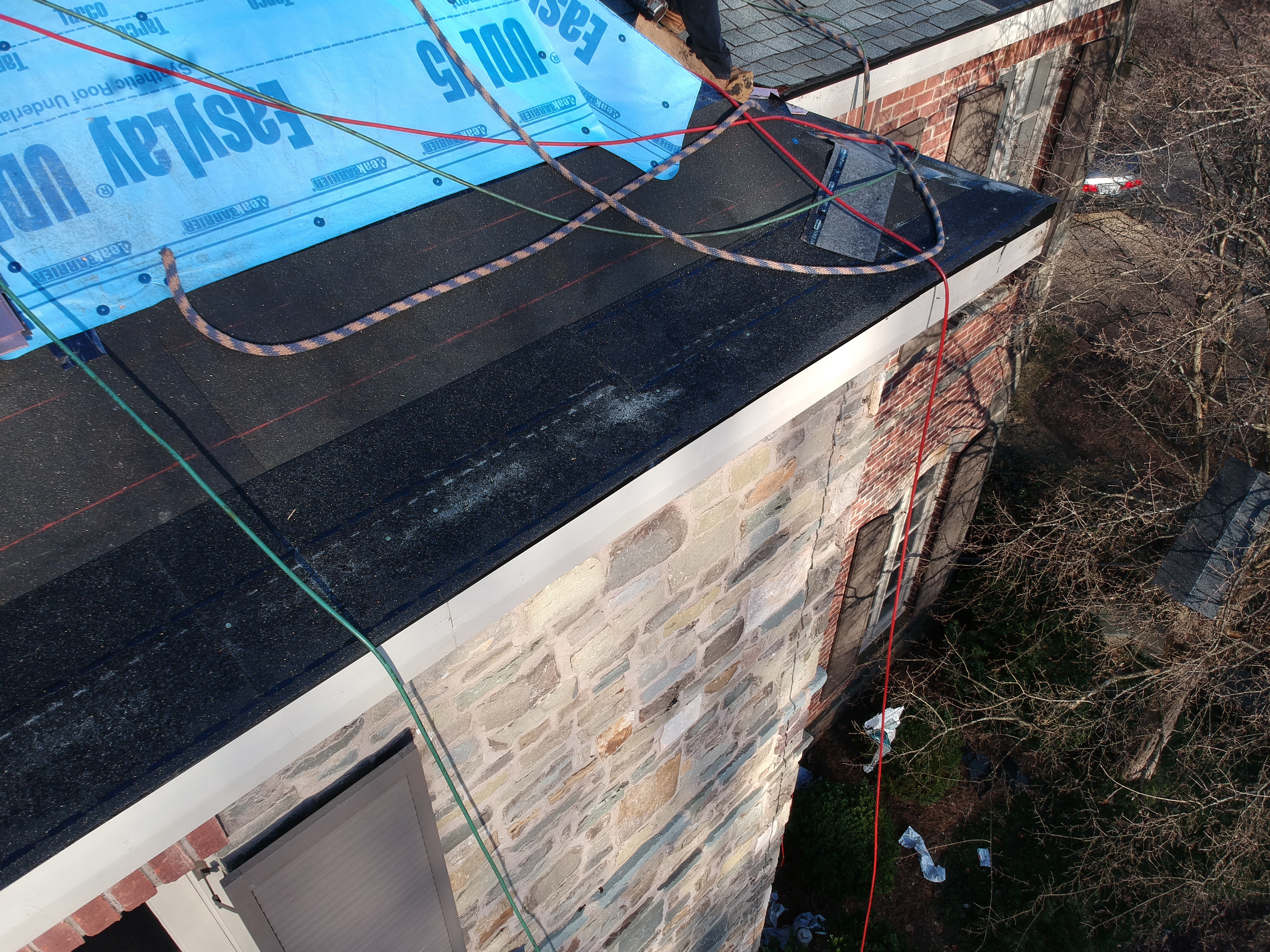
Emergency Roof Leak Response Across Metro Atlanta
Our emergency crews respond to roof leak emergencies 24 hours a day across our entire 30-mile service area. Every community in metro Atlanta sits within our 60-minute response window:
- Alpharetta: Large lot homes with mature tree canopy along Cogburn Road and Webb Bridge. Storm debris from overhanging trees is the leading cause of emergency roof leaks in this area.
- Buckhead: Steep-slope roofs on luxury homes with complex architectural details. Multiple valleys, dormers, and chimney intersections create more potential leak points than simpler roof designs.
- Sandy Springs: Homes along Mount Vernon Highway and Powers Ferry with aging roofing systems from the 1990s building boom. Many are past their warranty period and vulnerable to storm events.
- Johns Creek: Master-planned communities with HOA requirements for approved contractors. We work within HOA guidelines to ensure your emergency repair does not create a compliance issue.
- Roswell: From historic homes near the square to newer builds along Holcomb Bridge, Roswell's housing diversity means we see every type of roof leak scenario.
- Marietta: East Cobb's heavily wooded neighborhoods are particularly vulnerable to tree-related roof damage during storms. We respond to more emergency calls in this corridor than almost any other in our service area.
Your roof is leaking right now. Call (404) 277-1377 and we will be there within the hour.
Roof Leak Emergency FAQ
Can you tarp my roof during a storm?
Yes. Our emergency crews perform tarping during active storms when conditions allow safe roof access. For severe storms with high winds or lightning, we stage nearby and deploy the moment conditions allow. We carry commercial-grade tarps and mechanical fastening systems that hold through subsequent rain events. Call (404) 277-1377 and we will assess conditions and respond as fast as safely possible.
Water is dripping through my ceiling right now. What should I do?
Place buckets under active drips immediately. If you see a bulge forming in the ceiling, that is water pooling above the drywall. Place a tarp on the floor beneath it, position a bucket, and carefully puncture the center of the bulge with a screwdriver to release the water in a controlled way. An uncontrolled ceiling collapse dumps 50 to 200 gallons of dirty water across your room. Then call us at (404) 277-1377.
Will my homeowners insurance cover roof leak water damage?
Roof leak water damage caused by a sudden event like a storm, fallen tree, or wind damage is typically covered under standard Georgia homeowners policies. Damage from long-term neglect is usually excluded. The key is documenting that the leak resulted from a specific, sudden event. Our teams photograph everything and provide moisture mapping data that supports your claim.
How do you find where the roof is actually leaking?
The spot where water drips through your ceiling is almost never directly below the actual roof penetration point. Water travels along rafters and sheathing before dripping through. We use infrared thermal imaging to trace the moisture path from the interior drip back to the roof breach. On the exterior, we inspect flashing, valleys, penetrations, and shingle damage to pinpoint the entry point.
How long does roof leak water damage restoration take?
Emergency tarping and interior water extraction happen within hours of your call. Structural drying takes 3 to 5 days depending on saturation levels. Permanent roof repair and interior restoration typically take 1 to 3 weeks after drying is complete. Total timeline from emergency call to finished restoration runs 2 to 4 weeks for most roof leak jobs.
Can a roof leak cause my ceiling to collapse?
Absolutely. Saturated drywall gets extremely heavy and the fasteners pull through the softened material. A 10-by-10-foot section of wet ceiling drywall can weigh over 300 pounds. When it lets go, it comes down all at once, destroying furniture and flooring below. If you see a sagging or bulging ceiling, evacuate that room and call us immediately at (404) 277-1377.
More Emergency and Restoration Resources
Burst Pipe Emergency
24/7 response for burst pipes flooding your home. Water extraction and full restoration.
Storm Flooding Emergency
Severe weather flooding your property? Our storm damage crews respond around the clock.
Water Damage Restoration
Full-service water damage restoration for metro Atlanta homeowners.
Roof Repair Services
Professional roof repair for leaks, wind damage, and aging roofing systems.
Storm Damage Restoration
Complete storm damage assessment, emergency repairs, and insurance support.
Insurance Claims Help
We handle documentation, adjuster meetings, and claims negotiation.
Adjuster Meeting Prep
How to prepare for your insurance adjuster visit after roof damage.
Insurance vs. Out of Pocket
Understanding your financial options for roof and water damage restoration.
Do Not Wait. Every Hour Costs You Thousands.
Mold starts growing within 24-48 hours. Structural damage compounds by the day. Insurance adjusters want to see that you acted fast. Call 1 Source Roofing and Restoration right now.