
Burst Pipe Flooding Your Home? We Stop the Damage Now
Water is destroying your floors, walls, and belongings right now. Our emergency crews arrive within 60 minutes to extract the water and save your home.
Certified & Trusted Emergency Restoration
A Burst Pipe Is a Race Against the Clock
A single burst pipe can dump 400 to 600 gallons of water per hour into your home. That is not a typo. A standard half-inch supply line running at full pressure will flood an entire floor level in under two hours. By the time most homeowners realize what has happened, the water has already soaked through the subfloor, wicked up the drywall, and started pooling in areas they cannot see.
Here is what happens to your home on a timeline that should terrify you:
- First 60 minutes: Water saturates carpet, padding, and any finished flooring. Drywall begins wicking moisture upward. Furniture legs sitting in water start releasing dyes into carpet and hardwood. Personal belongings on the floor are likely already ruined.
- Hours 2 through 6: Water migrates through wall cavities and into adjacent rooms. Laminate flooring starts warping at the seams. Particleboard cabinets in kitchens and bathrooms swell and delaminate. Electrical outlets near the floor become a shock hazard.
- Hours 6 through 24: Drywall that has been wet for this long will not dry back to its original condition. It softens, sags, and becomes a breeding surface for mold. Hardwood floors begin cupping and buckling. The water has now reached areas behind walls that you cannot inspect without cutting holes.
- 24 to 48 hours: Mold spores activate. In Georgia's warm, humid conditions, mold colonization begins on any organic surface that stayed wet. This includes wood framing, paper-faced drywall, cardboard boxes, carpet backing, and insulation.
Every hour you wait adds thousands of dollars to the restoration bill. Call (404) 277-1377 right now. Our crew will be at your door within the hour.
A burst pipe dumps 400-600 gallons per hour. Mold begins colonizing within 24-48 hours. By 72 hours, visible mold growth requires professional remediation that costs 3-5x more than early intervention.
What Happens When Our Crew Arrives at Your Door
When you call 1 Source Roofing and Restoration for a burst pipe emergency, a live dispatcher picks up the phone. Not a voicemail. Not an answering service that takes a message and calls you back in the morning. A real person who starts mobilizing a crew while still on the line with you.
Here is exactly what our emergency response looks like:
- Phone triage (while you are on the phone): We walk you through shutting off your main water supply if you have not already done so. We ask targeted questions about where the water is, how deep it is, and what floor level is affected. This lets our crew arrive with the right equipment instead of making a second trip.
- Arrival and assessment (within 60 minutes): Our lead technician does a rapid walk-through to map the full extent of the water intrusion. We use infrared thermal imaging cameras to see moisture behind walls and under floors that the naked eye cannot detect. This initial assessment takes about 20 minutes.
- Emergency water extraction (begins immediately after assessment): We deploy truck-mounted extraction units that remove standing water at a rate that dwarfs anything you can rent at a hardware store. For deep flooding, we use submersible pumps rated for thousands of gallons per hour.
- Moisture mapping and documentation: Every wall, floor, and ceiling gets checked with professional moisture meters. We log readings at dozens of points throughout the affected area and take timestamped photos. This documentation becomes critical for your insurance claim.
- Structural drying setup: Once the bulk water is out, we position commercial dehumidifiers and high-velocity air movers throughout the affected area. The goal is to pull the remaining moisture out of drywall, framing, and subfloors before mold gets a foothold.
Most burst pipe emergencies require 3 to 5 days of active drying. Our team monitors moisture levels daily and adjusts equipment placement to ensure every surface reaches its dry standard.
Why Burst Pipes Hit Metro Atlanta Homes Hard
Atlanta is not Minneapolis. Our pipes are not buried 5 feet deep to survive minus-40 winters. Georgia building codes require a shallower frost line depth, and most metro Atlanta homes have water lines running through uninsulated crawl spaces, exterior walls, and attic spaces that builders never expected to drop below freezing.
That is exactly why burst pipes cause so much damage here. Atlanta homeowners are not prepared for it.
Here are the most common burst pipe scenarios we respond to across Alpharetta, Buckhead, Sandy Springs, Johns Creek, Roswell, and Marietta:
- Freeze events: When metro Atlanta gets a hard freeze (below 28 degrees for more than 4 hours), pipes in exterior walls and uninsulated crawl spaces burst at an alarming rate. The January 2024 freeze alone generated more burst pipe calls in a single week than we normally see in six months. Homes built before 2000 are especially vulnerable because insulation standards were lower and many builders ran supply lines through exterior wall cavities.
- Corroded copper supply lines: Homes built in the 1970s through 1990s across North Fulton and Gwinnett County often have original copper supply lines that have thinned from decades of use. These pipes do not just leak. They split open under normal water pressure with zero warning.
- Failed washing machine hoses: Rubber supply hoses connected to washing machines are the single most common source of catastrophic residential water damage in the United States. These hoses are under constant pressure and the rubber degrades over time. When they fail, they dump water at full municipal pressure until someone finds the mess.
- Water heater failures: A 50-gallon water heater that ruptures releases its entire tank plus continues filling from the supply line. These failures are especially destructive in two-story homes where the water heater sits in an upstairs closet or attic space, and the water cascades down through ceilings and walls.
- Polybutylene pipe failures: Thousands of homes built in metro Atlanta between 1978 and 1995 still have polybutylene (poly-B) plumbing. These gray plastic pipes are notorious for sudden, catastrophic failure. If your home has poly-B pipes, it is not a question of if they will burst, but when.
If any of these scenarios sounds like what just happened in your home, do not wait. Call (404) 277-1377 now.
The Damage Behind Your Walls That You Cannot See
The water on your floor is the problem you can see. The real destruction is happening inside your wall cavities, beneath your subfloor, and above your ceiling right now.
Water follows gravity and capillary action simultaneously. It pools on horizontal surfaces while wicking upward through porous materials like drywall and wood. A burst pipe on the second floor does not just flood the second floor. It runs down inside wall cavities, saturates insulation, drips through electrical junction boxes, soaks the first-floor ceiling, and pools on the ground floor or in the crawl space below.
Here is what we typically find behind the walls during burst pipe restoration:
- Saturated insulation: Fiberglass batt insulation holds water like a sponge. Once wet, it loses all thermal value and becomes a perfect incubator for mold growth. It must be removed and replaced.
- Wet wood framing: Studs, joists, and sill plates absorb water and remain damp for weeks if not professionally dried. Sustained moisture above 19% in wood framing creates conditions for wood rot and structural compromise.
- Electrical hazards: Water inside wall cavities contacts wiring, junction boxes, and outlets. Even after the visible water is gone, moisture trapped inside electrical boxes creates corrosion and potential fire hazards. Georgia code requires electrical inspection after significant water intrusion events.
- Subfloor damage: Plywood subfloors swell when wet and do not return to their original dimensions. OSB (oriented strand board) subfloors are worse. They delaminate when saturated and must be replaced. You cannot lay new hardwood or tile on a compromised subfloor.
Our infrared cameras detect moisture concentrations behind intact walls and under finished floors without cutting a single hole. We know exactly where the water went, how far it traveled, and what materials are affected before we begin any demolition work.
Mold Starts Fast in Georgia. We Move Faster.
Georgia ranks among the top five states in the country for mold-related property damage claims. The reason is simple: our baseline humidity runs 60% to 80% for most of the year. When a burst pipe adds standing water to an already humid environment, mold does not need any encouragement.
The mold timeline after a burst pipe in metro Atlanta:
- 0 to 24 hours: Mold spores (which are already present in every home) detect the new moisture and begin germinating on wet organic surfaces. You cannot see anything yet, but the biological process has started.
- 24 to 48 hours: Microscopic mold colonies form on the wettest surfaces. Drywall paper facing, carpet backing, and wood are the first targets. At this stage, professional drying can still prevent visible mold growth.
- 48 to 72 hours: Mold becomes visible as dark spots on drywall, fuzzy growth on carpet padding, and discoloration on wood framing. Once you can see it, remediation just got significantly more expensive.
- Beyond 72 hours: Mold spreads aggressively. Spore counts in the air increase, creating health risks for everyone in the home. Full mold remediation with containment barriers, HEPA filtration, and antimicrobial treatment becomes necessary.
The cost difference is stark. Professional drying within the first 24 hours typically costs a fraction of what full mold remediation runs after 72 hours. On a typical Atlanta home with 500 square feet of affected space, you are looking at the difference between a few thousand dollars and five figures.
That is why we answer the phone 24 hours a day. That is why we arrive within 60 minutes. The clock started the moment that pipe burst. Call (404) 277-1377 right now.
Water Damage Gets Worse Every Minute. Call Now.
Our emergency crews are standing by 24 hours a day, 7 days a week. We arrive within 60 minutes anywhere in metro Atlanta.
We Handle Your Insurance Claim From Start to Finish
Filing an insurance claim while standing in two inches of water is the last thing you want to deal with right now. We know. We have been through this process thousands of times with Atlanta homeowners, and we handle the heavy lifting so you do not have to.
Here is how we protect your insurance claim:
- Immediate documentation: From the moment we arrive, every action gets documented with timestamped photos, video, and written notes. We record moisture readings at dozens of points using calibrated meters. This creates an evidence trail that shows your insurer exactly what happened and exactly how we responded.
- Proper categorization: Insurance adjusters classify water damage into three categories. Category 1 is clean water from a supply line. Category 2 is gray water from appliances. Category 3 is black water from sewage. The category directly affects coverage and reimbursement rates. We make sure the damage is properly categorized from the start.
- Adjuster coordination: We work with every major insurance carrier operating in Georgia. State Farm, Allstate, Liberty Mutual, Farmers, USAA, Nationwide. We know their documentation requirements, their preferred pricing formats, and their claims processes. When your adjuster arrives, our project manager meets them on-site with a complete file.
- Scope alignment: The most common reason burst pipe claims get underpaid is scope disagreement. The adjuster misses the moisture behind a wall or underestimates the drying time. Because we have infrared imagery and moisture data from day one, we can demonstrate exactly what work was necessary and why.
Georgia law requires insurers to act in good faith on legitimate claims. A burst pipe from a sudden failure is about as clear-cut as water damage claims get. With our documentation backing your claim, you have the evidence to get the settlement you deserve.
Need help understanding your options? Read our guide to denied insurance claims in Georgia or learn how to prepare for your adjuster meeting.
Every hour of delay adds thousands to your restoration bill. Our crews arrive within 60 minutes, 24/7/365. Call (404) 277-1377 before the damage spreads further.
What NOT to Do After a Burst Pipe
In the panic of discovering your home flooding, most people make at least one mistake that costs them money on their insurance claim or makes the damage worse. Here are the mistakes we see homeowners make over and over again:
- Do not use your home vacuum to suck up water. A standard household vacuum is not designed for water. You will destroy the motor, potentially electrocute yourself, and barely make a dent in the standing water. Wet/dry shop vacs can handle small amounts, but they are hopelessly outmatched by a real burst pipe event.
- Do not rip out wet carpet yourself. This feels productive, but if you tear out materials before your insurance adjuster documents the damage, you may be destroying evidence that supports your claim. We document everything first, then begin controlled demolition.
- Do not turn on the HVAC system to dry things out. Your HVAC ductwork runs through floor cavities and wall chases. Running the system while those areas are wet spreads moisture and mold spores to every room in the house through the supply ducts. It also saturates your HVAC filter and evaporator coil, creating a mold problem inside the air handler itself.
- Do not wait until Monday. Water damage does not take weekends off. The difference between Friday night extraction and Monday morning extraction is 48 to 60 hours of additional damage. That is the difference between drying your existing drywall and ripping it all out. We work 24/7 for exactly this reason.
- Do not assume it will dry on its own. Opening windows and running fans feels like you are doing something, but fans move air across surfaces. They do not extract moisture from inside wall cavities, beneath subfloors, or within insulation. The materials that matter most are the ones you cannot reach with a box fan.
The single best thing you can do right now is shut off the water supply and call a professional restoration company immediately. That number is (404) 277-1377.
Complete Burst Pipe Restoration: From Flood to Finished
Emergency extraction is just the first phase. A burst pipe that floods 500 or more square feet of living space typically requires a multi-phase restoration process that takes 2 to 4 weeks to complete properly. Here is what the full scope of work looks like on a typical metro Atlanta burst pipe job:
Phase 1: Emergency Mitigation (Days 1 through 2)
- Water extraction using truck-mounted and portable equipment
- Removal of unsalvageable materials (saturated carpet pad, damaged insulation, ruined personal property)
- Controlled demolition of affected drywall (typically cut 12 to 24 inches above the visible water line to ensure all wet material is removed)
- Placement of commercial drying equipment
- Antimicrobial treatment on all exposed framing and subfloor
Phase 2: Structural Drying (Days 2 through 5)
- Daily moisture monitoring at all documented points
- Repositioning of air movers and dehumidifiers based on drying progress
- Target: all structural materials must reach their dry standard (below 15% for wood, below 1% for concrete) before any rebuild work begins
Phase 3: Rebuild and Restoration (Days 7 through 21)
- New insulation installation to current Georgia energy code requirements
- Drywall replacement, taping, and finishing
- Painting to match existing colors
- Flooring replacement or refinishing
- Baseboard and trim reinstallation
- Final electrical and plumbing inspection as required by local code
We handle every phase in-house. You do not need to hire a separate water mitigation company, a separate mold company, a separate drywall contractor, and a separate painter. One company. One point of contact. One insurance claim. That is how restoration should work.
Georgia Building Codes and Water Damage Restoration
Water damage restoration in Georgia is not just about getting things dry and putting them back together. State and local building codes govern what can be repaired, what must be replaced, and what inspections are required. Cutting corners on code compliance creates problems that surface during a home sale inspection or your next insurance claim.
Key Georgia code requirements for burst pipe restoration:
- Electrical inspection: Georgia code requires electrical inspection when water intrusion has affected wiring, outlets, or panels. In Fulton, Gwinnett, and DeKalb counties, this means pulling a permit and scheduling an inspection with the local building department. We handle the permitting process.
- Plumbing repair permits: Replacing the burst pipe itself requires a plumbing permit in most metro Atlanta jurisdictions. The repair must be performed by a licensed plumber and inspected by the local authority. We coordinate licensed plumbing subcontractors for every burst pipe repair.
- Insulation replacement: Georgia's current energy code (based on IECC 2015 with amendments) requires that any insulation removed during restoration be replaced to meet or exceed current R-value requirements. This is an upgrade opportunity. Many older homes had R-13 in exterior walls. Current code requires R-20 or R-13 plus continuous insulation.
- Mold remediation standards: While Georgia does not currently license mold remediators at the state level, most insurance carriers require that mold remediation follow IICRC S520 standards. Our teams are trained and equipped to meet these standards on every job.
Homeowners in HOA communities across Sandy Springs, Johns Creek, and Alpharetta face additional requirements. Many HOAs mandate specific contractors, require pre-approval for exterior work, and have noise and work-hour restrictions. We have worked with dozens of HOAs across metro Atlanta and know how to keep your restoration on track without triggering violations.
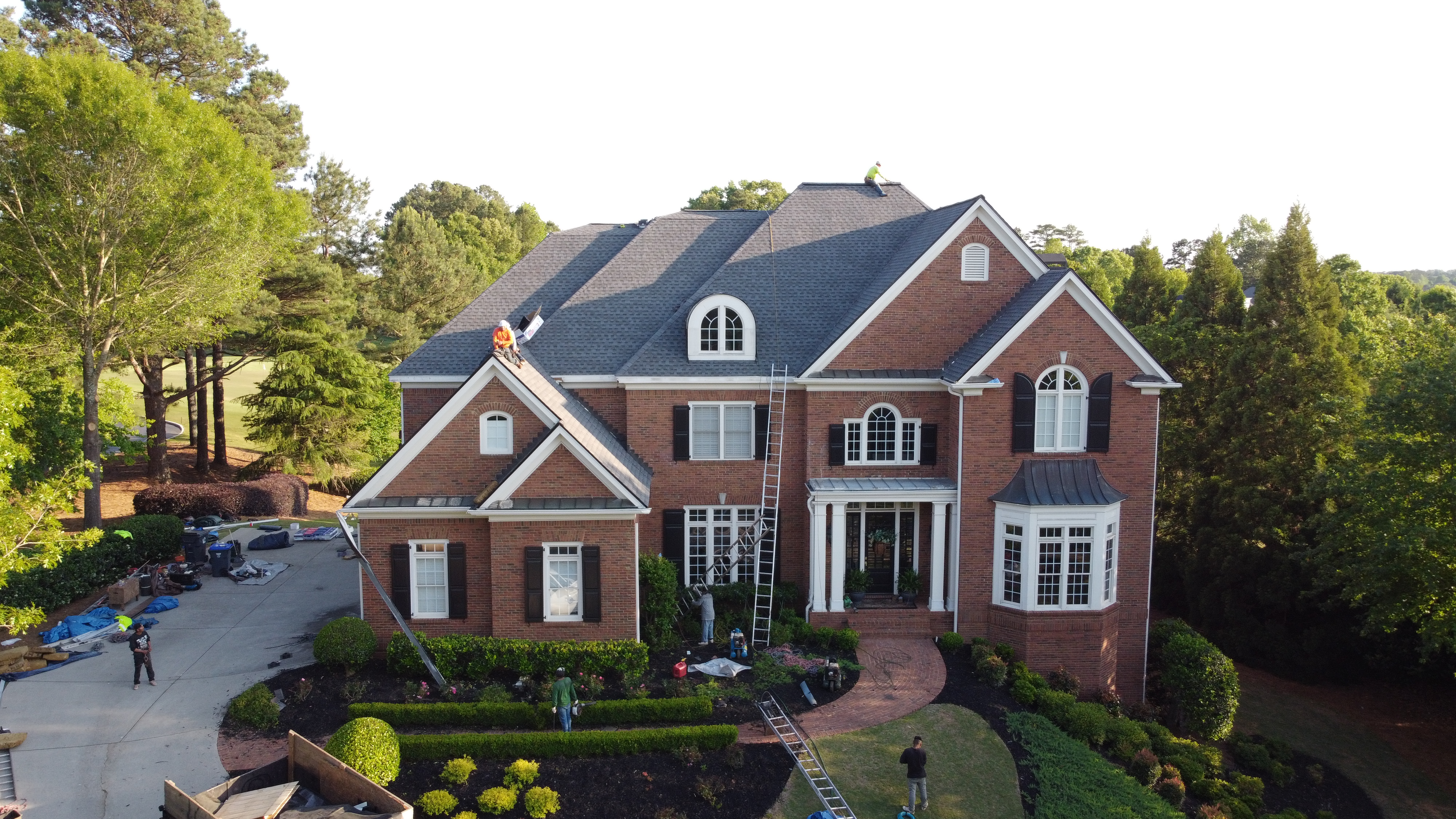
Emergency Burst Pipe Response Across Metro Atlanta
Our crews are staged strategically across the metro Atlanta area to ensure we can reach any location within our 30-mile service radius in under 60 minutes. We respond to burst pipe emergencies 24 hours a day in every community we serve:
- Alpharetta: High-end homes along Windward Parkway, Old Milton Parkway, and the Avalon district. Many built in the 1990s with copper lines nearing end of life.
- Buckhead: Historic estates and luxury high-rises. Older plumbing infrastructure combined with high property values make rapid response critical.
- Sandy Springs: Executive homes along the Chattahoochee corridor. Finished basements are especially vulnerable to burst pipe flooding.
- Johns Creek: Newer construction in master-planned communities. Even homes built after 2005 experience burst pipe events from freeze damage and water heater failures.
- Roswell: A mix of historic homes near Canton Street and newer developments along Highway 9. Older homes with galvanized or polybutylene plumbing are particularly at risk.
- Marietta: From the historic square to East Cobb subdivisions, we respond to burst pipe emergencies across all of Cobb County.
No matter where you are in metro Atlanta, if a burst pipe is flooding your home right now, call (404) 277-1377. We will be there.
Burst Pipe Emergency FAQ
How fast can you respond to a burst pipe emergency in Atlanta?
Our emergency crews are staged across metro Atlanta and can reach your home within 60 minutes of your call. We operate 24 hours a day, 7 days a week, 365 days a year. When you call (404) 277-1377, you speak with a live dispatcher who immediately mobilizes the closest available team to your location.
Does homeowners insurance cover burst pipe water damage in Georgia?
Most standard Georgia homeowners policies cover sudden and accidental water damage from burst pipes. The key word is sudden. If the insurer determines the pipe leaked slowly over weeks, they may deny the claim as a maintenance issue. We document every job with timestamped photos and moisture readings so your adjuster can see this was a sudden event, not deferred maintenance.
How long does it take for mold to grow after a burst pipe?
In Georgia's humid climate, mold spores can begin colonizing wet drywall and carpet padding within 24 to 48 hours. By 72 hours, visible mold growth is common on organic materials like wood framing, paper-faced drywall, and insulation. Immediate water extraction is the single most effective way to prevent mold.
Should I turn off the water before your crew arrives?
Yes. Shut off the main water supply valve immediately. In most Georgia homes, this is near the water meter at the street or where the main line enters the house. If you cannot find it, turn off individual fixture shutoffs near the burst pipe. Our dispatcher will walk you through this on the phone while our crew is en route.
What equipment do you use for burst pipe water extraction?
We deploy truck-mounted extraction units capable of removing hundreds of gallons per hour, commercial-grade dehumidifiers, high-velocity air movers for structural drying, infrared thermal cameras to detect hidden moisture behind walls, and professional-grade moisture meters to document readings for your insurance claim.
More Water Damage and Emergency Resources
Roof Leak Water Damage
Emergency response for active roof leaks flooding your attic and living spaces.
Storm Flooding Emergency
Severe weather flooding your home? Our storm damage crews respond 24/7.
Water Damage Restoration
Full-service water damage restoration for metro Atlanta homeowners.
Storm Damage Services
Complete storm damage assessment, repair, and insurance claims support.
Insurance Claims Help
We handle your insurance claim paperwork, documentation, and adjuster meetings.
Insurance vs. Out of Pocket
Understanding your options for paying for water damage restoration.
Roof Repair Services
Professional roof repair for leaks, storm damage, and aging roofing systems.
Insurance Claim Denied?
Steps to take when your Georgia insurance claim gets denied or underpaid.
Do Not Wait. Every Hour Costs You Thousands.
Mold starts growing within 24-48 hours. Structural damage compounds by the day. Insurance adjusters want to see that you acted fast. Call 1 Source Roofing and Restoration right now.