When severe weather strikes Country Club of the South, St. Ives, Abbotts Bridge, or Medlock Bridge, every minute of delay means more water intrusion and more damage. Our crews are staged and ready — 24 hours a day, 7 days a week.
Johns Creek sits directly in what meteorologists and insurance professionals often call the North Fulton storm corridor — a geographic belt stretching from Peachtree Corners north through Suwanee that channels severe convective storms off the Appalachian foothills and focuses hail-producing supercells over the densely developed communities along GA-141 and McGinnis Ferry Road. If you have lived in Johns Creek for more than a few years, you already know this. You have seen the hail, the downed limbs, the neighbor's tarp.
What many homeowners do not realize is how dramatically that pattern interacts with the age of Johns Creek's housing stock. The city was incorporated in 2006, but its core neighborhoods — Country Club of the South, St. Ives, Abbotts Bridge, and Medlock Bridge — were developed primarily between 1988 and 1999. That means the original roofing systems on most of these homes are now between 25 and 38 years old. Even well-maintained roofs lose granule density, sealant flexibility, and impact resistance as they age. A half-inch hail event that leaves a three-year-old roof unscathed can functionally destroy a 30-year-old 3-tab shingle system — and yet leave it visually intact from the street.
1 Source Roofing and Restoration has been responding to storm events across metro Atlanta for over a decade. We understand the specific exposure profile of Johns Creek properties, the documentation requirements for North Fulton insurance adjusters, and — critically — the HOA approval processes that govern exterior repairs in this city's premium planned communities. We do not just fix roofs. We manage the entire recovery from emergency tarping through final inspection, so you never have to.
.jpg)
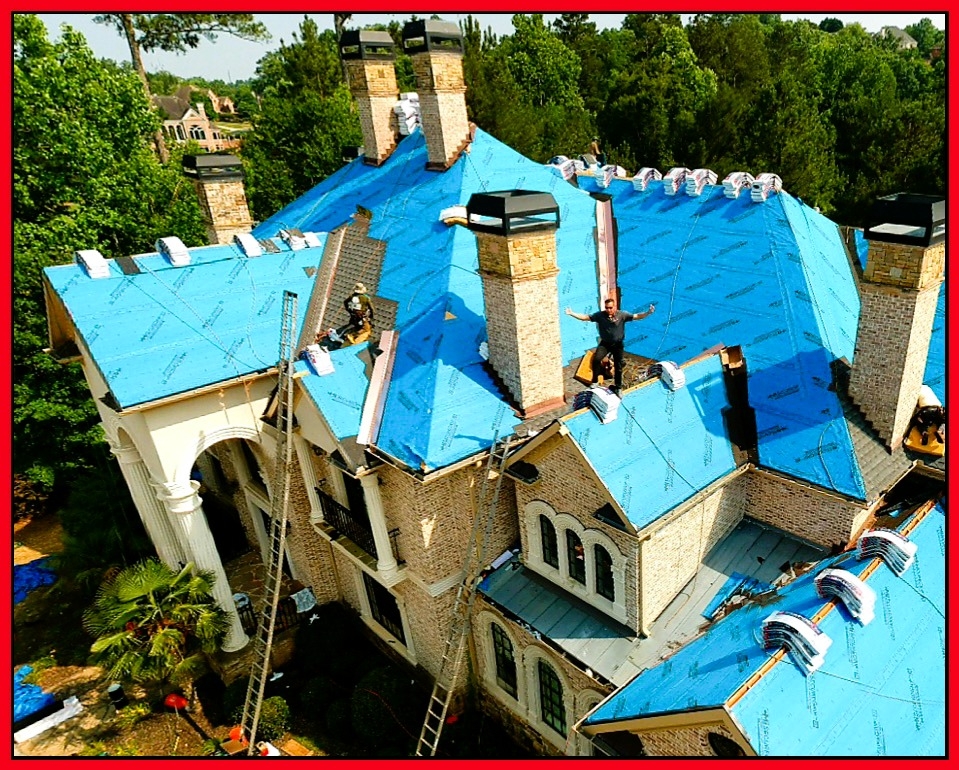
The moment a storm passes, the clock is running. Water intrusion that starts at the roof deck accelerates through insulation, drywall, framing, and finishes with every passing hour. Our emergency crews deploy weatherproof tarping systems — not hardware-store poly — that are mechanically secured to protect your interior while repairs are planned and permitted.
Hail damage is frequently invisible from ground level but catastrophic in its long-term effects. Our inspectors document every impact point with date-stamped photography, measure bruising depth, test granule adhesion, and evaluate the full extent of functional damage — producing reports that are formatted for insurance adjusters and built to stand up to scrutiny.
Sustained winds from severe thunderstorms and occasional tropical remnants routinely lift shingles, compromise ridge caps, and stress flashing at penetrations and transitions. We repair wind damage at every level — from individual shingle tabs to full system replacement when wind loading has compromised structural integrity.
We work directly with your insurance carrier from first notice of loss through final settlement. Our team prepares a detailed scope of loss, attends the adjuster inspection, negotiates discrepancies in damage assessment, and ensures your claim captures every covered item — including code-upgrade requirements that first-time claimants routinely miss.
Country Club of the South, St. Ives, Abbotts Bridge, and Medlock Bridge all maintain architectural review committees with specific material, color, and installation requirements. We prepare complete HOA submittal packages — product specifications, color matching, installation method statements — and coordinate approval timing so repairs proceed without delay or compliance risk.
When storm damage is extensive enough to warrant a full replacement, we perform complete system installations using GAF, CertainTeed materials — the manufacturer lines your HOA is most likely to approve. Every replacement includes new underlayment, ice-and-water barrier at eaves and valleys, proper ventilation, and manufacturer-backed warranties.
Water intrusion compounds with every hour. Our Johns Creek emergency line is active around the clock — a real crew member answers, not a voicemail box. We can have a crew at your property within hours of your call.
Call (404) 277-1377 — 24/7 Emergency LineThe roofing materials installed on the majority of Johns Creek homes during the development boom of the late 1980s and 1990s were built to a different standard than today's impact-resistant systems. Three-tab asphalt shingles — the dominant product of that era — had typical design lives of 20 to 25 years. Those timelines have passed for most of this city's original installations.
Shingle granules serve two functions: UV protection for the underlying asphalt and impact cushioning against hail. After 25 to 30 years of Georgia's intense ultraviolet exposure and thermal cycling, granule loss on aged shingles is severe. The exposed asphalt becomes brittle and cracks on impact, creating pathways for water infiltration that may not manifest as visible interior leaks for weeks or months — until structural damage is already underway.
Modern shingles bond to each other at a thermal-activated sealant strip that prevents wind uplift. On roofs that are 25 years or older, that sealant strip has typically hardened and lost adhesion. Wind events that would not disturb a properly bonded new roof can blow individual shingles or entire sections off an aged roof, and the failure often occurs at points that are not visible from below.
The felt underlayment beneath the shingle layer is your roof system's last line of defense against water penetration. Fifteen-pound felt — standard in 1990s construction — becomes brittle, tears at fastener points, and loses its waterproofing properties after two to three decades. When shingles are displaced by wind or compromised by hail, a degraded underlayment provides negligible protection.
When we assess a 1990s roof in Johns Creek, we document all three failure modes in our inspection report. Insurance adjusters who specialize in North Fulton County claims recognize these patterns. A thorough, age-appropriate assessment is the foundation of a successful insurance claim and the most accurate basis for repair-versus-replacement decisions.
Johns Creek's premier planned communities were designed with strict architectural controls to maintain property values and aesthetic consistency. Those controls are an asset to homeowners under normal circumstances. After a storm, they can feel like obstacles when your roof is compromised and you need work to begin immediately.
Understanding what does and does not require prior HOA approval is the first step in managing this process efficiently.
Emergency protective measures — including waterproof tarping, temporary ridge repairs, and debris removal — are almost universally classified as emergency maintenance under Johns Creek HOA declarations. These can and should begin immediately after storm events. Most declarations include explicit language protecting homeowners' rights to take emergency protective action without prior architectural committee approval.
Any permanent exterior alteration — including full roof replacement and, in many communities, even significant repair work — requires architectural committee review and written approval. Submittal requirements vary by community but typically include:
We have prepared HOA submittals for architectural committees in Country Club of the South, St. Ives, Abbotts Bridge, Medlock Bridge, and other Johns Creek communities. We know what these committees look for and what most commonly causes approval delays. Our submittals are comprehensive on first submission — reducing back-and-forth and keeping your repair timeline on track.
Insurance adjusters work on their own timelines. HOA committees meet on scheduled cycles. Getting repair work started requires coordinating both — and ensuring that your insurance claim's approved scope aligns with what your HOA will approve. We manage both processes in parallel, keeping you informed at every step and advocating with both parties when their requirements are in tension.
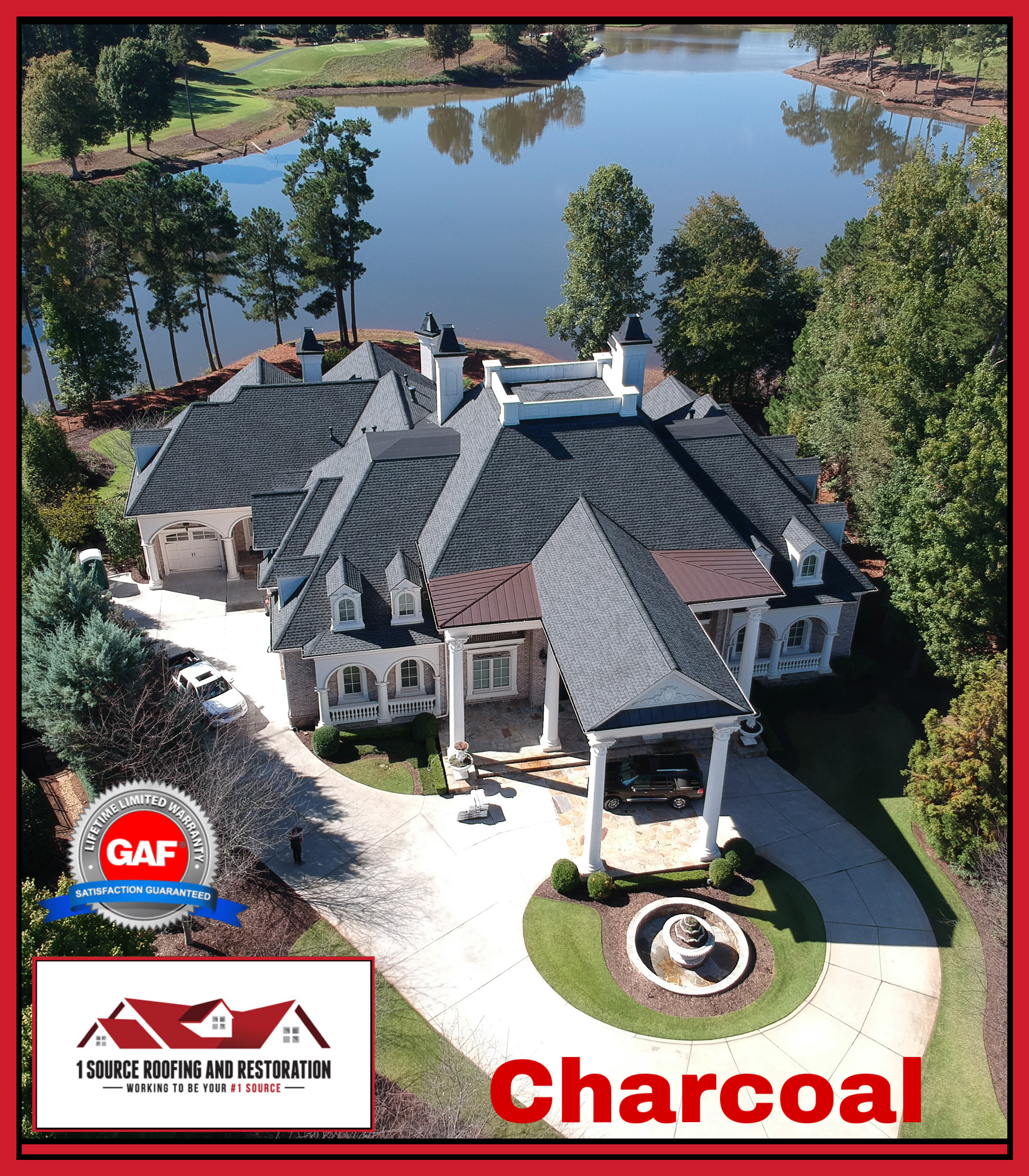
Our crews are deployed throughout Johns Creek's residential communities. We have direct experience with the architectural standards, HOA structures, and specific storm exposure profiles of the following neighborhoods.
One of Johns Creek's most prestigious gated communities, featuring large estate homes with complex rooflines, multiple pitches, and premium material specifications. HOA architectural standards are detailed and enforced. Our submittals are prepared to match the committee's specific requirements.
A golf-course community with substantial tree canopy that creates both wind damage and falling-limb risk. St. Ives homes frequently experience branch strike damage alongside hail impacts. We assess both categories in every inspection and coordinate with your insurer on combined-cause claims.
A large-scale planned community along Abbotts Bridge Road with significant housing stock from the early-to-mid 1990s. Many original roofing systems in Abbotts Bridge are approaching or past their design service life. Post-storm inspections in this neighborhood frequently document age-compounded damage requiring full replacement.
Straddling the Johns Creek and Johns Creek/Duluth boundary, Medlock Bridge features a mix of townhomes and single-family residences with active HOA oversight. We handle both property types and coordinate between adjacent HOA jurisdictions when boundary properties are involved.
When you call (404) 277-1377, a real team member answers — not a call center or voicemail system. We take your address, assess urgency, and dispatch based on damage severity. During active weather events, we prioritize active water intrusion and structural compromise.
Our first priority is stopping the damage from getting worse. This means deploying commercial-grade tarps, temporarily sealing open penetrations, clearing debris that is creating secondary damage risk, and documenting existing conditions with timestamped photography before any work begins.
A thorough, documented inspection is the foundation of both an insurance claim and a repair scope. We inspect the full roofing system — shingles, ridge, valleys, flashing, penetrations, gutters, fascia, and soffit — and document every item with photographs and written descriptions. We distinguish between pre-existing conditions and storm-caused damage because your insurer will.
We submit our inspection documentation to your insurance carrier, make ourselves available for the adjuster walkthrough, and review the adjuster's written scope against our own assessment. Where discrepancies exist — and they frequently do — we prepare a written supplement with supporting evidence. Our goal is to ensure that every item of covered damage is included in the final claim payment.
For permanent repair or replacement work, we prepare and submit your HOA architectural application. We track committee review timelines and follow up as needed to keep your approval on schedule.
Once approvals are in place, our installation crews complete the work. We use manufacturer-certified installation methods, conduct post-installation inspections, and do not consider a job complete until we are satisfied that the system will perform as designed.
We walk the property with you at completion, review the work, answer questions, and provide complete documentation of materials installed, warranties applicable, and any items noted for future monitoring. You receive a complete file — something we recommend you retain for any future insurance or sale transaction.
From Country Club of the South to Medlock Bridge, we know this city's homes, its HOAs, and its storm patterns. Let us manage your entire recovery — you focus on your family.
Call (404) 277-1377 — Free Inspection