
Emergency Tree Removal in Atlanta, GA
We remove the tree AND repair the roof — fast response across metro Atlanta. One call. Complete restoration. (404) 277-1377.
Tree on your roof? Call (404) 277-1377 — we handle the tree AND the roof damage. One call. Complete restoration.
Call NowCertified by Industry-Leading Manufacturers
When a Tree Falls on Your Roof — What to Do Right Now
If a tree has just fallen on your roof, the most important action in the first minutes is to stay clear of the impact zone. A tree on a roof creates structural risk that is not always visible from inside the home — load-bearing sections that appear intact may be compromised by the impact. The area directly beneath where the tree contacted the structure should be vacated until a contractor can assess the condition.
Do not attempt to remove the tree yourself. A tree lodged against or through a roof section may be providing temporary support to damaged framing. Removing it incorrectly — without assessing what it is bearing against — can cause secondary structural failure. This work requires trained personnel, the right equipment, and a clear understanding of the structural condition beneath.
Call 1 Source at (404) 277-1377. We prioritize tree-on-roof calls and deploy same-day to assess the structure, deploy emergency tarping over any open sections, and begin the documentation process for your insurance claim. While you wait for us to arrive: stay out of the attic and any rooms directly beneath the impact area; move valuables away from areas showing ceiling stress, sagging, or cracking; call your insurer to open a claim and record the claim number.
Why call a roofer instead of a tree service? Because the most important thing about a tree on a roof is not the tree — it is the damage to the roofing system and the structure underneath. A tree service removes the tree; they do not assess the decking, the rafters, the flashing, or the interior water exposure risk. 1 Source handles both — tree removal AND the complete roofing restoration underneath.
Tree Removal + Roof Repair — One Contractor, One Call
When a tree falls on a roof, the standard process most Atlanta homeowners experience goes like this: they call a tree company. The tree company arrives, removes the tree, and leaves. The homeowner then needs to find a roofer — a process that takes phone calls, estimates, and scheduling. Meanwhile, the open roof section is exposed to weather. If it rains before the roofer arrives, water infiltrates the interior, insulation, and wall cavities, multiplying the scope of the damage and the insurance claim.
That gap — between the tree being removed and the roof being sealed — is where the secondary damage happens. 1 Source eliminates that gap entirely.
When you call 1 Source for a tree-on-roof emergency, we arrive with both the capability to remove the tree and the expertise to assess and immediately begin restoring the roof underneath. Our crew handles the structural assessment of the impact zone, deploys emergency tarping to close any open sections before any tree removal work begins, removes the tree systematically and safely, and transitions directly into the roofing restoration scope — all under one contractor, on one timeline, with one insurance documentation package.
You make one call. We handle everything through to a weathertight roof. Insurance documentation is prepared throughout the process — not as an afterthought when the tree is already gone and evidence has been disturbed.
This integrated approach also produces better insurance outcomes. When the same contractor who removes the tree also documents the damage beneath it — before the tree moves — the photographic and measurement record captures the full cause-and-effect relationship between the tree and the structural damage. Adjusters reviewing claims where the tree was removed before documentation have less evidence to work with, which frequently results in disputes about the extent of structural damage that was present at the time of the loss.
1 Source documents everything before the tree moves. That record protects your claim.
Preventive Tree Risk Assessment — Before a Storm Strikes
Not every tree-related roofing situation is an emergency. For homeowners with large trees near their home — a common situation throughout Atlanta's mature residential neighborhoods — the more valuable conversation is a preventive one.
Georgia's storm season brings sustained winds, embedded thunderstorms, and occasional tornado events that can bring down otherwise healthy trees. Large trees overhanging roof sections are among the highest-consequence risks on a residential property, not because tree falls are common, but because when they happen, the cost of response and repair is typically substantial.
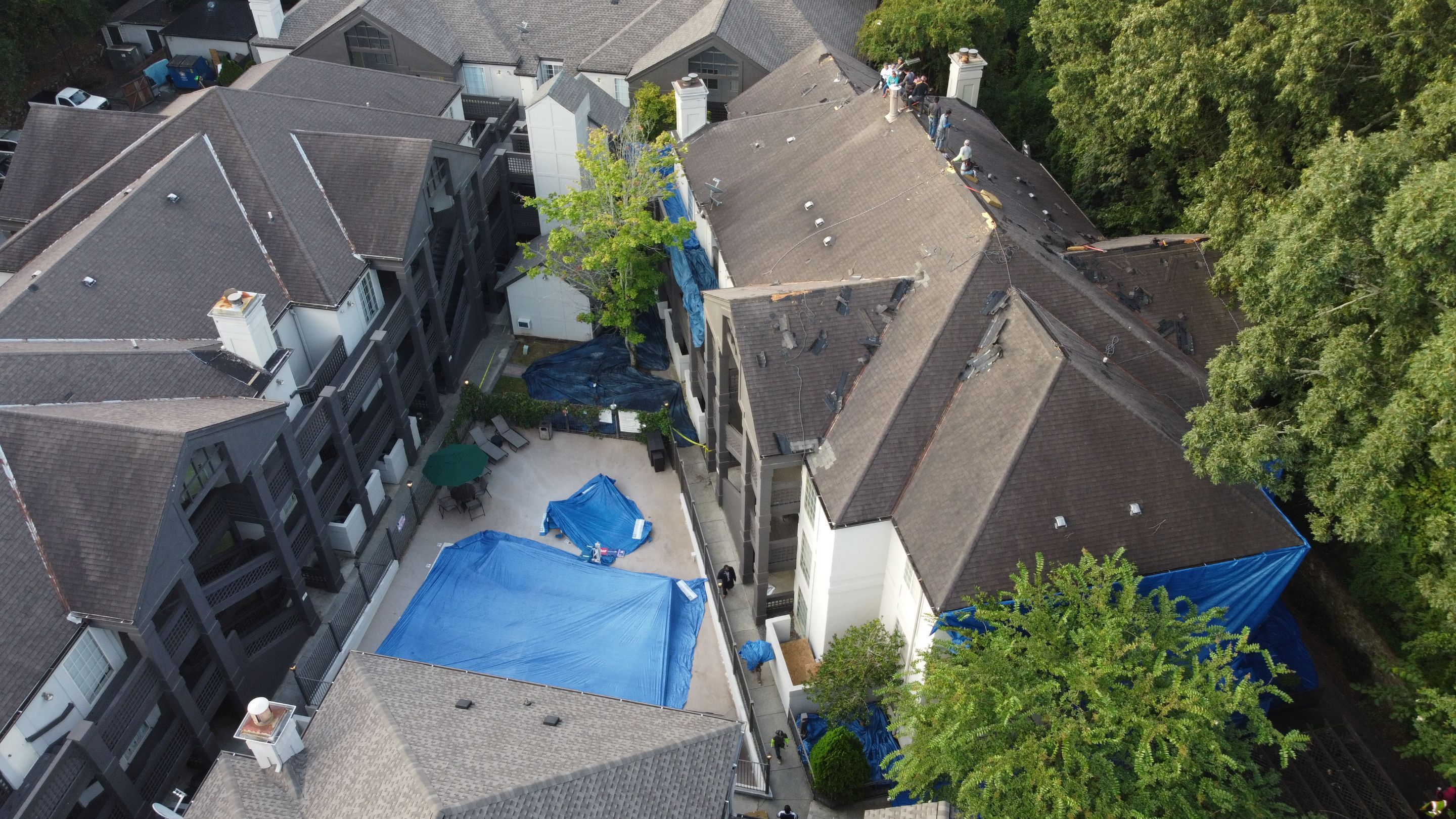
Atlanta's most valuable homes are frequently surrounded by mature hardwood trees — the oaks, tulip poplars, and sweetgums that make a property beautiful and provide the canopy that commands a premium in the luxury residential market. Those same trees represent the highest impact risk in storm season. Managing that risk proactively is a different posture than responding to it after the fact.
Signs a tree presents elevated risk to your roof:
Dead Limbs
Limbs with no leaves in season, brittle bark, or visible decay. Dead wood loses its tensile strength and becomes a projectile in wind events regardless of the tree's overall health.
V-Shaped Trunk Forks
A V-shaped fork where two major limbs diverge is structurally weaker than a U-shaped fork. These co-dominant stems are one of the most common failure points in mature trees during storm events.
Root Heaving
Raised soil at the base of the tree, cracking in hardscape near the root zone, or visible root lifting from the ground — all indicate a tree that is destabilizing. A leaning tree with root heave is at high risk of falling in any significant weather event.
Trunk Cavities and Fungal Growth
Large cavities in the main trunk, shelf fungus growing from the base or major limbs, or soft wood when probed all indicate internal decay. A tree that looks large and healthy from the outside may have a hollow or compromised core.
Heavy Lean Toward Structures
A tree that leans toward the house — particularly one where the lean has increased over time — represents a directional fall risk. The degree of lean combined with the tree's height determines the impact zone if it fails.
Previous Lightning Strikes
Lightning can kill a tree from the inside out while leaving the exterior apparently intact. A tree that was struck in a previous storm should be evaluated by an arborist — it may be a standing dead tree with none of the external visual cues.
1 Source includes tree risk observation in our annual roof inspection service. We are not arborists, and we refer at-risk specimens for formal arborist evaluation — but we flag trees of concern during our roof assessment and give homeowners a clear picture of what is within falling distance of their roofing system. Removing a large limb overhanging your roof before a storm costs a fraction of what the emergency response and roof repair costs afterward.
The 1 Source Emergency Response Process
Every tree-on-roof emergency follows the same structured sequence. The order of steps matters — each one protects the homeowner's claim, the structural integrity of the repair, and the completeness of the outcome. Here is exactly what happens when you call 1 Source for a tree emergency.
- Emergency Call — (404) 277-1377 Call us and tell us: tree on roof, your address, and any visible structural damage you can see from a safe position. We prioritize tree-on-roof calls above routine service requests. You will speak with a team member who understands the scope of the situation and can give you accurate arrival information.
- Same-Day Deployment Our crew arrives with tarping materials, rigging equipment for tree removal, and assessment tools. Same-day arrival is standard for tree-on-roof emergencies across our metro Atlanta service area. We do not schedule tree emergencies for the following week.
- Structural Safety Assessment Before any tree work begins, we evaluate the structural condition of the impact zone. Is the section safe to work on? Is the load-bearing capacity of the affected area compromised in a way that affects tree removal sequencing? This assessment determines how the tree removal proceeds and informs the tarping placement.
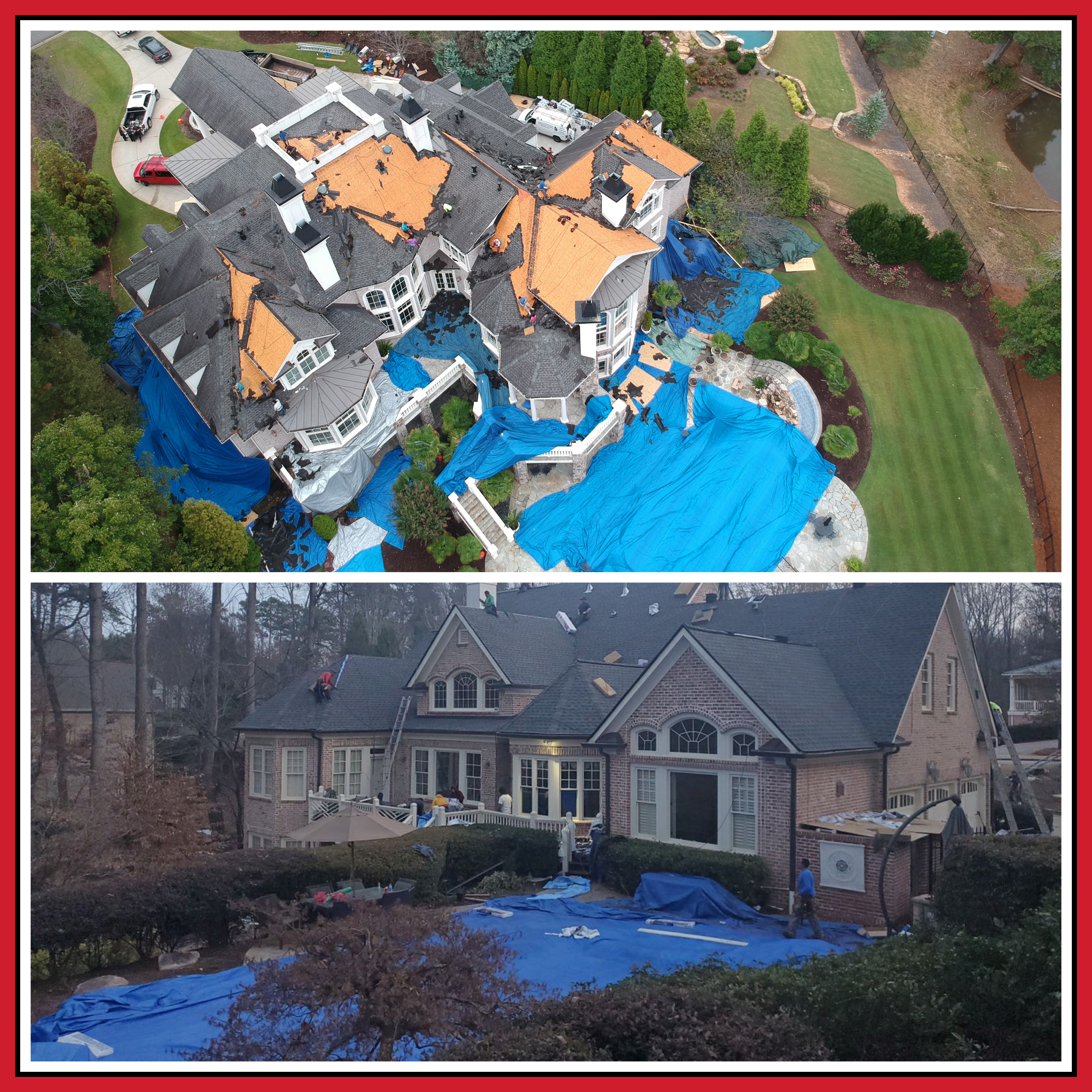
- Emergency Tarping Open roof sections are tarped before tree removal begins. This is a sequencing decision that most homeowners do not expect — they expect the tree to come off first. We tarp first because the exposure risk to the interior is immediate, and because removing a tree from a tarped section allows us to work more efficiently without the risk of rain events occurring mid-removal on an open deck.
- Pre-Removal Damage Documentation The most important documentation in a tree damage claim is taken before the tree moves. We photograph and measure the tree, its point of contact with the roof, the visible structural damage at the impact zone, and the condition of the surrounding roof sections. This record establishes the full extent of damage caused by the tree at the time of impact — evidence that is partially lost once the tree is removed and the debris is cleared.
- Tree Removal Systematic removal of the tree in sections as needed for safety, clearance, and control. Large trees in confined residential settings require rigging to control section descent and protect the structure below. Debris is cleared from the roof and property during the removal process.
- Adjuster Meeting Coordination 1 Source attends your insurance adjuster meeting with the full damage documentation package. We present the structural damage evidence, the material specifications for the repair scope, and any code upgrade requirements that apply to the restoration. Our presence at the adjuster meeting is the most effective way to ensure the full repair scope is included in the settlement.
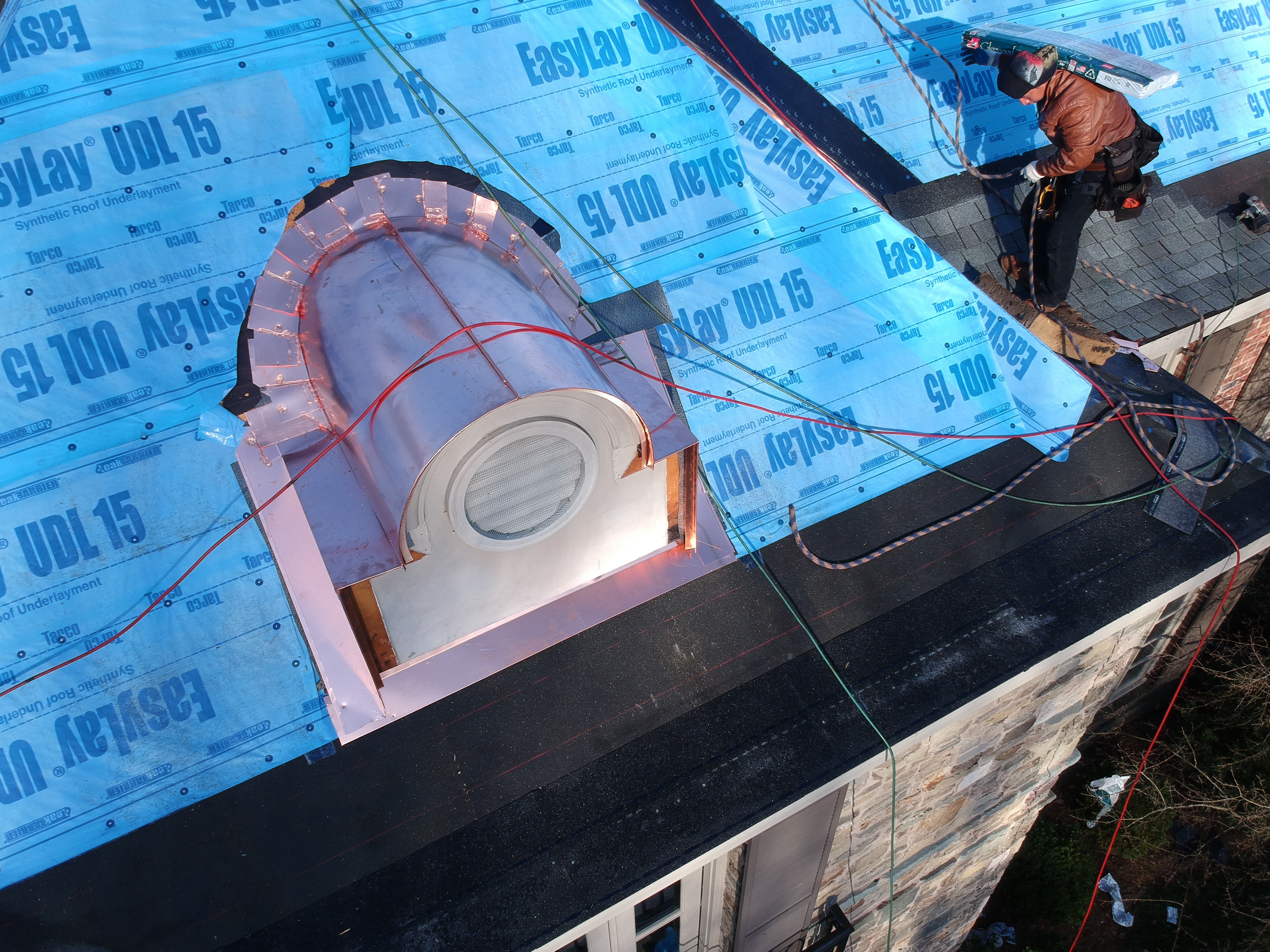
- Roofing Repair or Replacement Decking repair, structural framing repair if needed, and complete roofing system restoration — underlayment, ice-and-water shield where required, flashing, shingles, and ridge cap — all installed per GAF, CertainTeed specifications. The restoration carries manufacturer warranty protection on all restored sections.
Tree on Your Roof? One Call Handles Everything.
Emergency response across metro Atlanta — tree removal plus roof repair, same contractor. We handle the full scope from the moment we arrive.
Call (404) 277-1377Insurance Coverage for Tree Damage
Tree damage to a home is a covered peril under most Georgia homeowner's policies when the tree falls due to a storm, wind, or other named peril event. Understanding how the coverage works helps homeowners navigate the claim process with the right expectations.
Dwelling coverage applies to the structural and roofing damage caused by the fallen tree — this is the primary coverage category and is typically subject to your policy deductible. There is no sublimit on dwelling coverage for tree damage; the repair scope is what drives the settlement amount.
Tree removal cost is typically covered up to a sublimit, which varies by policy but is often $500 to $1,000 per tree. This sublimit applies only to the cost of removing the tree from the property — the roofing and structural repair is covered separately under dwelling coverage. Review your policy declarations page for your specific sublimit, as it varies significantly between insurers and policy tiers.
The key to a successful tree damage claim is documentation taken before the tree is moved. The photographic record of the tree's position, the point of impact, and the structural damage directly beneath the tree is the evidentiary foundation of the claim. Adjusters who arrive after the tree has already been removed are working from a less complete picture — and scope disputes are more common in those situations.
1 Source documents everything before beginning removal. That documentation record accompanies the claim from the first adjuster contact through the final settlement.
For a full walkthrough of the claim process: Insurance Claims Assistance — we guide you through each step from opening the claim through receiving the settlement check.
Most fallen trees in the Atlanta area are storm-related. For damage that extends beyond the tree impact zone to other areas of the roof: Storm Damage Restoration covers the full range of storm-related roofing damage we address across metro Atlanta.
Emergency Tree Removal Across Metro Atlanta
1 Source provides emergency tree removal and roof repair services throughout the greater Atlanta metro area. We are based in Lawrenceville and serve communities across Gwinnett, Fulton, DeKalb, Cobb, Cherokee, Forsyth, and Hall counties. Our service radius covers the full range of Atlanta's premium residential neighborhoods, from Buckhead and Sandy Springs to Alpharetta, Roswell, and the communities along the GA-400 corridor.
Atlanta's combination of mature hardwood tree canopy and active storm season makes tree-on-roof situations more common here than in regions with younger tree stock. Our crew has handled tree removal and roof repair on everything from 1950s ranch homes to modern estate properties, across every roofing system type common in the Atlanta market.
Services Connected to Tree Damage
Tree damage situations frequently involve related service needs. 1 Source manages the roofing and structural scope as the primary contractor and coordinates with specialists where the scope extends beyond our core services.
What Our Customers Say
Tree-on-roof situations are stressful, fast-moving events. These are the experiences Atlanta homeowners have shared about what it was like to work with 1 Source through the process.
"Tree fell on our roof during the August storms. 1 Source had tarps up within hours and the tree removed the next day. The roof repair was done the following week. No gaps, no coordination headaches. One crew handled everything and the insurance documentation was already complete when the adjuster came out."
"We had three large oaks overhanging our roof. 1 Source identified two limbs that were dead and posed risk during their annual inspection. We had them removed before storm season — a good call, as it turned out, given how active that summer was."
Frequently Asked Questions About Tree Removal and Roof Damage
What Atlanta homeowners ask when a tree falls on a roof — or when they are thinking ahead
What should I do if a tree falls on my roof?
Stay out of the area beneath the impact zone — structural damage may not be visible from inside and the section may be unstable. Do not attempt to remove the tree yourself; a tree lodged against roof framing may be supporting damaged structural members, and improper removal can cause secondary collapse. Call 1 Source at (404) 277-1377. While you wait: do not enter the attic or rooms directly beneath the impact zone; move valuables away from areas showing ceiling stress, sagging, or cracking; document what you can see from safe positions with your phone; call your insurer to open a claim and note the claim number even before a contractor arrives. 1 Source will provide full damage documentation and attend your adjuster meeting with a complete evidence package.
Does homeowner's insurance cover tree removal from a roof?
Yes — when a tree falls due to a covered peril such as wind, storm, or lightning, the damage to your home's structure and roofing is covered under your dwelling coverage. Tree removal cost is typically covered up to a sublimit specified in your policy — often in the range of $500 to $1,000 per tree, though this varies significantly by insurer and policy tier. The structural repair and roofing restoration is covered under your dwelling coverage without a sublimit, subject to your deductible. The most important step is documentation: photographs and measurements taken before the tree is moved establish the cause and full extent of structural damage that was present at the time of the loss. 1 Source documents everything before beginning any removal work. See our complete guide: Insurance Claims Assistance.
Can 1 Source Roofing handle both tree removal and roof repair?
Yes — this integrated capability is our core differentiator in tree damage situations. Most tree services remove the tree and leave, which creates a gap during which the open roof section is exposed to weather and the homeowner must locate a separate roofer. That gap is where secondary water damage occurs. 1 Source handles the complete scope: structural assessment of the impact zone, emergency tarping to close the roof before removal begins, systematic tree removal, pre-removal damage documentation for your insurance claim, attendance at your adjuster meeting, and full roofing repair or replacement through to a weathertight, warranty-backed result. One call. One contractor. Complete restoration. No coordination gap. No secondary water damage from an untarped open roof.
How can I prevent tree damage to my roof?
Annual inspection of all trees within falling distance of your home is the foundational preventive measure. Warning signs that indicate elevated risk: dead limbs (no leaves in season, brittle bark, absence of bud formation in spring), V-shaped trunk forks where two major limbs compete (structurally weaker than U-shaped unions), trunk cavities or shelf fungal growth (indicating internal decay), root heaving near the base (tree is destabilizing), and heavy leans toward the structure. 1 Source includes tree risk observation in our annual roof inspection service — we identify trees of concern and recommend professional arborist evaluation for specimens that present elevated risk before storm season. Proactive limb removal and arborist-guided risk management is significantly less expensive than the emergency response and roofing restoration that follows a tree-on-roof event.