
Emergency Tarping and Insurance Coverage in Georgia
Your roof is breached and water is entering your home. We tarp it within 60 minutes, stop the damage, and bill your insurance directly. You pay nothing out of pocket for emergency mitigation.
Certified & Trusted Emergency Restoration
Your Insurance Policy Requires You to Mitigate. And Pays for It
Every Georgia homeowners policy contains a duty to mitigate clause. This clause requires you to take "reasonable and necessary steps" to prevent additional damage after the initial loss. If a storm tears shingles off your roof and rain is pouring into your attic, you are legally and contractually obligated to cover that breach. If a pipe bursts and water is spreading across your first floor, you must stop the flow and begin extraction.
Here is what many Georgia homeowners do not realize: your policy also pays for these mitigation actions. Emergency tarping, water extraction, board-up services, temporary power, and drying equipment deployment are all covered costs billed directly to your insurance carrier. These mitigation expenses are typically covered under a separate provision from your dwelling repair coverage, which means they do not reduce the amount available for permanent repairs.
This dual obligation. You must mitigate, and the carrier must pay for it. Is one of the most powerful provisions in your policy. When we respond to your emergency, we satisfy your duty to mitigate with documented, professional-grade work, and we bill the carrier for every dollar of that mitigation. You pay nothing out of pocket beyond your deductible for the overall claim.
What Emergency Roof Tarping Involves
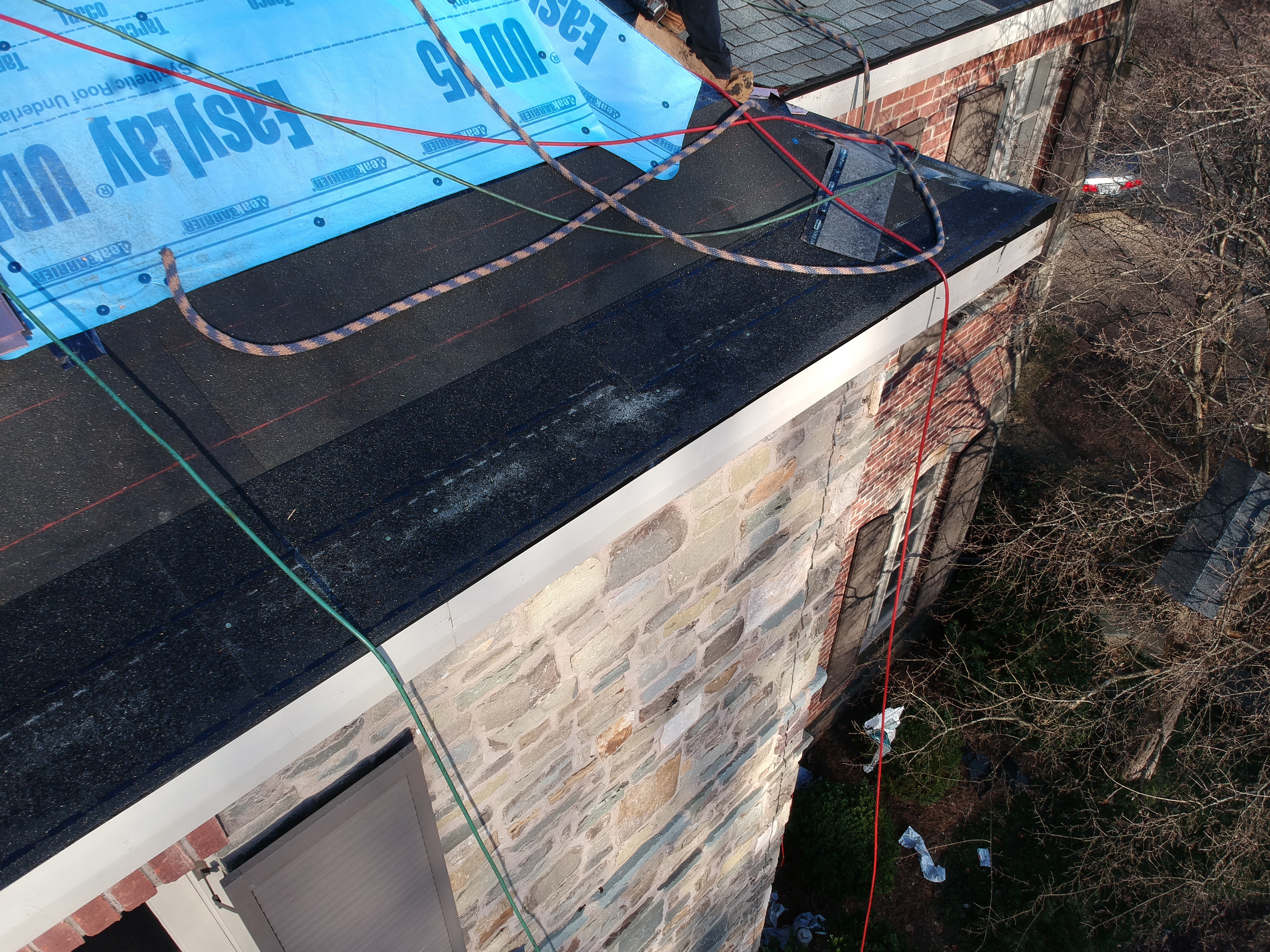
Emergency roof tarping is not throwing a blue tarp over a hole and hoping it stays put. Professional tarping that satisfies your insurance policy's mitigation requirements and protects your home until permanent repairs can be made requires specific materials, techniques, and documentation.
Materials. We use heavy-duty polyethylene tarps rated for wind and weather exposure. Standard emergency tarps are 6-mil thickness for temporary protection; we use 10-mil or heavier for extended coverage when repair scheduling requires longer protection periods. We carry multiple tarp sizes on every emergency truck so we can cover any breach from a single missing shingle to a large section of decking exposed by wind damage.
Securing method. We secure tarps using 2x4 lumber battens fastened through the tarp into the roof decking. The batten system distributes wind load across the tarp surface and prevents the tarp from lifting, tearing, or pulling free in subsequent storms. We extend tarps at least 4 feet past the damaged area on all sides and wrap them over the ridge where possible to prevent water from entering under the tarp edge. Tarps secured with sandbags, bricks, or staples alone are inadequate. They will fail in the next storm and the carrier may argue that you did not properly mitigate.
Timing. Our crews arrive within 60 minutes of your call to (404) 277-1377. Tarp installation takes 1 to 3 hours depending on the scope of damage, roof pitch, and accessibility. For steep-pitch roofs common in Buckhead and Johns Creek luxury neighborhoods, our crews use safety harnesses and roof brackets that allow safe work at any pitch.
Documentation. We photograph the damage before tarping, during the installation process, and after the tarp is secured. We document the tarp size, the area covered, the materials used, and the time of installation. This documentation becomes part of your claim file and proves you fulfilled your duty to mitigate. See our damage documentation guide for more on how we build your claim file.
Emergency roof tarping costs $500 to $2,500 depending on breach size and roof complexity. Your policy covers these costs as mitigation expenses, billed separately from dwelling repair coverage. You pay nothing out of pocket for tarping.
Exactly What Your Insurance Covers for Emergency Mitigation
Georgia homeowners policies cover a broad range of emergency mitigation services. Here is what we bill to your carrier and what gets approved:
Emergency roof tarping: $500 to $2,500 depending on the size of the breach and roof complexity. Covers tarp materials, lumber, fasteners, labor, and after-hours service charges. The carrier pays these costs regardless of whether you have met your deductible on the overall claim. Mitigation is a separate billing category.
Board-up services: $300 to $1,500 for securing broken windows, damaged doors, or wall openings created by fallen trees or debris. Board-up prevents unauthorized entry, weather damage, and animal intrusion while permanent repairs are scheduled.
Emergency water extraction: $500 to $5,000 depending on the volume of water and the area affected. We deploy truck-mounted extraction units capable of removing hundreds of gallons per hour. Extraction costs are billed by square footage and equipment hours, documented with before-and-after photos and extraction volume measurements.
Structural drying equipment: $200 to $500 per day for commercial-grade dehumidifiers and high-velocity air movers. Typical Georgia water damage events require 3 to 5 days of drying; our humid climate can extend that to 7 or more days during summer months. Each day of equipment deployment is documented with atmospheric readings that justify the continued need for drying.
Moisture monitoring: $100 to $200 per day for daily moisture readings that track the drying progression. These readings determine when structural materials have reached their target moisture content and equipment can be removed. Without monitoring documentation, the carrier may dispute the number of drying days billed.
Temporary power: If the water damage affected your electrical system and power must be shut off, the cost of a temporary generator to power drying equipment is covered as a mitigation expense.
Waiting even one night to tarp a roof breach can result in $5,000 to $30,000 in additional interior water damage. The carrier reduces your payout by the amount of damage they attribute to your delay. Our 60-minute response eliminates this risk.
The Failure-to-Mitigate Trap That Costs Georgia Homeowners Thousands
Insurance carriers use the duty to mitigate as both a sword and a shield. When you mitigate promptly, the carrier pays for it. When you fail to mitigate, the carrier reduces your claim by the amount of additional damage they attribute to your delay. This creates a trap that catches homeowners who do not understand their obligations.
Scenario 1. Storm damage, no tarping. A severe storm damages your roof at 2:00 AM. You plan to call a roofer in the morning. It rains again overnight. Water pours through the open breach for 8 hours. When you file the claim, the carrier sends an adjuster who documents both the original storm damage and the additional water damage from the overnight rain. The carrier approves the claim but reduces the payout by the amount they attribute to your failure to tarp. Potentially $5,000 to $15,000 in additional interior water damage that would not have occurred with a tarp.
Scenario 2. Burst pipe, delayed extraction. A pipe bursts while you are on vacation. You return three days later to find standing water, saturated drywall, and active mold growth. The carrier covers the initial burst damage but argues that the mold and extended water damage resulted from your failure to address the situation promptly. Your mold remediation costs. $10,000 to $25,000. May be denied or reduced.
Scenario 3. Appliance leak, inadequate response. Your dishwasher fails and leaks water across the kitchen floor. You mop up the visible water but do not extract moisture from the subfloor or deploy drying equipment. Two weeks later, the hardwood floor in the adjacent dining room buckles. The carrier may deny coverage for the dining room damage, arguing it resulted from inadequate mitigation of the original kitchen leak.
Every one of these scenarios is preventable. When you call us within minutes of discovering the damage, we mitigate immediately and document every step. The carrier cannot argue failure to mitigate when our timestamped documentation shows a 60-minute response time and immediate professional-grade mitigation.
Emergency Tarping After Georgia Storms
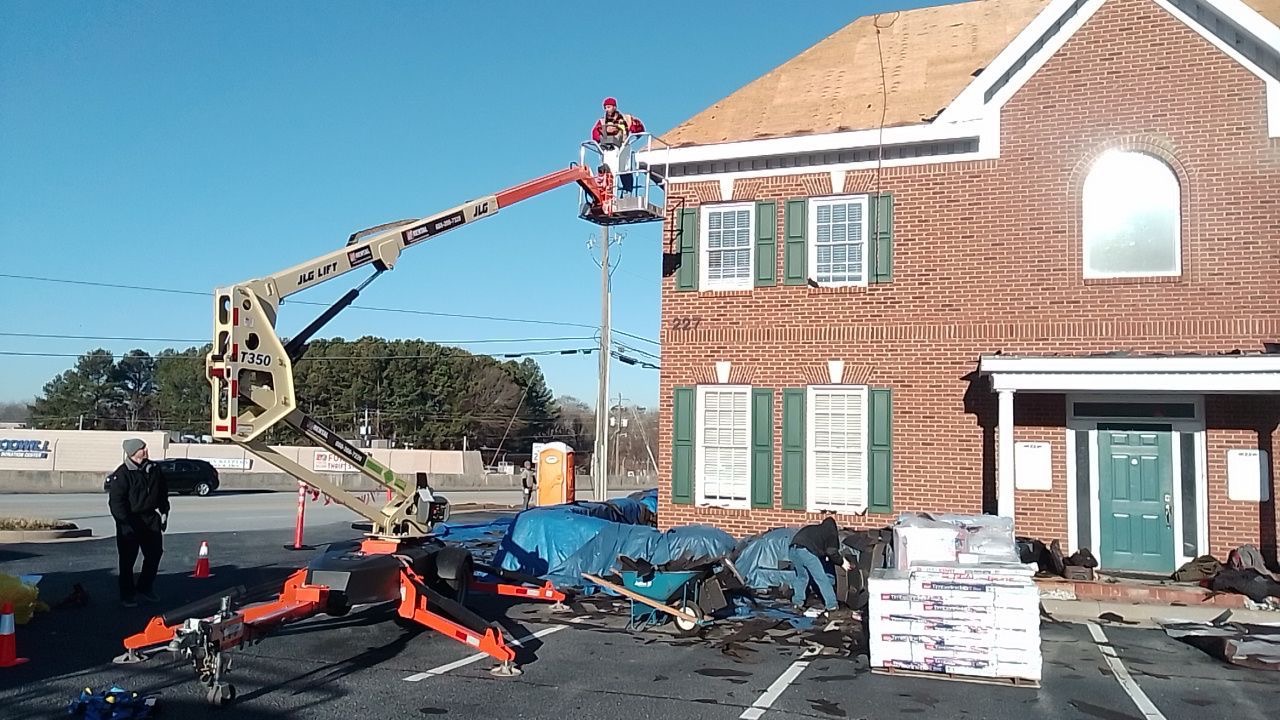
Georgia's severe weather season. March through October, with peak storm activity in April, May, and June. Generates thousands of roof damage events every year across metro Atlanta. Straight-line winds, large hail, falling trees, and tornadic activity can create roof breaches ranging from a few missing shingles to entire sections of decking ripped away.
After a major storm event, the demand for emergency tarping services surges. Roofers who are not already set up for emergency response cannot get to your home for days. Our crews are staged and ready for storm response at all times. We monitor National Weather Service alerts for the metro Atlanta area and pre-position trucks and materials when severe weather is forecast for Alpharetta, Roswell, Sandy Springs, Marietta, and surrounding areas.
The days following a major storm are also when carriers deploy catastrophe (CAT) adjuster teams. These adjusters handle enormous workloads and schedule inspections quickly. Having your roof already tarped when the CAT adjuster arrives demonstrates mitigation compliance and allows the adjuster to focus on assessing the underlying damage rather than worrying about active water entry. Our documentation of the tarp installation. Including pre-tarp damage photos. Gives the adjuster everything they need.
For more on storm damage claims, see our storm damage restoration page.
Interior Emergency Mitigation for Water Damage
Emergency tarping addresses the roof breach. But the water that already entered your home through that breach. Or from a burst pipe, appliance failure, or other internal source. Requires its own mitigation response. Here is what our interior emergency response includes and what your policy covers:
Standing water extraction. Our truck-mounted extraction units remove standing water from carpet, hardwood, tile, and concrete surfaces. We extract water from every affected room and from areas where water has traveled through floor transitions, doorways, and plumbing penetrations. Extraction is billed by square footage and equipment time.
Carpet and pad lifting. When carpet is salvageable. Typically Category 1 water with less than 48 hours of exposure. We lift the carpet and remove the pad for drying. The pad is always replaced (it cannot be effectively dried), but the carpet can often be cleaned, dried, and reinstalled. This saves significant cost compared to full carpet replacement. We document the decision to save or replace based on IICRC S500 standards.
Furniture and contents relocation. We move furniture, electronics, personal items, and area rugs away from wet areas to protect them from additional damage and to clear the space for drying equipment. Contents that are already damaged are documented for your personal property claim before they are moved. See our guide on what insurance covers for water damage for details on personal property coverage.
Drying equipment deployment. We position commercial dehumidifiers and air movers throughout the affected area based on the specific drying needs of the materials involved. Hardwood floors require a different drying configuration than drywall. Concrete slabs dry differently than wood subfloors. Our drying plan follows IICRC S500 psychrometric calculations to achieve optimal drying conditions for your specific situation.
Antimicrobial application. In Georgia's humid climate, mold can begin colonizing wet building materials within 24 to 48 hours. We apply EPA-registered antimicrobial treatments to all exposed structural surfaces during the mitigation phase to prevent mold growth during the drying period. This preventive treatment is far less expensive than mold remediation after the fact, and it is covered as a mitigation expense on your claim.
How We Document Mitigation for Your Insurance Claim
Mitigation costs are only covered when they are properly documented. Generic invoices that say "emergency service. $2,000" get rejected. Our mitigation documentation is detailed enough to support every line item on the claim:
Time stamps. We log the time of your call, crew dispatch time, arrival time, and start time for each mitigation activity. This timeline proves response speed and supports any after-hours or emergency rate billing.
Before-and-after photos. We photograph every affected area before mitigation begins and after each phase is complete. Before photos show standing water, active leaks, and damage in its original condition. After photos show extraction complete, tarps installed, and drying equipment in place.
Moisture readings. We record moisture content in every affected material at the time of our initial response and daily throughout the drying period. These readings create a drying curve that justifies the number of equipment days billed. When the readings show structural materials reaching their target moisture content (typically below 15 percent for wood), we pull the equipment. Every day of equipment use is justified by data.
Equipment inventory. We document every piece of equipment deployed. Type, model, serial number, placement location, and date/time of deployment and removal. Each piece of equipment is a separate line item on the mitigation invoice. Commercial dehumidifiers, air movers, air scrubbers, and monitoring equipment are all documented individually.
Extraction measurements. We measure and record the square footage extracted, the depth of standing water, and the volume removed. These measurements support the extraction billing and help the adjuster understand the severity of the water event.
Do Not Wait for the Insurance Adjuster Before Tarping
This is the most common and most costly mistake Georgia homeowners make after roof damage. They think they need the adjuster to see the damage before it can be covered. They wait for the inspection, which may take 5 to 14 days to schedule. Meanwhile, rain enters through the open breach and causes $10,000 to $30,000 in additional interior damage that proper tarping would have prevented.
Your insurance policy does not require you to wait for the adjuster before taking mitigation action. In fact, it requires the opposite. You must act immediately. The adjuster will evaluate the tarp installation and the underlying damage during their inspection. Our pre-tarp documentation shows the adjuster exactly what the damage looked like before the tarp was installed.
Some homeowners worry that tarping will "cover up" the damage and the adjuster will not approve the claim. This fear is unfounded. We document the damage thoroughly before installing the tarp, and we can remove the tarp for the adjuster's inspection if they request it. Our documentation package includes enough pre-tarp photos, close-ups of the damage, and measurement data that most adjusters do not even need the tarp removed.
When we attend the adjuster meeting, we present the pre-tarp documentation alongside the current tarped condition. The adjuster sees exactly what happened, when it happened, and what we did to prevent further damage. This is exactly what adjusters want to see.

After-Hours Emergency Service: Georgia Storms Do Not Wait for Business Hours
Severe storms in Georgia strike without regard for the clock. The worst storm damage we have responded to across metro Atlanta happened at 2:00 AM, 11:00 PM, on Christmas Eve, and during the Fourth of July weekend. When a tree crashes through your roof at midnight, you need a crew on site within the hour. Not a voicemail system promising a callback on Monday.
Our 24/7 emergency dispatch line at (404) 277-1377 is answered by a live dispatcher at every hour of every day. When you call at 3:00 AM during a thunderstorm, a real person answers, collects your information, and dispatches the closest available crew to your location. There is no automated phone tree, no answering service, and no delay.
After-hours emergency tarping is billed at slightly higher rates than standard business-hour work. Typically a 25 to 50 percent premium for nights, weekends, and holidays. These after-hours rates are recognized by insurance carriers as standard industry practice and are covered under your policy's mitigation provisions. We document the time of service on every invoice so the carrier can verify the after-hours billing.
For internal water emergencies like burst pipes, water heater failures, and sewage backups, our after-hours response is identical. The same 60-minute arrival, the same professional equipment, the same insurance-grade documentation. Day or night, the response is the same.
Related Water Damage Insurance Guides
- Filing a Water Damage Insurance Claim. How tarping documentation supports your claim
- What Insurance Covers for Water Damage. Mitigation coverage explained
- How to Document Water Damage. Documentation standards for mitigation billing
- Meeting the Insurance Adjuster. Presenting tarping documentation to the adjuster
- Water Damage Claim Denied. When failure to mitigate caused the denial
- Supplementing Water Damage Claims. Adding mitigation costs to your supplement
- Out-of-Pocket vs. Insurance Claim. Mitigation costs in the cost equation
See also: Storm Damage Restoration | Insurance Claims Assistance | Water Damage Restoration
Frequently Asked Questions: Emergency Tarping and Insurance
Does insurance cover emergency roof tarping in Georgia?
Yes. Emergency tarping is covered under the mitigation provisions of virtually every Georgia homeowners policy. Your policy requires you to take reasonable steps to prevent further damage after a loss. The cost of emergency tarping, board-up, water extraction, and temporary drying equipment is covered separately from your dwelling repair coverage. We bill these mitigation costs directly to your carrier as a separate line item on the claim.
How much does emergency roof tarping cost?
Emergency roof tarping typically costs $500 to $2,500 depending on the size of the damaged area, the roof pitch, accessibility, and whether the work is performed during normal hours or as an after-hours emergency. These costs are covered by your insurance policy as mitigation expenses. We do not charge you out of pocket for emergency tarping when the damage is covered by insurance.
How quickly can you tarp a damaged roof in metro Atlanta?
Our emergency tarping crews are staged across metro Atlanta and can reach your home within 60 minutes of your call. Once on site, a standard emergency tarp installation takes 1 to 3 hours depending on the scope of the roof damage and weather conditions. We carry tarps, lumber, fasteners, and all necessary equipment on our trucks at all times so there is no delay for materials.
Do I need to wait for the insurance adjuster before tarping my roof?
No. You should not wait. Your policy requires you to mitigate further damage immediately. Waiting for the adjuster while rain continues to enter your home through a roof breach will increase the damage and give the carrier grounds to deny the incremental damage caused by the delay. Tarp immediately, document everything, and present the mitigation documentation when the adjuster arrives. We handle all of this for you.
Is emergency water extraction also covered by insurance?
Yes. Emergency water extraction is covered as a mitigation expense under the same policy provisions that cover tarping. Extraction, temporary drying equipment deployment, and moisture monitoring are all billable mitigation costs. We document extraction volumes, equipment placement, and drying progression to support the mitigation billing on your claim.